

Victorian Writing Console
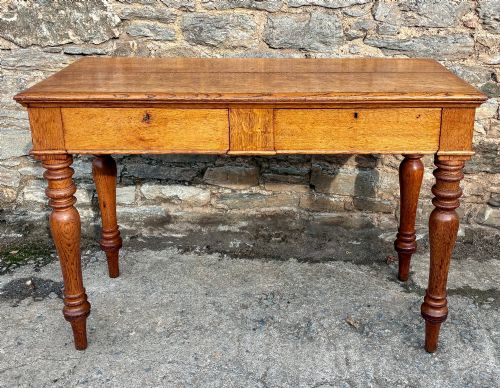
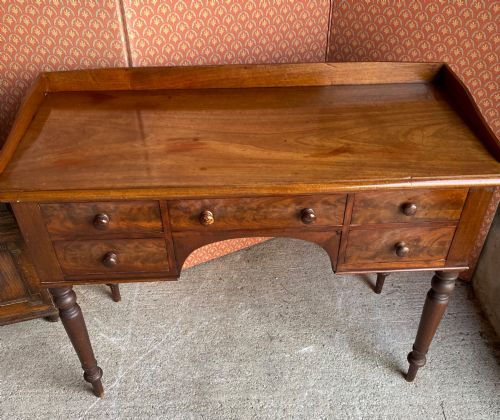
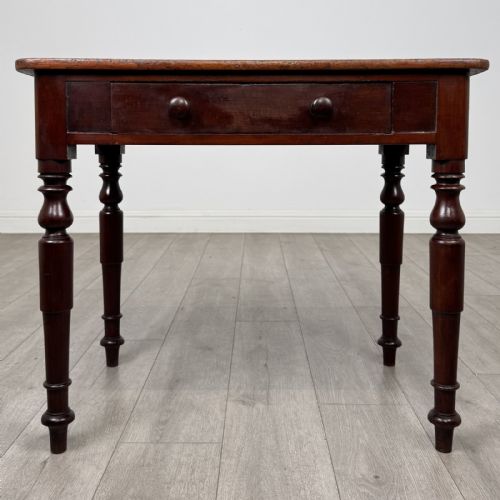
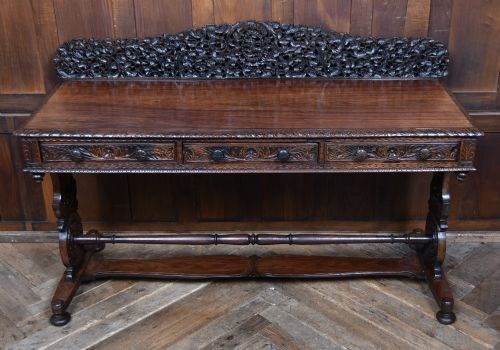
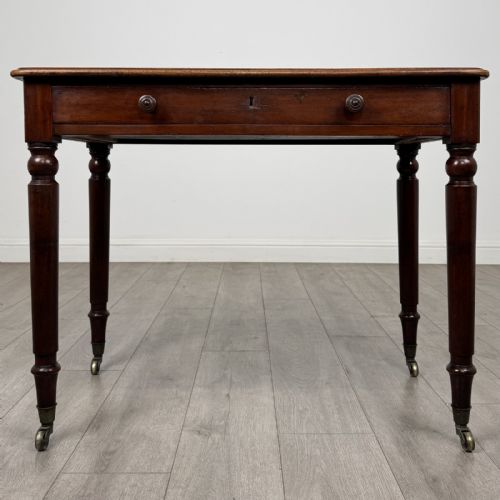
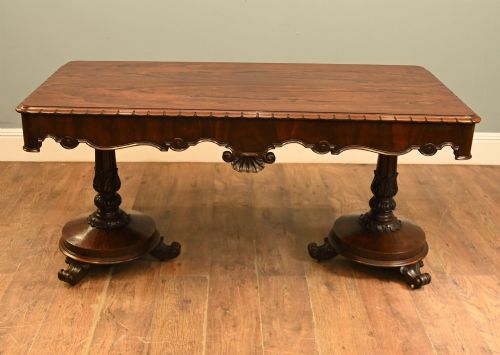
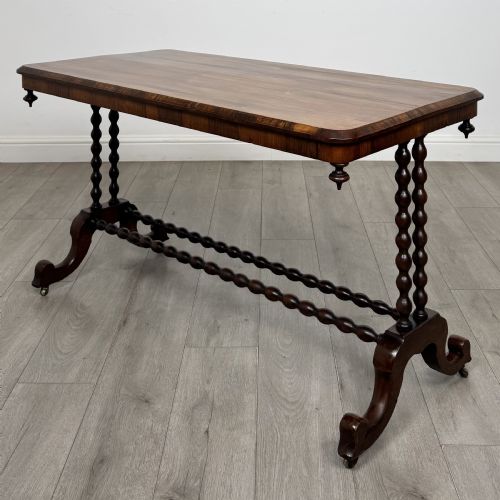
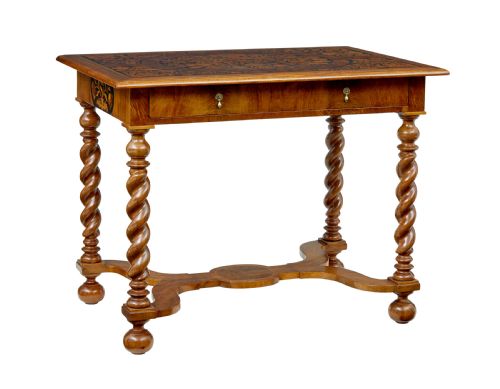
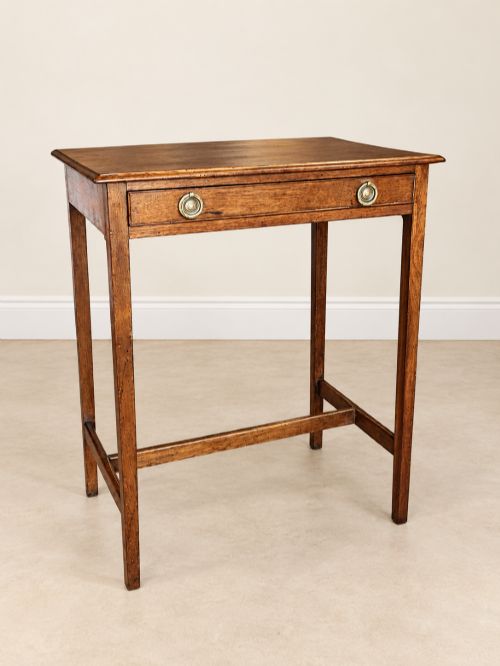
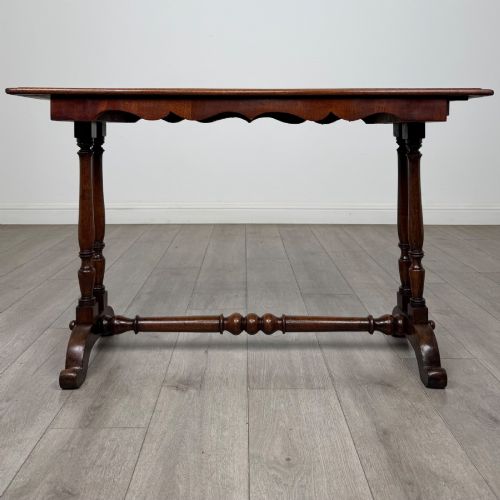
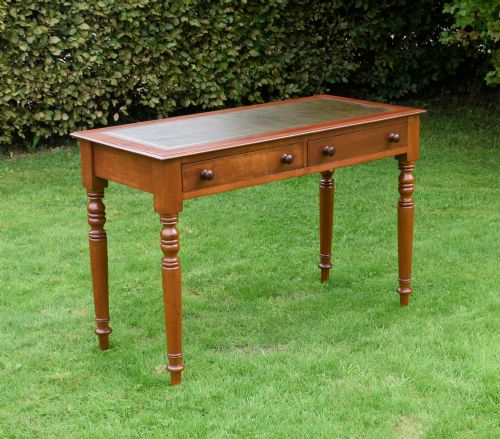
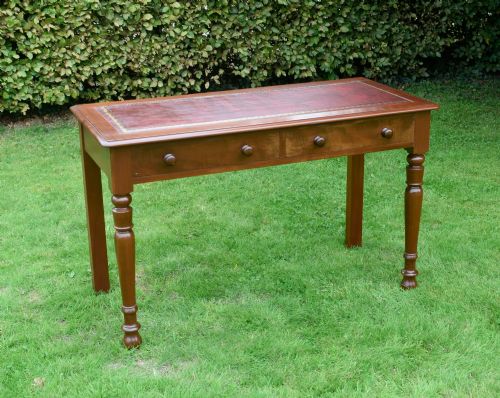
A victorian writing console brings timber character and functional surface space to a hallway or study.
Victorian Writing Console
A victorian writing console bridges the gap between a side table and a compact writing desk, designed for occasional correspondence and display. These pieces frequently double as side tables, dressing tables, or library tables depending on the room they inhabit.
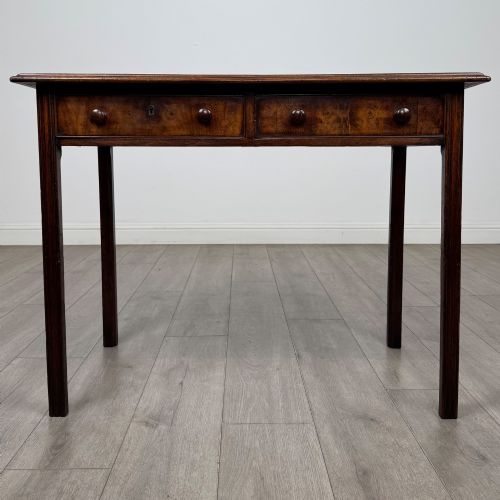
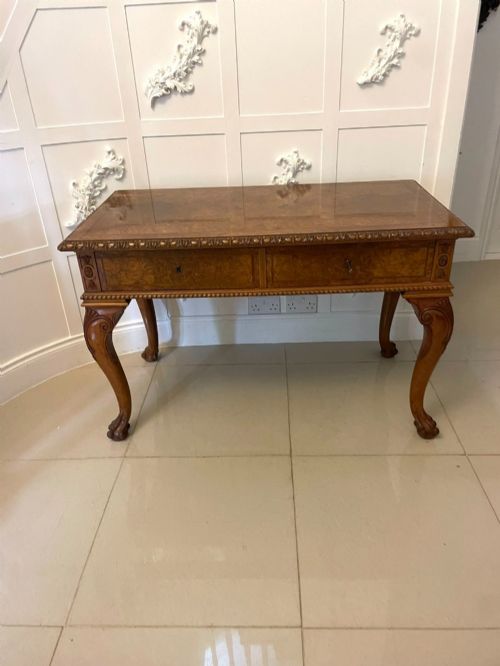
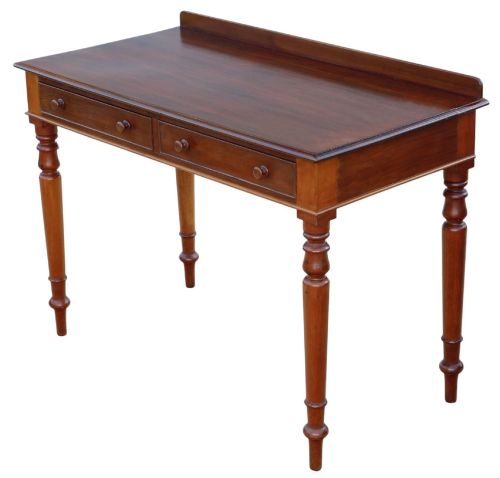
The materials span from rich hardwoods like mahogany and burr walnut to everyday utility timbers such as pine and pitch pine. You will regularly encounter variants featuring single or multiple drawers set into the front frieze.
Origins heavily reflect nineteenth-century British cabinet making, encompassing standard Victorian production alongside regional iterations. Pieces range from austere pine and oak utilitarian forms to highly figured satinwood and rosewood library examples.
How They Were Made
Makers utilised solid timbers alongside finely cut veneers, applying flame mahogany and burr walnut over stable secondary woods. Brass fittings, including key escutcheons and drawer pulls, provide functional detail against the timber grain.
Construction methods rely on traditional joinery techniques such as dovetailed drawer boxes and mortise and tenon frames. Surfaces display hand-finished wax or polished treatments that highlight the natural figure of oak, birch, and walnut.
The inventory records multiple forms spanning side tables, library tables, dressing tables, sofa tables, and dedicated writing desks.
What Varies in Quality
Timber selection dictates the initial tier of quality, moving from utilitarian stripped pine up to figured satinwood, zebrawood, and burr walnut. The choice of secondary woods and the precision of drawer construction reveal the original maker's intent.
Carved ornament and decorative inlay separate standard workshop production from pieces attributed to notable makers and retailers. The integration of functional elements, such as secret compartments or well-fitted brass hardware, elevates the standing of the console.
Heal and Son·Gillows·Liberty·J A Mein Edinburgh Cabinet Maker
The Victorian Writing Console Glossary
- Console table
- A table designed to stand against a wall, frequently fitted with a narrow top for display or writing. These often feature decorative carving on the front and sides.
- Frieze
- The horizontal band situated directly beneath the tabletop, frequently housing one or more drawers in these tables. It often receives decorative mouldings or applied veneers.
- Burr walnut
- A prized timber marked by swirling knot formations that create intricate patterns across the surface. Cabinet makers used it selectively for high-status furniture fronts.
- Pitch pine
- A resinous softwood utilised widely in nineteenth-century joinery for its durability and prominent grain structure. It appears frequently in utilitarian and regional pieces.
- Drop leaf
- A hinged tabletop section that folds down to save space or extends upward supported by swinging brackets. This mechanism allows the surface area to adapt to smaller rooms.
Victorian Writing Console: Frequently Asked Questions
What is a victorian writing console used for?
These consoles served as versatile surface furniture in nineteenth-century homes, functioning as hallway drop points, dressing tables, or desks for correspondence.
Their narrow proportions allowed them to sit flush against walls in corridors and reception rooms without obstructing household traffic.
How do I identify a nineteenth-century console?
Look for traditional construction indicators like hand-cut dovetails on drawer boxes and timber thicknesses consistent with period hand-tooling. Materials such as solid mahogany, pitch pine, and burr walnut dominate genuine nineteenth-century examples.
The presence of original brass hardware and secondary woods like oak or deal further anchors the piece within the Victorian era.
Where should I place a writing console?
A hallway makes an ideal home for a console featuring drawers, offering convenient storage for keys and correspondence as you enter the house.
Alternatively, they function effectively as dressing tables in bedrooms or as compact writing desks in studies where floor space is limited.
Are these tables suitable for daily writing?
Solid timber construction makes these consoles robust enough for daily use, provided the joints and legs remain stable over time.
Consider the kneehole height and drawer clearance if you plan to sit at the console regularly, as many period examples were built for lighter intermittent tasks.