



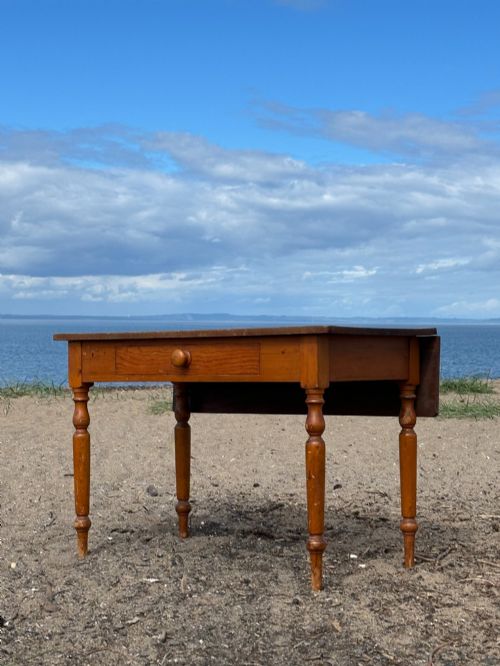
Victorian Work Table Drawers
Victorian work table drawers are practical sewing, writing and occasional pieces designed for domestic utility and crafted primarily in mahogany, walnut and pine.
Victorian Work Table Drawers
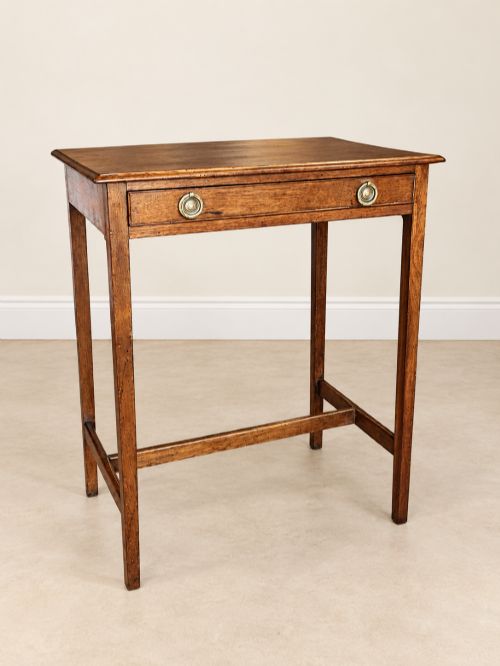
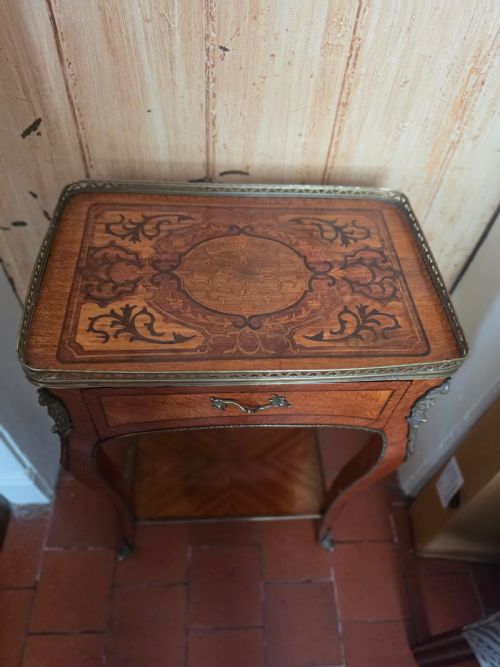
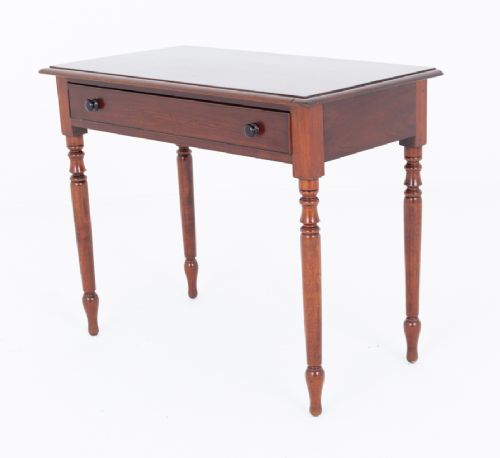
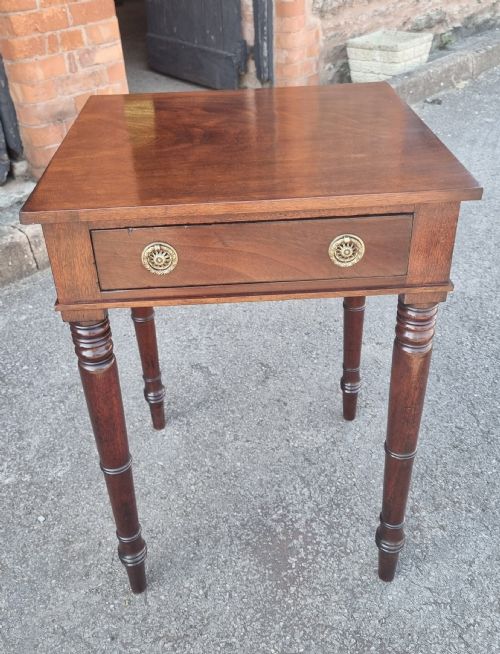
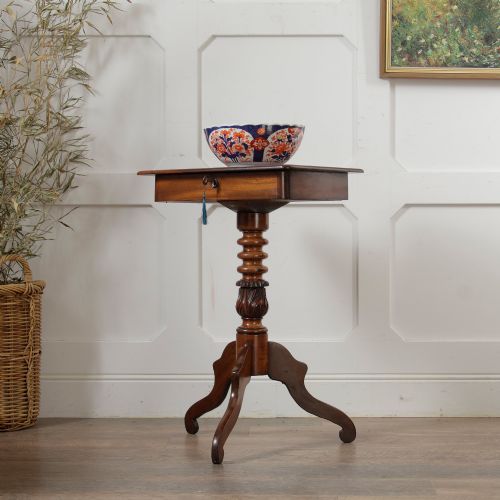
When searching for victorian work table drawers, a buyer encounters domestic furniture spanning the nineteenth century, including pieces from the Georgian, William IV and Victorian eras. These items serve multiple purposes as sewing tables, writing desks, lamp stands and occasional tables equipped with single or multiple drawers.
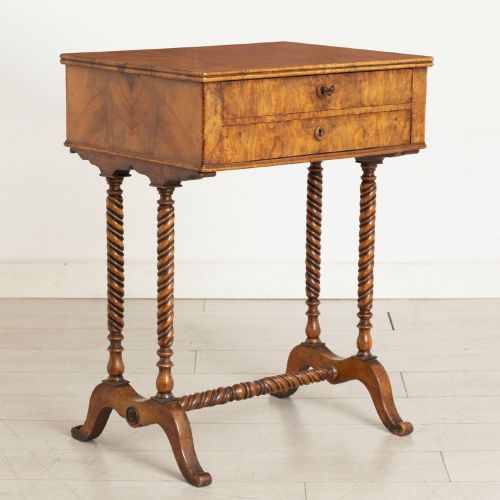
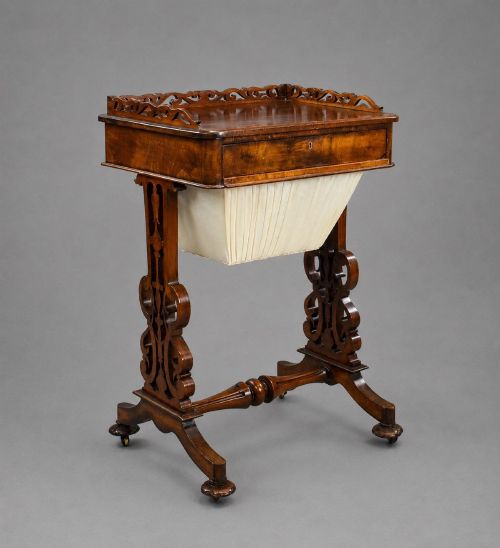
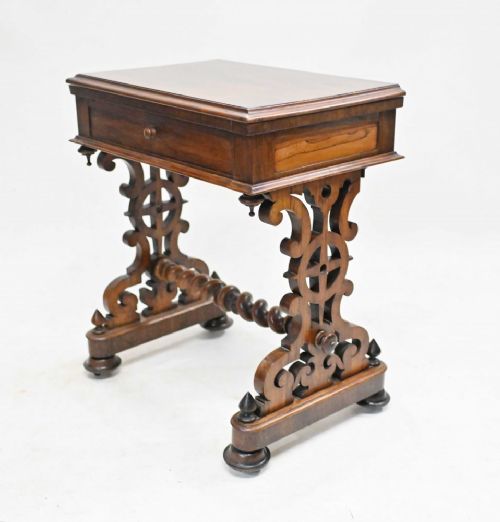
The versions met most frequently on this page are constructed from mahogany or pine, often featuring drop leaves, pedestal bases or turned legs. Makers from these periods adapted the form for sewing, games, and writing, meaning the lower compartments frequently house internal compartments or writing surfaces.
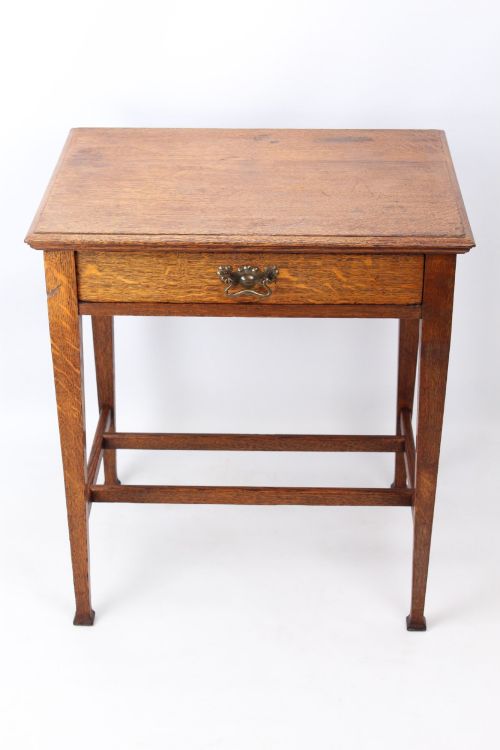
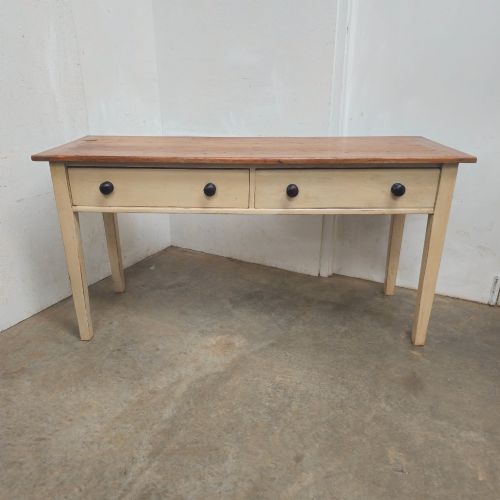
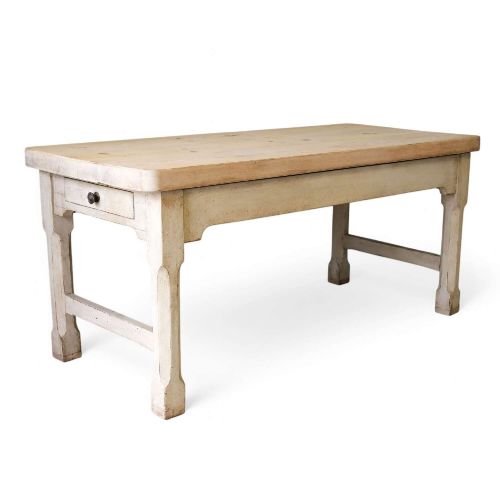
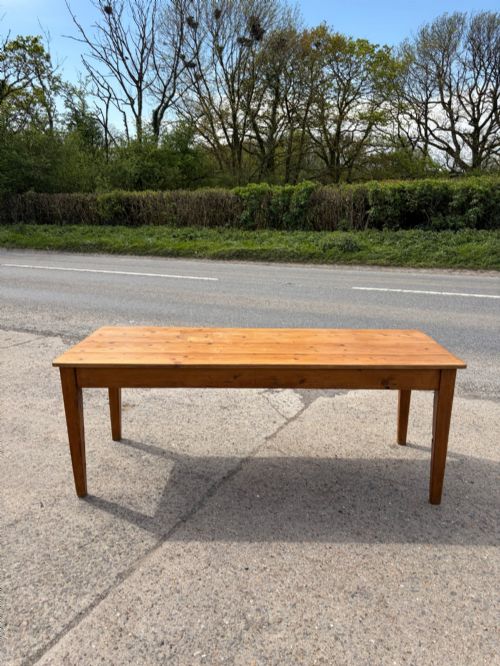
Originating largely from English and Scottish workshops, these tables range from refined burr walnut and pollard oak examples to rustic painted pine dairy and kitchen prep tables. The unifying element is the integration of functional storage drawers within domestic tables of the nineteenth century.
Materials and construction methods
Joinery relies heavily on solid timbers such as mahogany, walnut, oak and pine, frequently enhanced with decorative veneers like burr walnut and pollard oak. Cabinetmakers utilised traditional dovetailed drawer construction and turned elements such as bobbin turning for structural support.
Surface finishes vary from polished mahogany and rosewood to original paintwork on pine kitchen and dairy tables, with occasional leather inserts applied to writing surfaces. Brass fittings appear regularly on handles, castors and hinges, particularly on mid-nineteenth century examples.
Distinctions in quality and execution
The upper tier of these pieces is defined by choice timber selection, such as figured pollard oak or burr walnut, alongside precise cabinet work like finely dovetailed drawer linings and original brass hardware. Lesser examples utilise simpler softwoods like pine with later painted surfaces or replaced components.
Boothroyd Sons Rimmer Southport
The Victorian Work Table Drawers Glossary
- Pembroke table
- A small occasional table with hinged drop leaves on two opposing sides and a drawer in the frieze. It became popular during the eighteenth and nineteenth centuries for breakfast or writing use.
- Frieze
- The horizontal band situated directly beneath the tabletop, which typically houses the storage drawer in these tables. It often provides a canvas for decorative mouldings or timber grain.
- Drop leaf
- A hinged flap on the side of a table that can be raised to extend the surface area or lowered when space is restricted. It appears frequently on nineteenth century sewing and occasional tables.
- Bobbin turned
- A style of furniture leg or support shaped on a lathe to resemble a string of rounded bobbins or spools. This decorative turning is characteristic of mid to late nineteenth century work.
- Pollard oak
- Oak timber obtained from a tree that has been pruned at a height above livestock reach, producing a dense, highly figured grain. It is prized by cabinetmakers for fine decorative panels.
Victorian Work Table Drawers: Frequently Asked Questions
What were Victorian work tables used for?
These tables served specific domestic tasks, primarily needlework, spinning, and light writing, providing a dedicated surface alongside concealed storage for threads and implements.
Many incorporated specialised internal compartments, drop leaves for expansion, or even integrated game boards for chess and backgammon during leisure hours.
How do I identify a William IV work table?
William IV pieces date roughly from the eighteen thirties to the eighteen forties, typically showcasing heavier proportions, robust mahogany timbers, and architectural pedestal bases.
They often bridge the transition between late Regency elegance and full Victorian ornamentation, featuring subtle scrollwork and substantial turned columns.
Are pine tables from this period rustic?
Pine examples frequently originate from farmhouses, dairies, and country houses, functioning as practical kitchen preparation surfaces rather than formal parlour furniture.
They often retain traces of original paintwork, scrubbed tops, and simple single drawer friezes designed for everyday culinary tasks.
How can I tell a sewing table from a writing table?
Sewing tables usually feature drop leaves and internal compartments beneath the drawer or top for holding textiles, wools, and sewing tools.
Writing tables prioritize a stable flat surface, sometimes with a leather insert, and focus on drawer space suited for stationery rather than fabric storage.