



Victorian Woolwork
When you search for victorian woolwork, you are looking at tactile textile art and framed wall art from the nineteenth century.
Victorian Woolwork
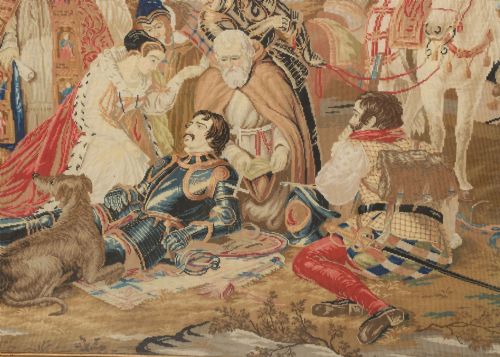
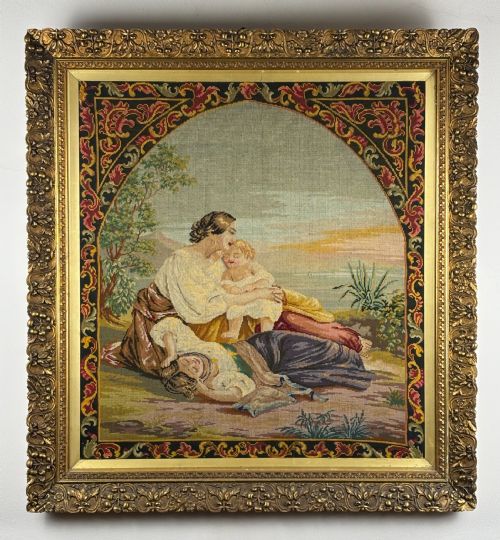
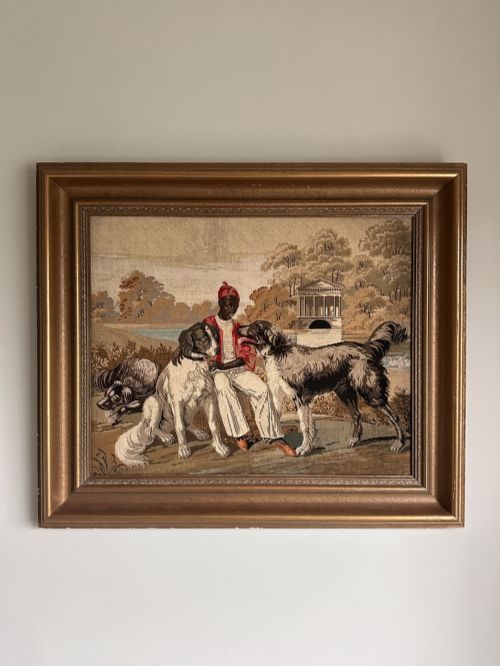
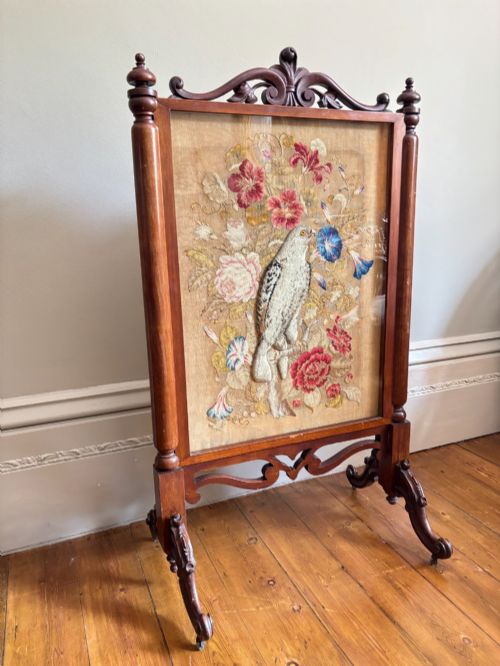
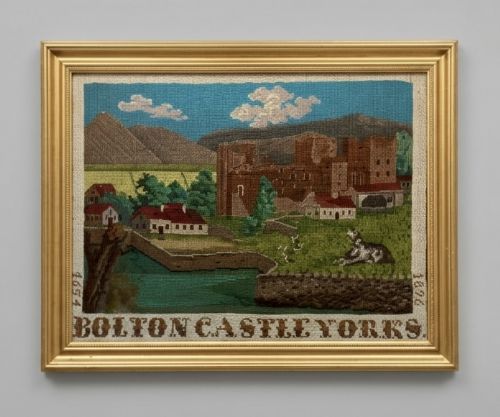
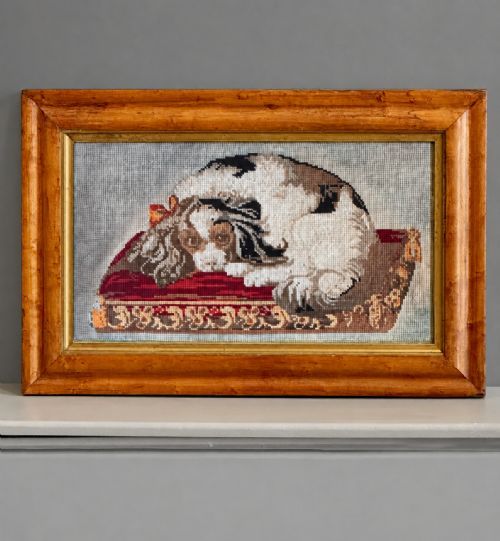
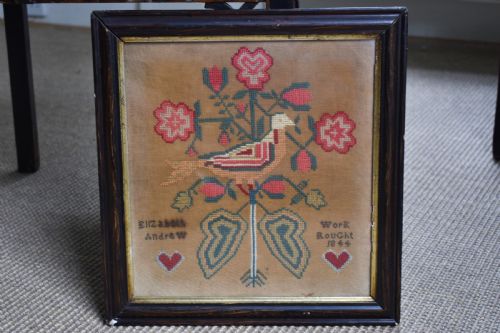
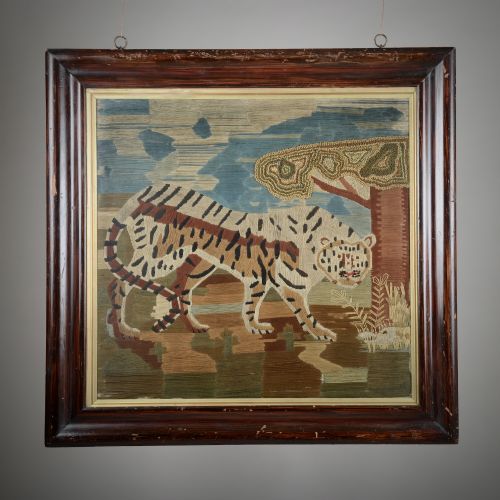
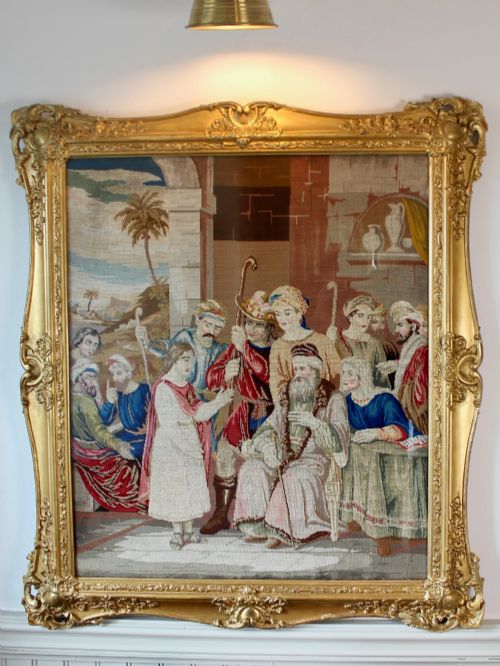
Victorian woolwork encompasses framed tapestries, needlepoint pictures, samplers, and fire screens created during the nineteenth century. These textile artworks capture subjects ranging from literary and religious scenes to domestic animals and maritime subjects.
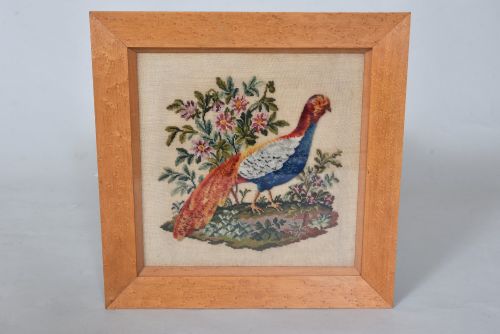
You are most likely to meet Berlin woolwork panels and sailors' woolies framed in wood, rosewood, or giltwood. Many survive behind glass in their original frames, preserving the bright dyed wools and glass beads used by nineteenth-century makers.
The objects function primarily as wall art or functional home furnishings like fire screens. They represent a distinct blend of middle-class domestic leisure and maritime folk art.
How they were made
Makers stitched wool and silk threads onto canvas using needlepoint techniques such as gros point and petit point. Many pieces incorporated Berlin woolwork charts, which provided numbered colour grids for stitchers to follow.
Giltwood, burr maple, oak, and rosewood frames completed the works, often paired with protective glass. Some specialised pieces also integrated glass beads and plushwork elements to create textured surface details.
Victorian Woolwork Retail Price Guide 2026
Typical asking prices for victorian woolwork among the pieces listed under this phrase on Sellingantiques today, from the lower quarter to the upper quarter. They describe what is for sale here now, not the wider market.
Listings feature 19th-century needlework using wool, silk, canvas, and glass beads within wooden, rosewood, and giltwood frames.
What varies in quality
Quality rests in the precision of the needlework and the complexity of the design, with fine petit point stitching achieving greater detail than coarser canvas work. The ambition of the pictorial subject, from simple birds to intricate portraits and historical scenes, also separates standard examples from exceptional ones.
The survival of original framing materials, such as burr maple or giltwood frames with intact glass, adds considerably to a piece's historical integrity. The vibrancy of the wool and silk threads, preserved away from excessive light, dictates the visual impact of the textile.
The Victorian Woolwork Glossary
- Berlin woolwork
- A type of nineteenth-century needlepoint worked in coloured wool on canvas, typically following printed and hand-coloured grid patterns.
- Sailors woolie
- A form of maritime folk art embroidery made by sailors at sea, usually depicting ships using wool threads.
- Gros point
- A coarse needlepoint stitch used for the background or main areas of a tapestry, offering a bolder texture than petit point.
- Plushwork
- A needlework technique where loops of wool are cut to create a velvety, three-dimensional pile resembling fur or feathers.
Victorian Woolwork: Frequently Asked Questions
What is a sailors woolie?
A sailors woolie is a specific type of nineteenth-century maritime embroidery created by sailors during long voyages at sea. These pieces typically depict sailing ships in profile using wool threads on canvas.
They form a distinct category of folk art within the broader range of nineteenth-century textile works. Their naive charm and naval subjects make them particularly sought after by collectors.
How do you date nineteenth-century tapestries?
Dating relies on stylistic clues, framing materials, and occasional written inscriptions or dates worked directly into the canvas. Subject matter and the type of canvas or wool can also point to a specific decade.
Most pieces date from the mid to late nineteenth century, reflecting the peak of domestic needlework popularity. Original frames often provide supporting evidence for the period of creation.
What frames are common on these pieces?
Common frames include giltwood, rosewood, burr maple, and oak surrounds that were chosen to complement the textile within. Many retain their original glass, which has protected the delicate wool and silk threads from dust and atmospheric wear.
Deep wooden frames were especially popular for fire screens and larger wall hangings. The presence of an original period frame enhances the historical context of the textile.
Were these made at home or professionally?
Many works were stitched at home by amateur makers using commercially printed Berlin woolwork charts and pre-printed canvases. Others, particularly complex portraits or military commemoratives, involved more skilled or professional hands.
Needlework was a standard accomplishment for nineteenth-century women, resulting in a vast output of domestic pieces. Sailors and professional artisans produced separate categories of folk and maritime embroidery.