


Victorian Woolwork Picture
A victorian woolwork picture brings rich texture and hand-stitched domestic artistry to the wall, offering a tangible link to nineteenth-century needlecraft.
Victorian Woolwork Picture
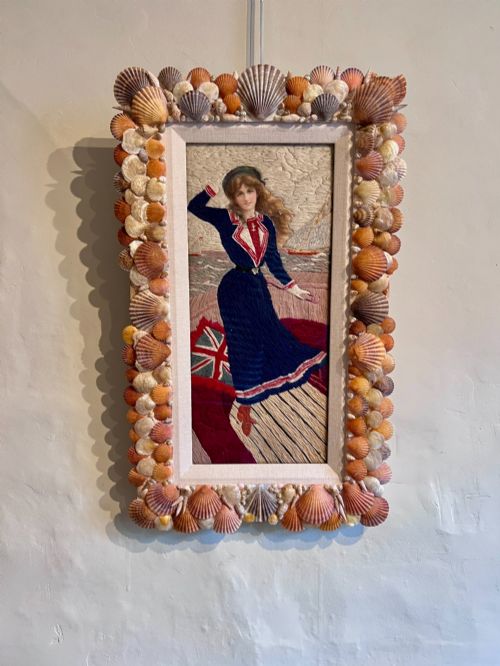
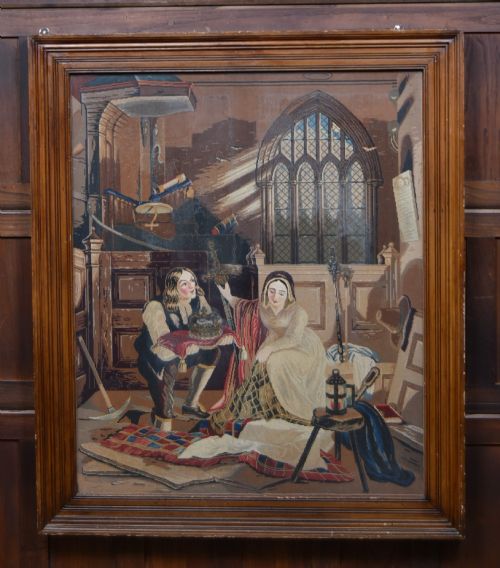
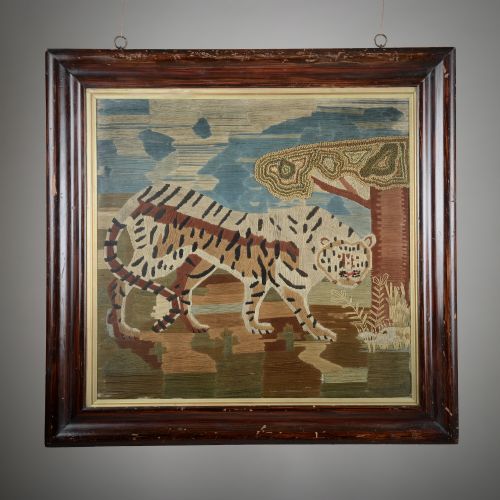
A victorian woolwork picture is a hand-stitched textile artwork produced during the nineteenth century, often displayed behind glass in a timber or gilt frame. These pieces encompass detailed figurative compositions, maritime scenes, and decorative animals created by makers across Britain and continental Europe.
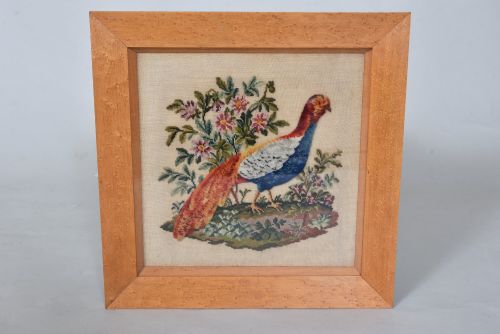
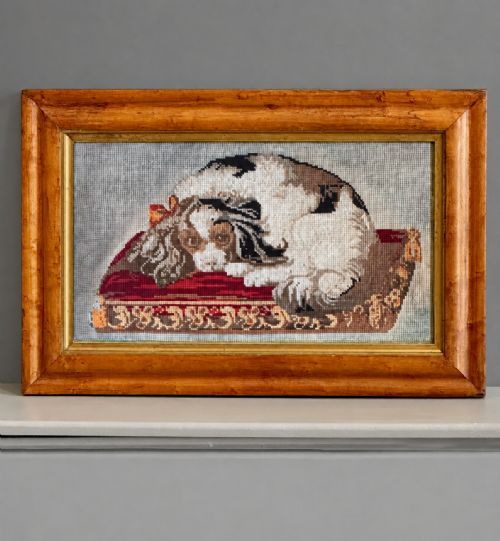
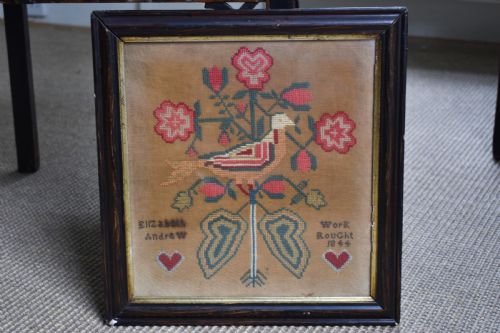
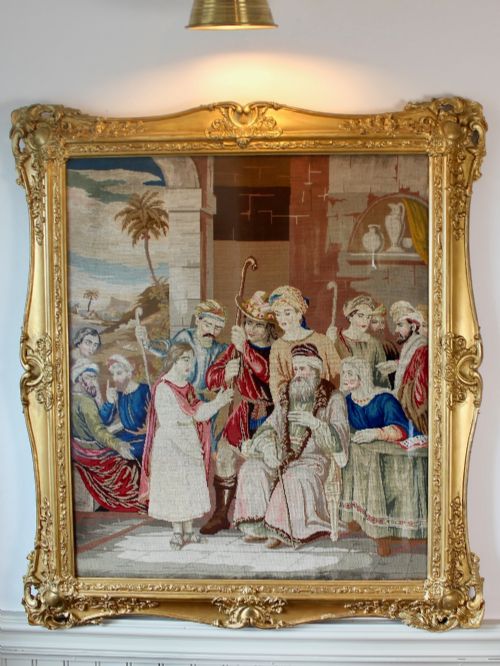
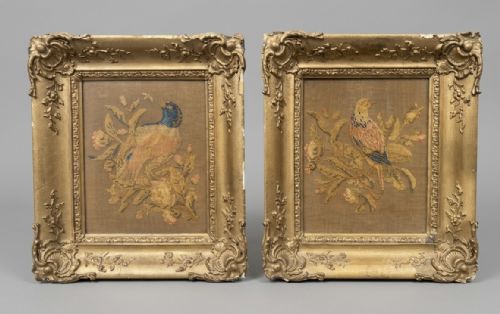
The selections available here range from modest samplers and plushwork pheasants to large Berlin woolwork tapestries depicting biblical narratives, royalty, and domestic animals. Many examples arrive mounted in original burr maple, rosewood, or oak frames.
Maritime subjects, particularly sailors' woolies depicting ships and figures, sit alongside Gothic Revival and Rococo Revival compositions. The overarching aesthetic relies on dense wool stitching on canvas foundations to form durable wall art.
Assessing quality and execution
The distinction between ordinary and superior pieces rests on the precision of the needlework, the complexity of the colour palette, and the fidelity of the composition. Finer Berlin work and carpet mosaic pictures demonstrate intricate shading and anatomical accuracy that lesser examples lack.
The integrity of the original framing, whether burr maple, rosewood, or giltwood, heavily influences the overall character of the piece. Well-preserved textiles retaining vibrant wool colours alongside undamaged original glazing represent the upper echelon of surviving works.
Victorian Woolwork Picture Retail Price Guide 2026
Typical asking prices for victorian woolwork picture among the pieces listed under this phrase on Sellingantiques today, from the lower quarter to the upper quarter. They describe what is for sale here now, not the wider market.
Recorded styles encompass Victorian Folk Art, Victorian Rococo Revival, Gothic Revival, and maritime folk art traditions.
The Victorian Woolwork Picture Glossary
- Berlin work
- A style of nineteenth-century needlepoint worked in wool on canvas from printed point-paper grids. This method popularised symmetrical floral and figurative designs across domestic interiors.
- Gros point
- A coarse needlepoint stitch using thick wool yarn on a canvas ground. It provides a durable texture suitable for large tapestries and pictorial backgrounds.
- Plushwork
- A variant needlework technique incorporating raised or clipped loops to create a tactile, velvety surface. This method appears on depictions of animals and birds.
Victorian Woolwork Picture: Frequently Asked Questions
How do I care for a victorian woolwork picture?
Protect the textile by hanging the piece away from direct sunlight to prevent the wool yarns from fading over time. Maintaining a stable indoor climate prevents moisture damage to the canvas and the wooden frame.
Keep the original glass clean using dry or minimally damp cloths, taking care not to introduce moisture to the historic backing materials.
What is Berlin woolwork?
Berlin woolwork refers to needlepoint embroidered from hand-coloured or printed grid patterns originating in Germany. This style became dominant during the mid-nineteenth century for domestic textile art.
The method allowed makers to produce complex pictorial scenes, religious narratives, and animal portraits with remarkable consistency.
Are these pictures usually framed?
Most surviving examples appear behind glass within period frames made from woods such as rosewood, burr maple, oak, or gilded moulding. Framing protected the delicate wool and canvas from dust and handling.
Original frames matching the mid-nineteenth-century date of the needlework add considerable context to the piece.