
Victorian Wooden Writing Table
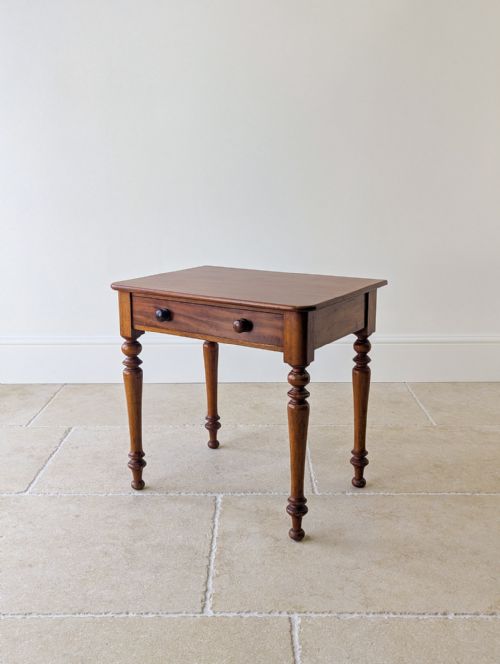
A victorian wooden writing table brings honest 19th-century craftsmanship and warm timber tones directly into a room, offering a sturdy surface for daily correspondence.
Victorian Wooden Writing Table
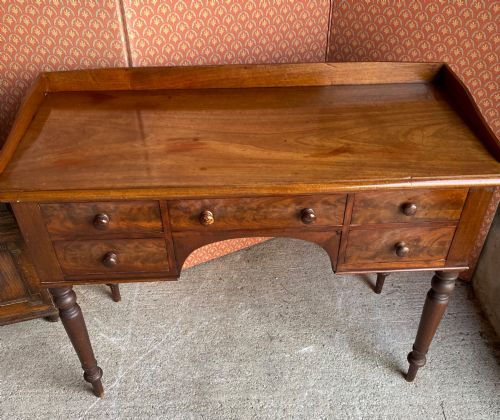
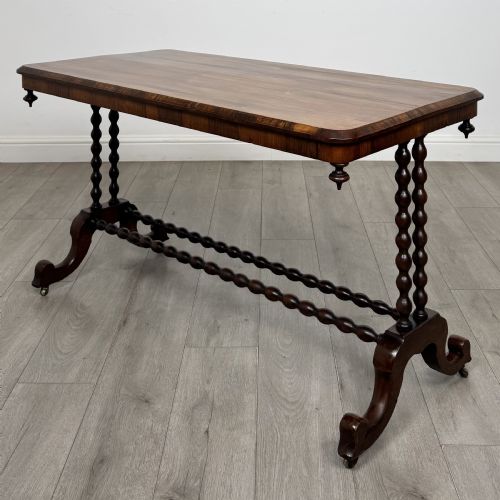
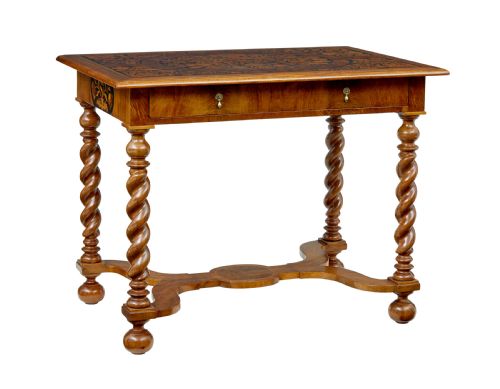
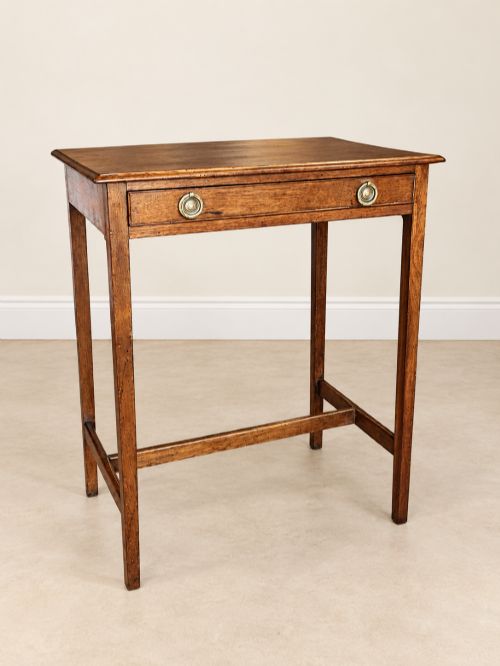
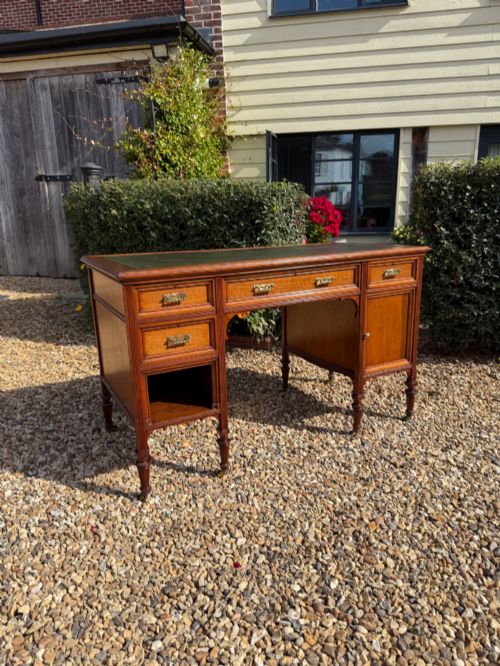
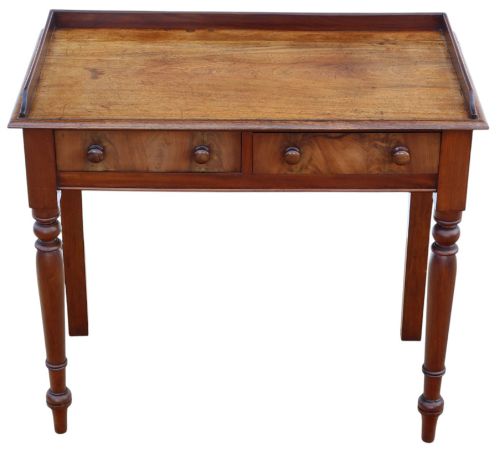
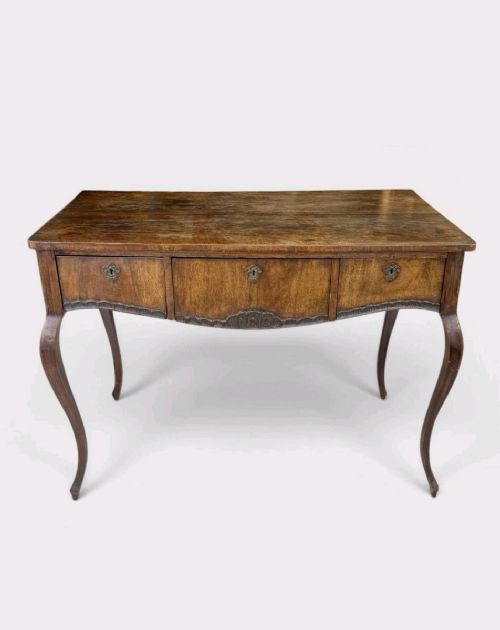
A victorian wooden writing table is fundamentally a practical piece of period furniture designed for correspondence, study, and administrative tasks. Buyers searching for a victorian wooden writing table encounter diverse forms spanning simple side tables with single drawers, larger library tables, and twin pedestal desks.
The materials predominantly feature solid timbers and veneers such as mahogany, walnut, and pine, often complemented by inset leather writing surfaces. Most examples date from the 19th century, reflecting the robust joinery and functional layouts typical of the Victorian era.
Materials and construction methods
Cabinet makers utilised dense hardwoods like mahogany and walnut alongside softer utilitarian woods such as pine and pitch pine for carcases and internal framing. Surfaces frequently display flame mahogany veneers or polished wood grains, supported by brass hardware and fitted with tooled leather inserts.
Joinery techniques relied on traditional hand-cut joints, sturdy pedestals, and dovetailed drawer construction to ensure structural longevity. Side tables and desks were built to withstand heavy daily use, employing solid timber panels and stable sub-frames.
Listings feature robust woods including mahogany, walnut, oak, and pine across various Victorian forms like pedestal desks, side tables, and washstands.
Assessing quality and craftsmanship
The distinction between standard utility furniture and superior examples lies in the selection of timber figures, such as flame mahogany or burr walnut, and the precision of the cabinet work. Finer pieces demonstrate careful attention to secondary timbers, finely dovetailed drawer linings, and well-preserved original brass fittings.
Proportion and architectural balance heavily influence the standing of a desk or table, with maker-stamped pieces and detailed decorative carvings commanding greater attention. The integrity of the original leather writing surface and the smoothness of the drawer action also indicate higher manufacturing standards.
Hobbs & Co.·Maple & Co·LIBERTY
The Victorian Wooden Writing Table Glossary
- Pedestal desk
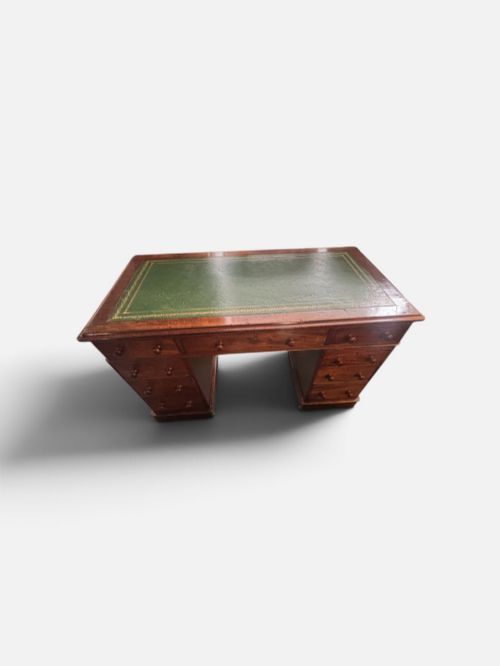
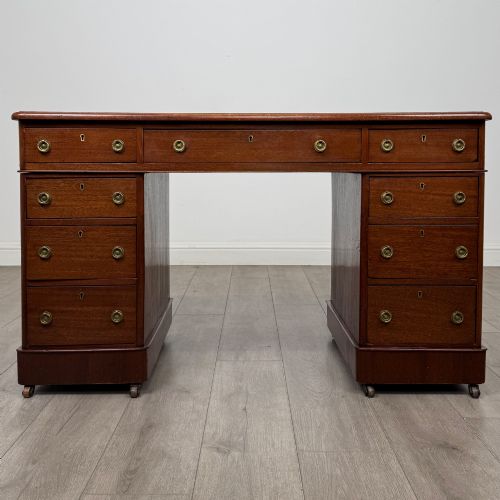
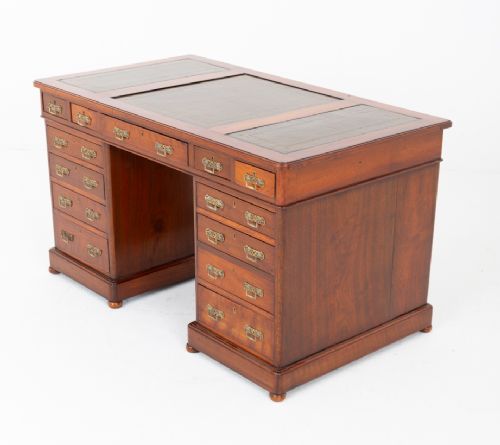
- A heavy freestanding desk comprising two supporting pedestals of drawers with a central desktop section. These pieces often feature inset leather writing surfaces.
- Kneehole desk
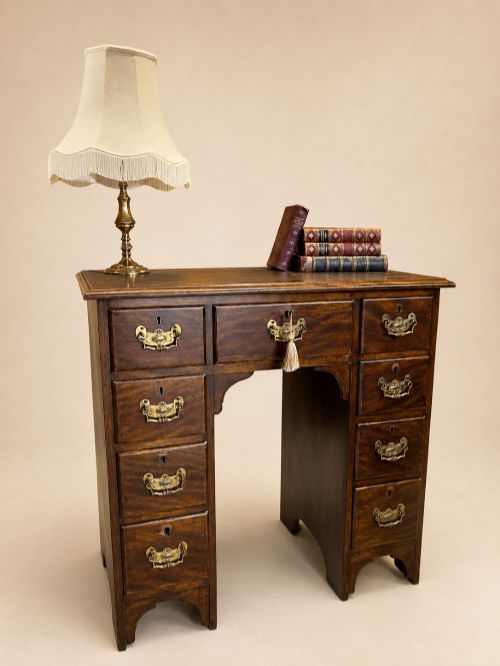
- A compact desk featuring a central recess for the legs, flanked by banks of smaller drawers. This form allows the user to sit comfortably close to the writing surface.
- Roll top desk
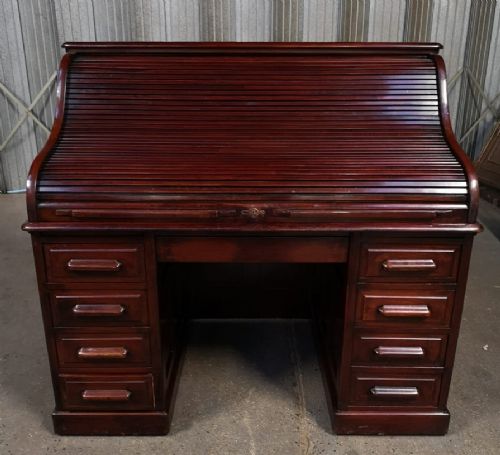
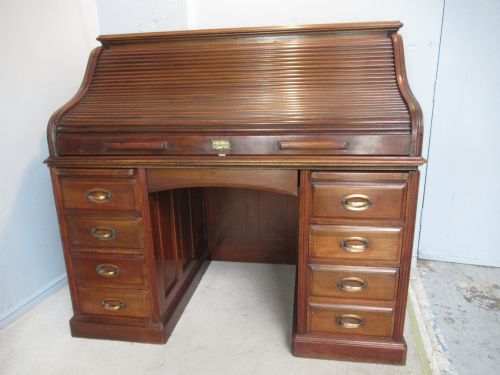
- A cylinder-topped desk featuring a slatted wooden tambour that pulls down to conceal the pigeonholes and writing drawers. It provides a secure way to close up correspondence.
- Flame mahogany
- A veneer cut from the fork of a mahogany tree to produce a dramatic, flickering grain pattern. Cabinet makers reserved this timber for prominent drawer fronts and tabletops.
- Parquetry inlay
- Geometric patterns formed by fitting small pieces of contrasting wood veneers together into a surface design. This technique adorns the tops of finer occasional tables.
Victorian Wooden Writing Table: Frequently Asked Questions
How do I use a writing table today?
These tables function well as compact laptop desks in living rooms or studies, providing a dedicated surface for daily correspondence without dominating the floor space.
Their sturdy timber construction and practical drawer storage accommodate modern stationery while maintaining a traditional interior aesthetic.
What is the difference between a writing table and a pedestal desk?
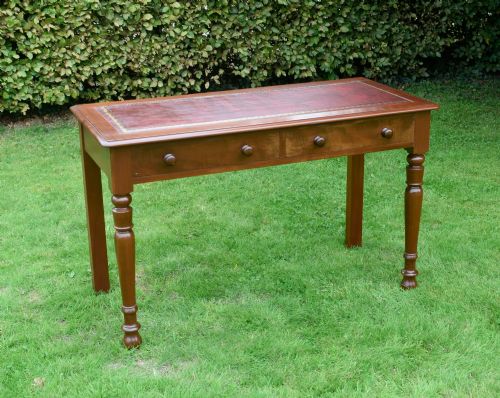
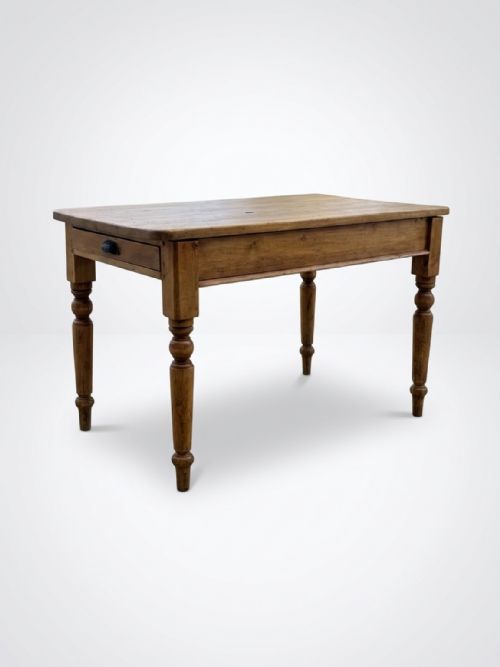
A writing table typically stands on four legs with one or more drawers beneath the top, offering a lighter and more open silhouette. A pedestal desk uses two banks of drawers to support the writing surface, providing substantial storage capacity.
Both forms belong to the broader category of 19th-century study furniture but serve different spatial and storage requirements.
Are the leather tops original?
Many surviving desks retain their original tooled leather inserts, often showing patination from decades of use. Others have received replacement leather during historical maintenance.
Examining the tooling and the edge gilt helps determine whether the leather surface reflects the period of the table.
How do I care for a mahogany writing table?
Maintenance requires regular dusting with a soft dry cloth and occasional application of traditional beeswax to nourish the timber. Direct sunlight and excessive heat sources should be avoided to prevent veneer cracking.
Protecting the leather top from moisture spills ensures the writing surface remains intact for everyday use.