



Victorian Wooden Weather Instrument
A victorian wooden weather instrument brings domestic barometers, stick barometers, and wall clocks into the home with traditional cabinet-making.
Victorian Wooden Weather Instrument
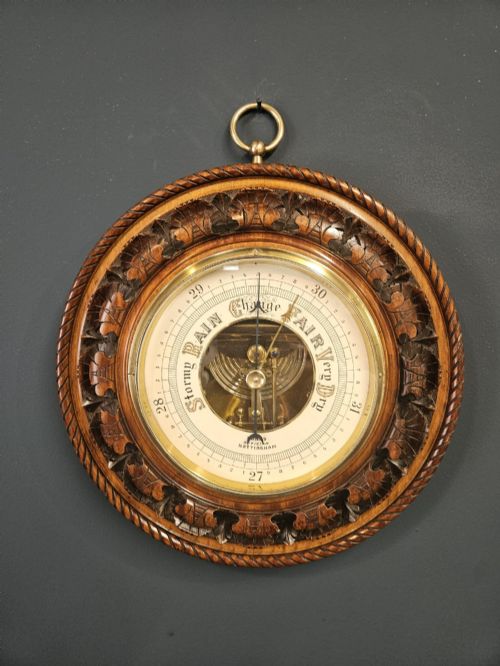
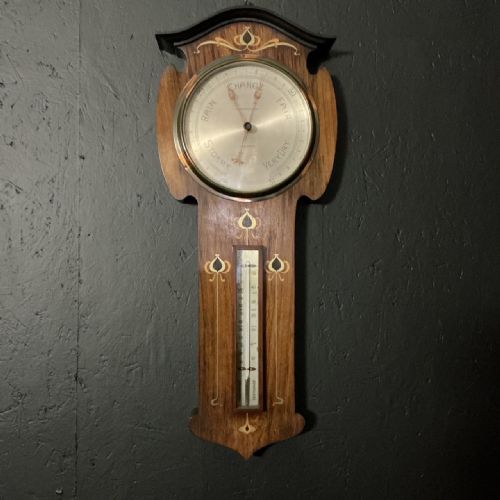
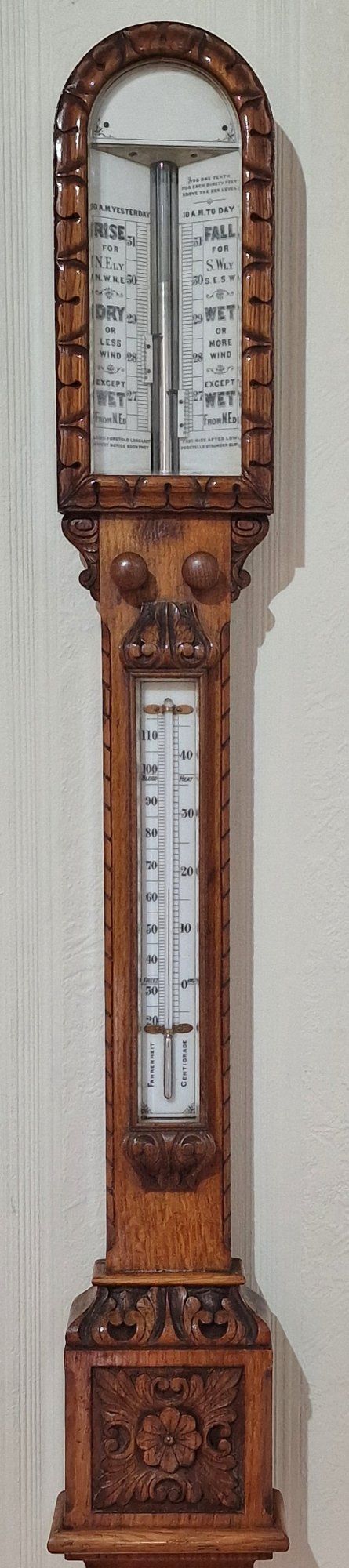
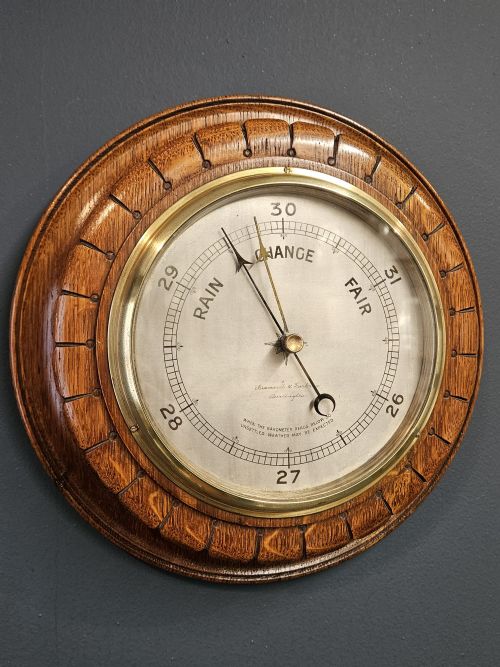
A victorian wooden weather instrument comprises barometers, stick barometers, wall clocks, and desk barometers housed in timber frames. These pieces monitor atmospheric pressure and temperature while serving as functional interior fittings.
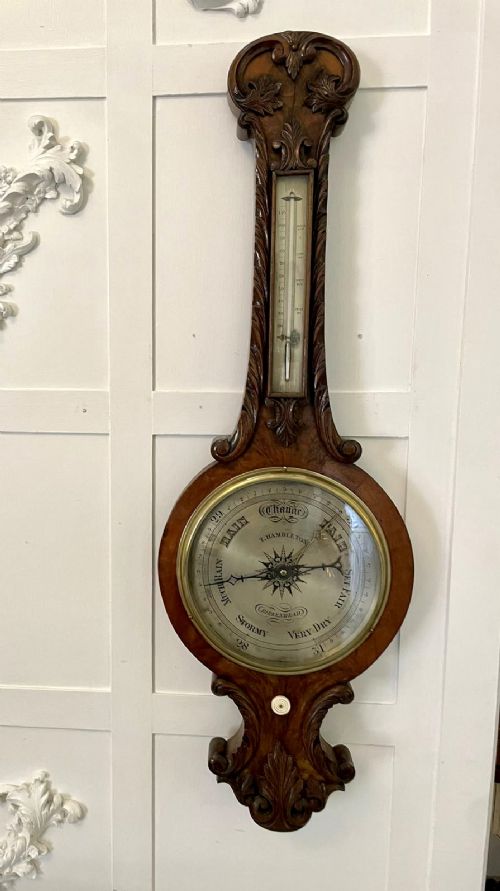
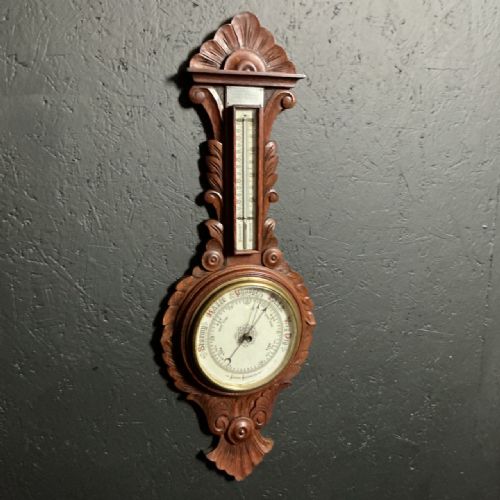
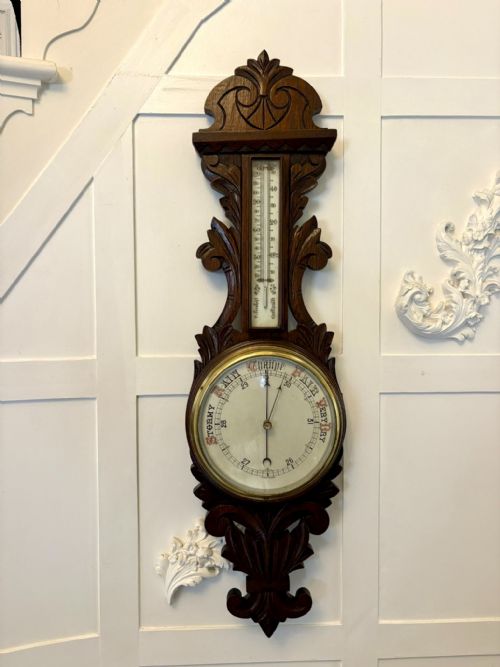
The version most commonly encountered on this page is the carved oak, walnut, or mahogany banjo barometer, often incorporating a thermometer alongside the main dial. Such instruments reflect both nineteenth-century scientific interest and domestic decorative tastes.
How they were made
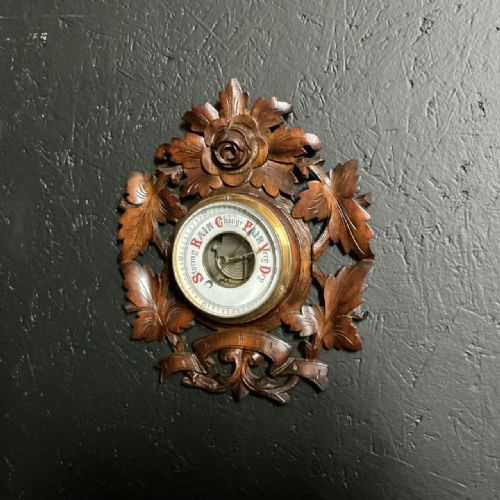
Cases utilise solid and veneered timbers including oak, walnut, mahogany, rosewood, and beechwood, frequently shaped through carving or inlaid with contrasting woods. Black Forest examples display detailed foliage, birds, and rocaille carving directly into the walnut or softwood ground.
Internal mechanisms combine brass fittings, silvered dials, and glass tubes containing mercury or aneroid capsules. Cabinets are constructed using traditional joinery methods to house delicate scientific instruments securely within the timber surround.
What varies in quality
Quality separates through the depth and crispness of the wood carving, the choice of timber figure such as burr walnut or figured mahogany, and the presence of marquetry inlay. Superior examples display balanced proportions and detailed sculptural work rather than flat, machine-cut surfaces.
Signatures on the silvered brass dial from makers such as Negretti and Zambra or W Watson & Sons elevate an instrument's standing. The legibility of the engraved lettering and the integration of secondary instruments like thermometers further distinguish finer productions.
Bramwell & Harbron of Darlington·W Watson & Sons·Negretti & Zambra·L Casatelli of Liverpool·J Groce, York·J Hicks of London·Pillischer London
The Victorian Wooden Weather Instrument Glossary
- Aneroid barometer
- An instrument measuring atmospheric pressure without liquid, using an expanding metal capsule connected to an indicator needle. This design allowed for more compact and varied wall-hanging and desk cases.
- Banjo barometer
- A domestic barometer housed in a distinctive shaped wooden case resembling a banjo, typically combining a damp-scale, thermometer, and large round dial. They emerged as a popular nineteenth-century hall furnishing.
- Stick barometer
- A tall, slender instrument containing a vertical glass tube of mercury against a vernier scale. These rely on direct atmospheric pressure acting on an open cistern.
- Admiral Fitzroy barometer
- A weather glass incorporating storm warnings and detailed instructions developed by the nineteenth-century meteorologist. They often feature extensive scale notes alongside the thermometer and barometer dials.
- Skeletonised
- A design where the internal mechanical works of the barometer or clock remain partially visible through the dial face. This highlights the brass gears and levers driving the indicator.
Victorian Wooden Weather Instrument: Frequently Asked Questions
How do I read a stick barometer?
Read the height of the mercury column against the scale using the adjustable vernier to track changes in atmospheric pressure.
Rising columns generally indicate improving weather conditions, while falling mercury points towards approaching rain or wind.
Where should I hang a wall barometer?
Hang the instrument on an interior wall away from direct sunlight, radiators, and heavy vibrations to protect the wooden case and internal mechanics.
Stable indoor temperatures ensure the barometer responds accurately to natural barometric shifts rather than local heating sources.
What is the difference between aneroid and mercury barometers?
Aneroid barometers use a sealed metal capsule that expands and contracts with pressure changes, operating entirely without liquid.
Mercury stick barometers rely on a column of liquid metal balanced against atmospheric pressure in a glass tube.
How do I care for the wooden case?
Dust the timber regularly with a soft, dry cloth and avoid applying modern liquid polishes that can degrade traditional wax or shellac finishes.
Maintain moderate room humidity to prevent the solid woods and veneers from cracking or warping over time.