


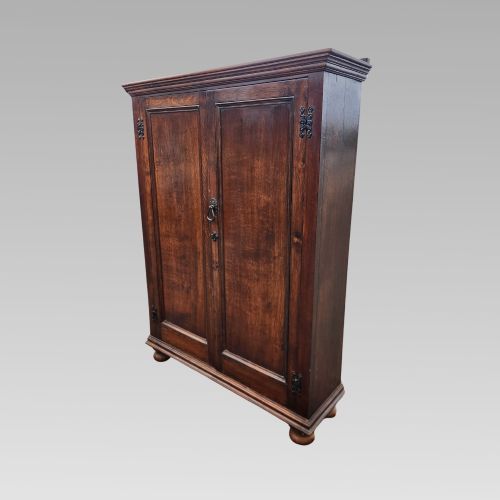

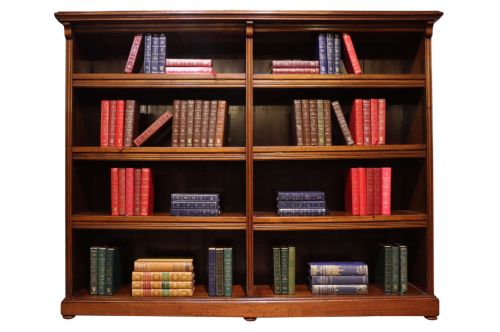
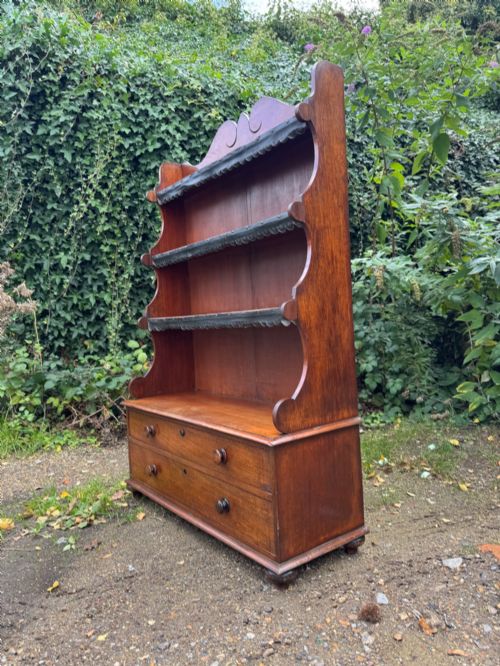
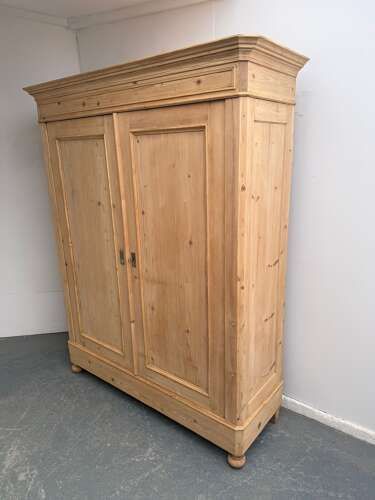

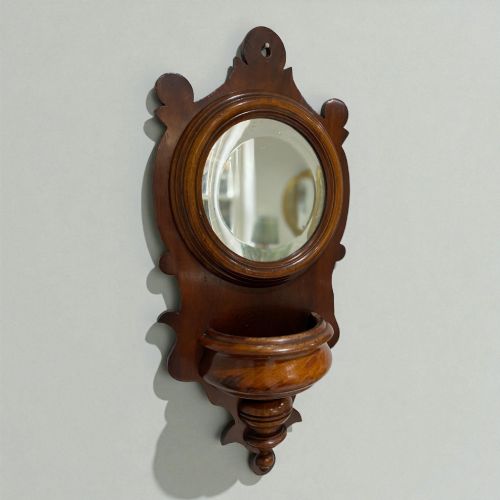
Victorian Wooden Shelves
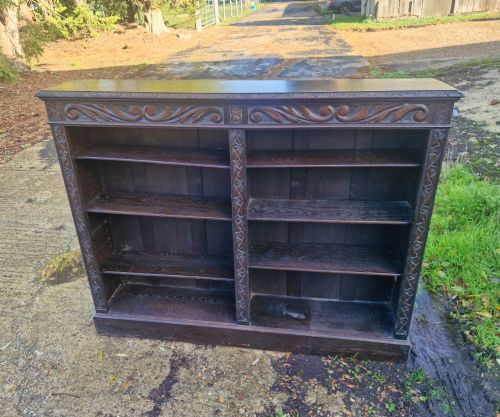
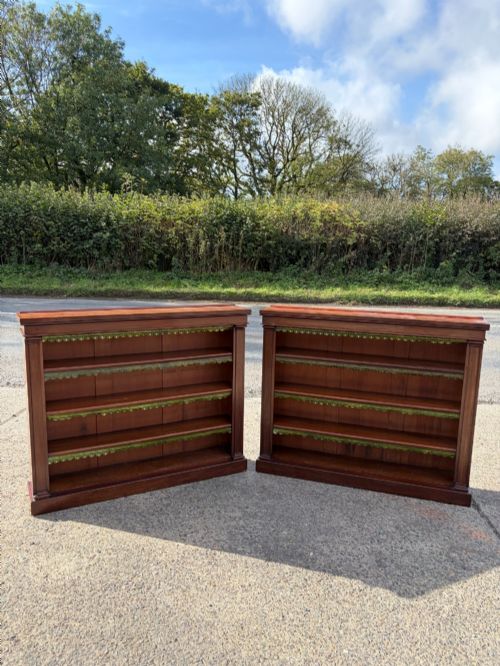
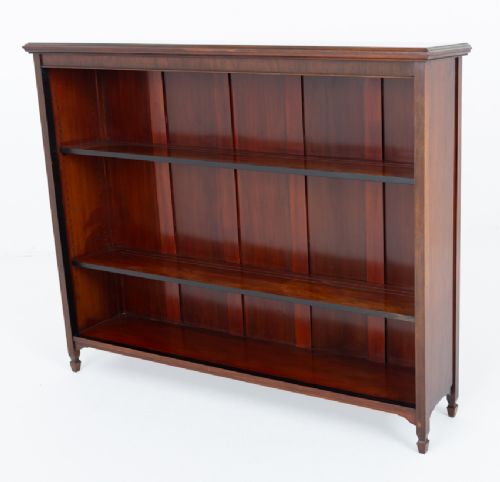
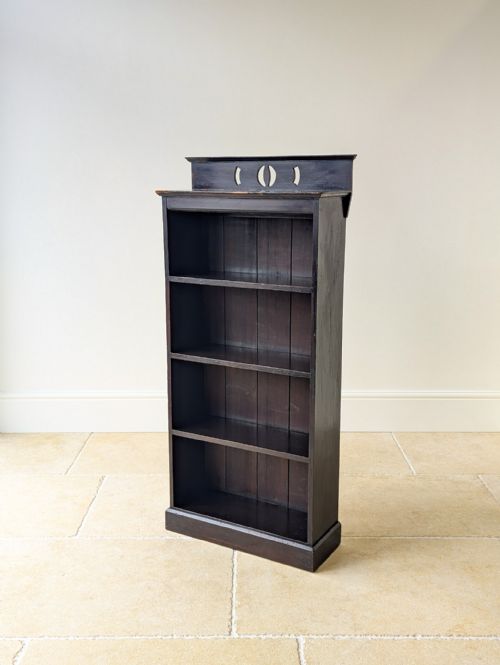
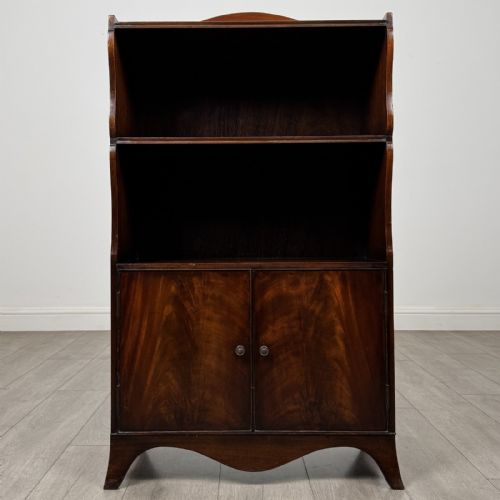
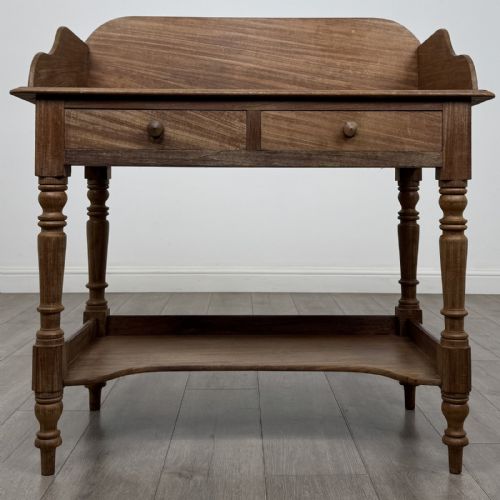
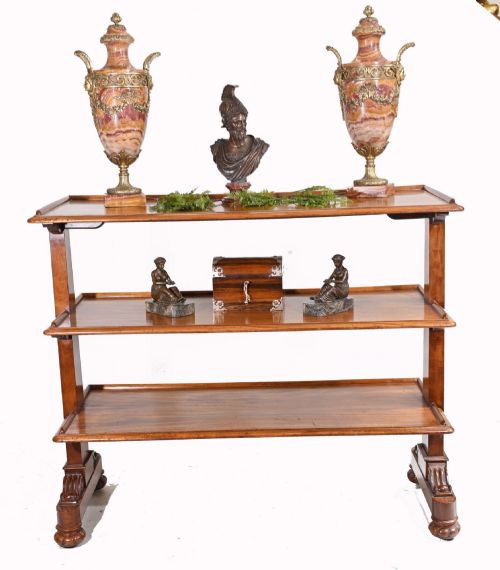
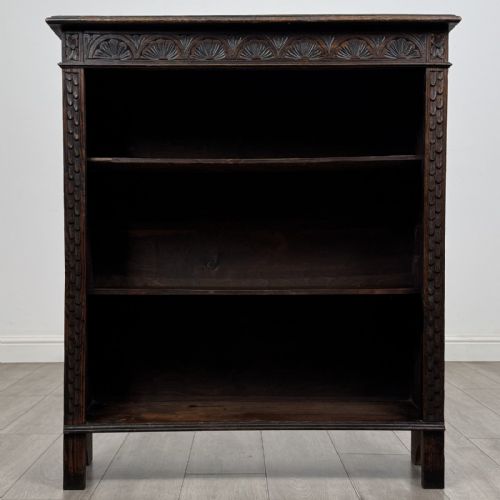
These Victorian wooden shelves and open bookcases bring practical storage and rich timber grain into everyday rooms.
Victorian Wooden Shelves
Victorian wooden shelves encompass open bookcases, wall hanging shelf racks, and tiered whatnots designed to hold books and display objects. These pieces emerge primarily from the nineteenth century, spanning from the early decades through the late Victorian and Edwardian eras.
The most frequent forms met on this page are open bookcases with adjustable shelves, alongside smaller wall brackets, side tables with galleried tiers, and corner whatnots. Makers utilised native and imported hardwoods to build functional display furniture for libraries, halls, and sitting rooms.
How they were made
Cabinet makers constructed these pieces predominantly from solid mahogany, oak, and walnut, often applying flame mahogany or burr walnut veneers to prominent surfaces. Timber selection governed the visual weight of each bookcase, whatnot, or wall rack.
Joinery techniques included adjustable shelf systems, raised galleries, carved details, and inlaid stringing. Brass castors, hinges, and ormolu mounts frequently finished pieces such as library bookcases and side tables.
Victorian Wooden Shelves Retail Price Guide 2026
Typical asking prices for victorian wooden shelves among the pieces listed under this phrase on Sellingantiques today, from the lower quarter to the upper quarter. They describe what is for sale here now, not the wider market.
What varies in quality
Quality rests upon the selection of timber figures, such as flame mahogany and burr walnut, and the crispness of hand-carved oak details or inlaid patterns. Finer bookcases display thoughtful proportions and careful timber matching across open fronts and side panels.
Structural refinement also separates standard utility pieces from exceptional commissions, seen in smoothly operating adjustable shelf mechanisms and robust bracket feet or brass castors.
Johnstone And Jeanes·German H.A.C.
The Victorian Wooden Shelves Glossary
- Whatnot
- A multi-tiered piece of freestanding furniture designed for displaying ornaments, books, or small objects. These units often feature barley twist supports or corner alignments.
- Gallery
- A raised ornamental border running along the edge of a shelf, top surface, or table. This feature kept small items from sliding off.
- Bookcase
- A piece of furniture fitted with horizontal shelves for storing books. Many Victorian examples feature adjustable wooden shelving.
- Veneer
- A thin layer of figured timber, such as flame mahogany or burr walnut, applied over a secondary wood base. This technique exposed rich grain patterns on cabinet fronts.
- Bracket
- A projecting architectural support or wall-mounted shelf. These pieces served to hold clocks, mirrors, or small display items.
Victorian Wooden Shelves: Frequently Asked Questions
How do I adjust the shelves?
Most Victorian open bookcases utilise traditional wooden ratchets, brass pegs, or slotted uprights inside the cabinet walls. You simply lift the shelf slightly to release the support and move it to the desired height.
Take care when shifting older timbers to avoid catching the polished edges against the interior lining plates.
Where should I place a whatnot?
Whatnots fit well in corners, empty wall spaces, or beside seating areas where their multiple tiers can hold books and small decorative objects. Corner whatnots make efficient use of unused angles in smaller rooms.
Ensure the floor is even so that taller tiered stands remain stable without wobbling.
How do I clean walnut and mahogany?
Dust the timber regularly with a soft, dry cloth to prevent grit accumulation on the polished surfaces. Avoid using modern silicone sprays that can build up a cloudy residue over the traditional finish.
Feed the wood occasionally with a quality wax polish to maintain the natural lustre of the mahogany or walnut grain.
What is a raised gallery used for?
A raised gallery forms a protective rail around the top surface of a washstand, side table, or bookcase. It originally prevented small wash accessories or books from rolling onto the floor.
Today, this decorative feature frames the top surface and adds distinct height to low-profile furniture.