
Victorian Wooden Office Desk
A victorian wooden office desk brings solid timber construction and practical compartments to a working space, offering enduring utility alongside period character.
Victorian Wooden Office Desk
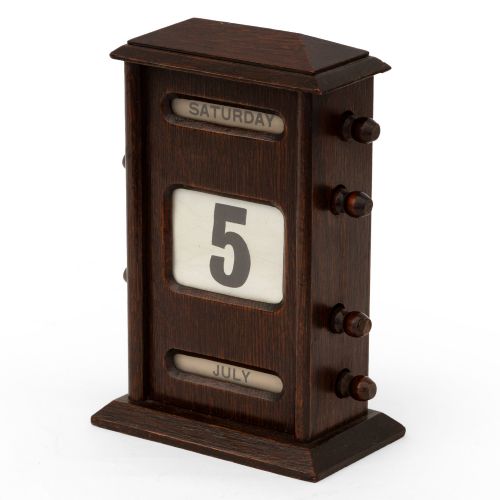
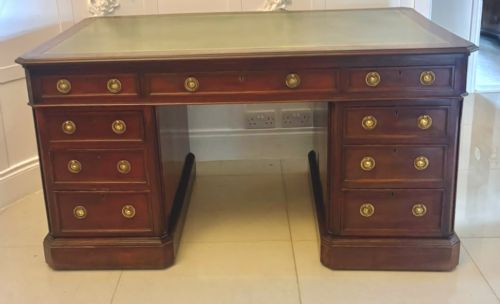
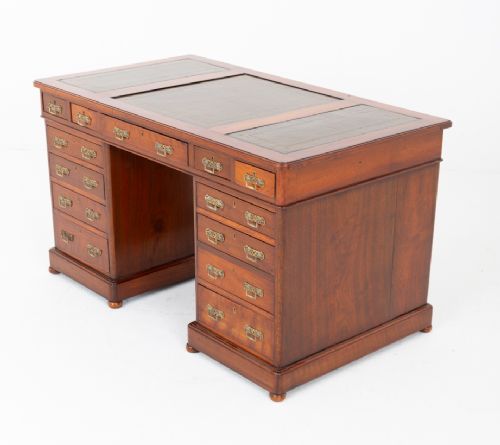
A victorian wooden office desk represents the heavy-duty workspace furniture of the nineteenth century, built to manage correspondence and paperwork. These pieces range from substantial twin pedestal kneehole desks to cylinder desks and roll top writing tables.
The objects originate primarily from the Victorian period, with related pieces appearing from the wider nineteenth century and the early twentieth century. Construction often includes fitted stationery drawers, writing slides, and brass hardware designed for daily administrative use.
Materials and Construction
Makers utilised dense timbers such as mahogany, oak, walnut, ash, elm, and beech to build sturdy office furniture capable of enduring daily commercial use. These woods were frequently combined with leather writing surfaces and brass handles, hinges, or castors.
Joinery methods focused on structural integrity, evident in panelled pedestal construction, fitted internal stationery compartments, and turning on chairs and desk accessories. Selected pieces incorporate burr walnut veneers or pitch pine to achieve distinct grain patterns while maintaining robust frames.
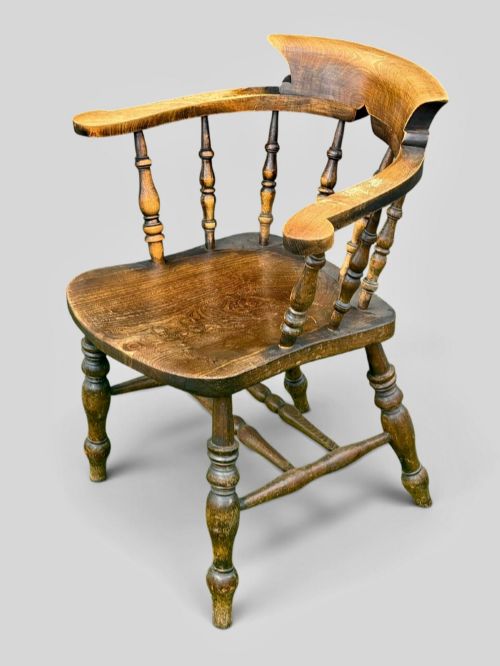
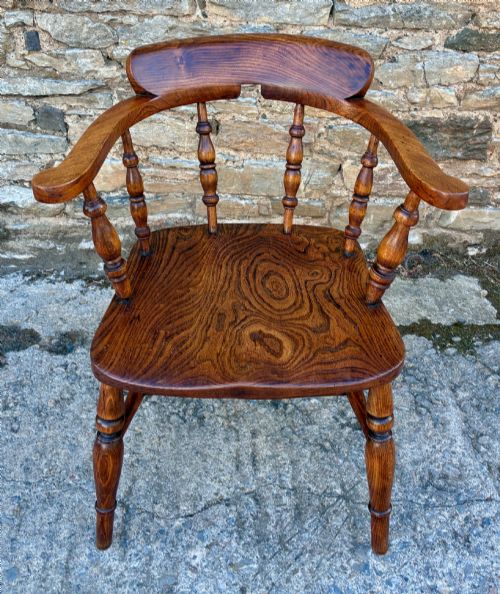
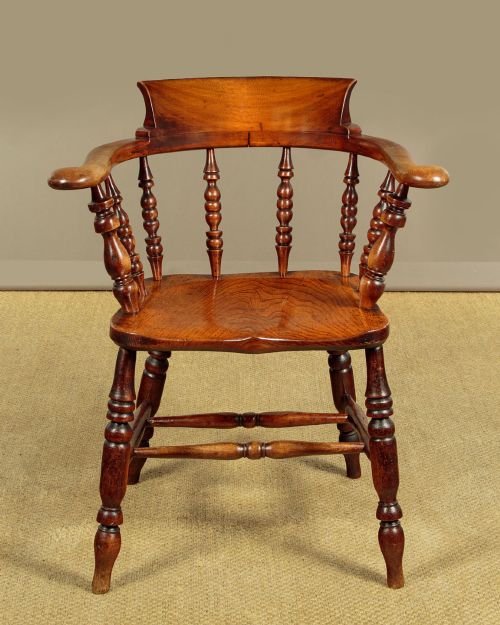
Current listings feature pedestal desks, cylinder desks, and captain's chairs across Victorian, Edwardian, and Arts and Crafts styles.
Assessing Quality and Execution
Quality separates simple utility furniture from exceptional cabinet work through the selection of timber figures, such as burr walnut or figured mahogany, and the precision of the internal drawer construction. Superior examples retain original brass hardware, fitted stationery interiors, and matching revolving mechanisms without later alterations.
The distinction also lies in the joinery and proportion, where finely turned columns, panelled backs for freestanding placement, and smooth sliding writing surfaces demonstrate higher workshop standards. Original leather inserts and well-preserved maker attribution further elevate the standing of a desk or chair.
Hobbs & Co.·Maple & Co
The Victorian Wooden Office Desk Glossary
- Pedestal desk
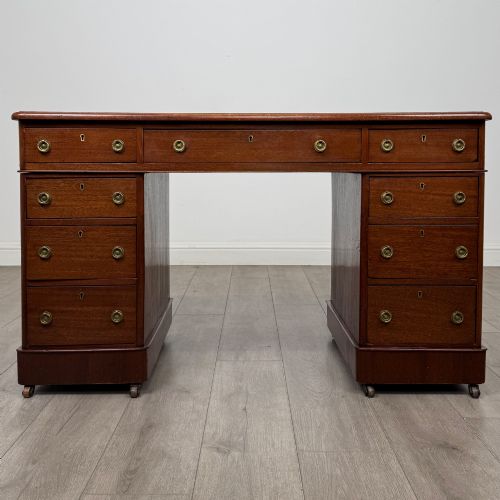
- A heavy office desk featuring two vertical banks of drawers supporting a central writing surface. These large pieces often include kneeholes and fitted stationery compartments.
- Cylinder desk
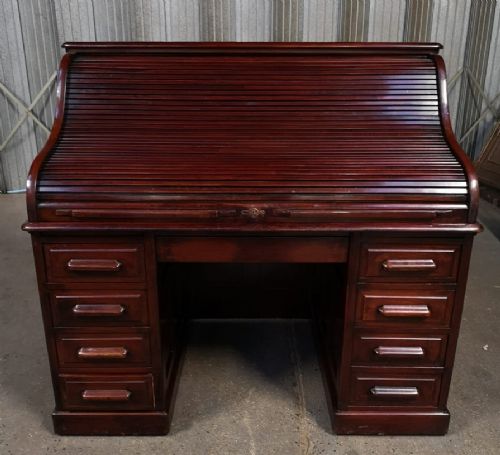
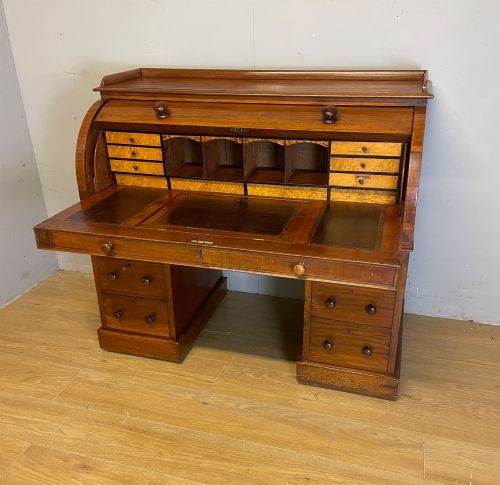
- A workspace featuring a curving quarter-circle wooden shutter that rolls back to reveal writing surfaces and pigeonholes. It encloses paperwork securely when not in use.
- Kneehole desk
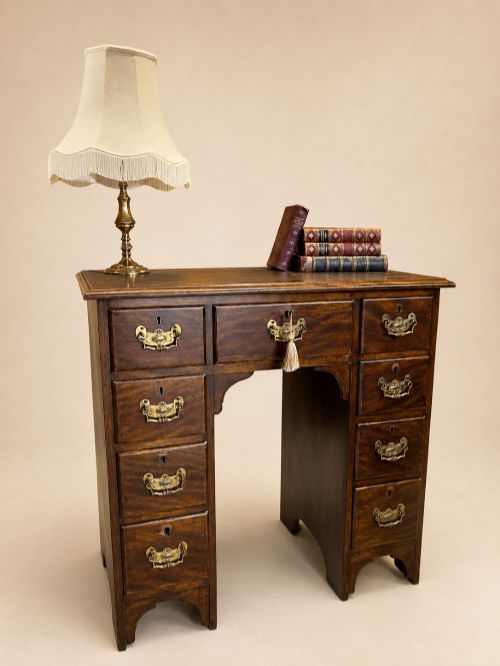
- A compact desk configuration featuring a recessed central space for the legs beneath the writing surface, flanked by pedestals of drawers.
- Captain's chair
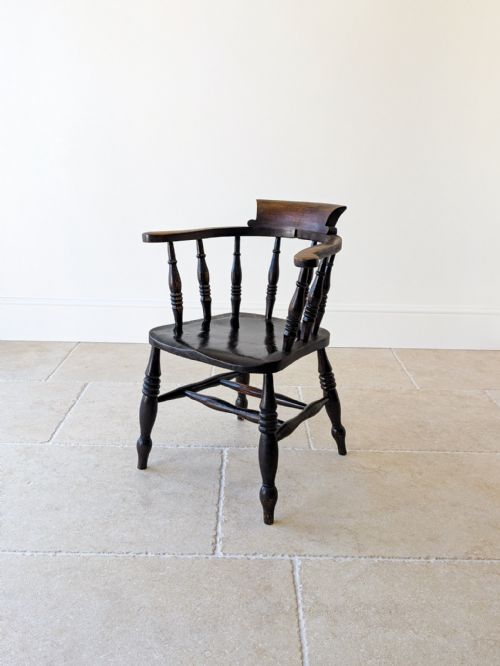
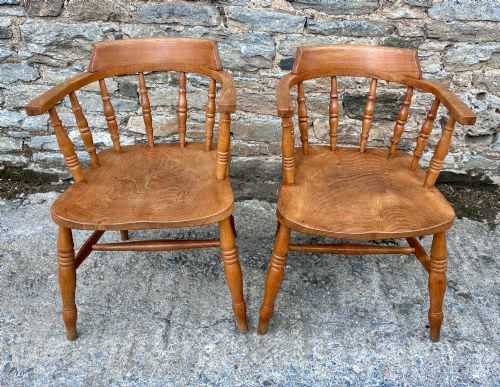
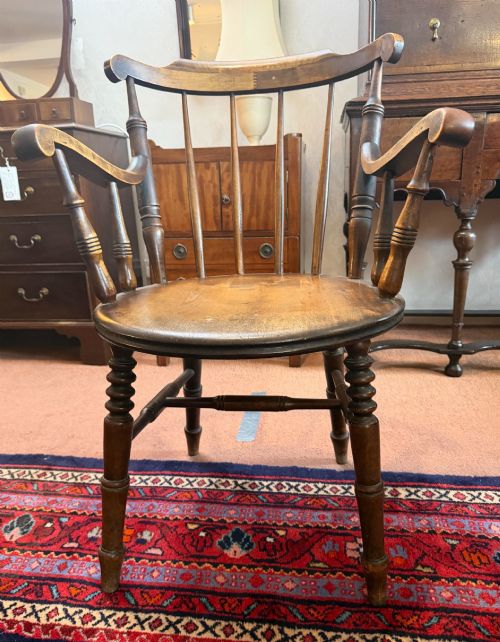
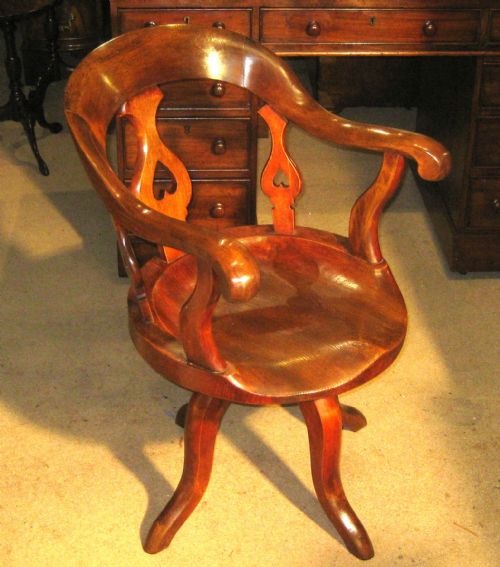
- A sturdy wooden armchair with a low back and rounded top rail supported by vertical spindles, frequently paired with office desks.
- Revolving desk chair
- A swivelling office armchair mounted on a central wooden or iron spindle, designed for mobility while seated at a large desk.
Victorian Wooden Office Desk: Frequently Asked Questions
What is a pedestal desk?
A pedestal desk is a heavy workspace featuring two columns of drawers that support a main writing top. These pieces provide substantial storage for stationery and documents.
They function as centrepieces in private studies or offices, often finished on all sides to allow freestanding placement in the middle of a room.
How do cylinder and roll top desks differ?
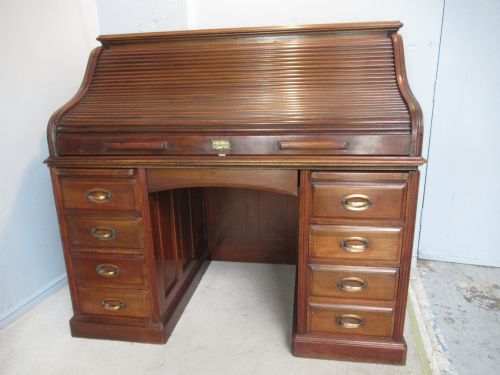
A cylinder desk uses a solid curved wooden shutter that slides in a track to cover the writing area. A roll top desk uses slatted wooden tambour strips instead.
Both forms conceal interior pigeonholes and small drawers when closed, protecting confidential correspondence and writing materials.
Which woods were used for office desks?
Makers constructed office furniture from dense hardwoods including mahogany, oak, walnut, ash, elm, and beech. These timbers provided the necessary strength for heavy daily administrative tasks.
Finer decorative woods like burr walnut and maple appeared on select surfaces to enhance the visual appeal of executive workspaces.
How are swivel desk chairs structured?
Revolving desk chairs feature timber seats and spindle backs mounted on a central vertical pivot mechanism. This allows the user to turn easily while seated at a large pedestal desk.
Many examples combine elm and beech or solid mahogany, often resting on four-legged wooden or cast-iron bases with castors.
What is a Dickins desk?
A Dickens desk is a specific pedestal form featuring a raised superstructure of small drawers and pigeonholes above the main writing surface. It offered segregated storage for correspondence.
This design gained popularity during the Victorian era for managing large volumes of handwritten letters and administrative ledgers.