



Fitted Mahogany Cylinder Desk
These fitted mahogany cylinder desks offer hidden writing surfaces and pigeonholed interiors, bringing traditional craftsmanship and enclosed storage to your study.
Fitted Mahogany Cylinder Desk
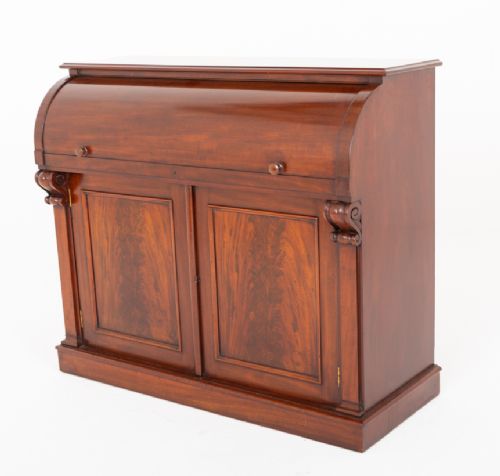
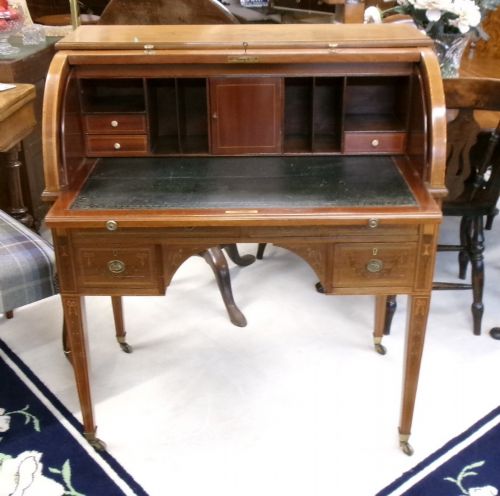
A fitted mahogany cylinder desk conceals a writing surface beneath a curved wooden roll or cylinder, which slides back to reveal a fitted interior of small drawers and pigeonholes. When you search for a fitted mahogany cylinder desk, you are looking at substantial pieces of antique furniture designed for private correspondence and paperwork.
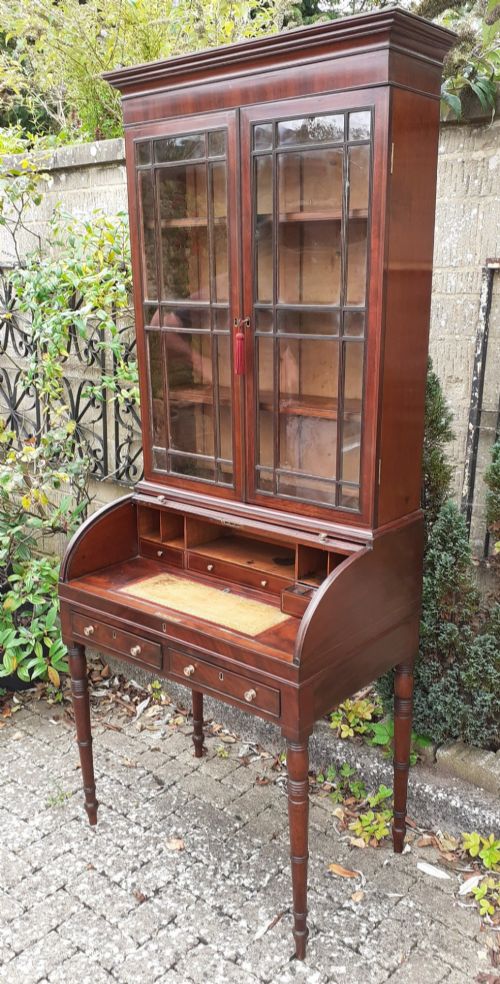
The versions you are most likely to meet on this page span the Georgian, Victorian, and Edwardian periods, including both compact autonomous desks and larger bureau bookcases. These pieces combine rich timber grains with functional compartments, reflecting the changing interior storage needs of the nineteenth and early twentieth centuries.
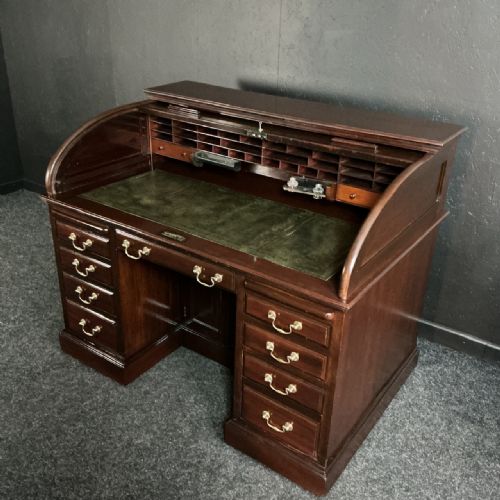
Makers utilised dense timbers and decorative veneers to create these desks, ranging from twin pedestal formats to smaller freestanding writing tables. Each example demonstrates how workspace organisation was handled before the era of modern office furniture.
How they were made
Cabinet makers constructed these desks using solid mahogany and flame mahogany veneer, often accentuating the primary timber with satinwood inlay. The curved cylinder shutter requires precise woodworking, sliding smoothly along grooved tracks to cover the writing surface.
Internal components typically incorporate leather writing inserts and fine brass handles, while glass panels feature in the bookcase upper sections found on taller bureau variants. Structural integrity relies on traditional joinery techniques suited to heavy domestic furniture.
Listings span the Georgian, Victorian, Edwardian, and 1920s periods, utilising mahogany, flame mahogany veneer, satinwood inlay, brass, leather, and glass.
What varies in quality
Quality in these desks rests upon the choice of timber figure, such as the selection of flame mahogany veneer, and the crispness of any satinwood inlay work. Superior examples demonstrate seamless movement in the cylinder mechanism and precise fitting within the internal pigeonholes and small drawers.
The overall proportion and stylistic restraint also distinguish finer pieces, whether built in a restrained Victorian manner or influenced by earlier Chippendale styles. Better workshops invested greater care in finishing secondary timbers and ensuring the stability of pedestal and freestanding frames.
Tudor And Burrey Shrewsbury
The Fitted Mahogany Cylinder Desk Glossary
- Cylinder top
- A curved wooden shutter that rolls back to cover and uncover the desk interior. This mechanism provides secure concealment for correspondence and writing materials.
- Flame mahogany veneer
- A thinly sliced wood showing a fiery, flamed grain pattern applied to a stable base timber. It was selected for its striking visual appearance on prominent surfaces.
- Pedestal desk
- A heavy writing desk supported by two banks of drawers or cupboards beneath the top. This form provides substantial storage alongside the upper cylinder compartment.
- Satinwood inlay
- Contrasting pale hardwood inserted into the darker mahogany surface in decorative patterns. It adds fine detail to drawers, borders, and writing panels.
- Bureau bookcase
- A tall combination piece featuring a desk section below and glazed shelving doors above. This dual-purpose form houses both books and writing equipment within a single unit.
Fitted Mahogany Cylinder Desk: Frequently Asked Questions
How do cylinder desks work?
A curved wooden shutter slides smoothly along tracks to conceal the internal writing surface and pigeonholes. Pushing the cylinder back reveals the fitted interior for daily correspondence.
This mechanical roll top action protects the desk contents while maintaining a tidy appearance when the workspace is not in use.
What is inside the fitted interior?
The interior typically contains small storage drawers, open letter slots, and occasionally secret compartments behind miniature doors. A leather-lined pull-out writing slide is often integrated beneath these compartments.
Such meticulous internal arrangement reflects the Victorian and Edwardian dedication to organised household administration and letter writing.
Where were these desks placed?
These pieces traditionally occupied private studies, libraries, and principal reception rooms in large houses. Freestanding variants could sit away from walls to showcase mahogany grain on all sides.
Today they function effectively in home offices and living spaces, offering enclosed storage for modern stationery and laptops.
How do I date a cylinder desk?
Dating relies on stylistic clues, timber choice, and construction methods associated with periods like the Georgian, Victorian, and Edwardian eras. Earlier pieces often display restrained lines, while late nineteenth and early twentieth-century examples may incorporate revival details.
Examining secondary woods and internal drawer construction provides further evidence of the manufacturing decade.