



Victorian Wooden Canterbury
A victorian wooden canterbury holds sheet music or periodicals with compartmented grace, bringing practical nineteenth-century elegance to any sitting room.
Victorian Wooden Canterbury
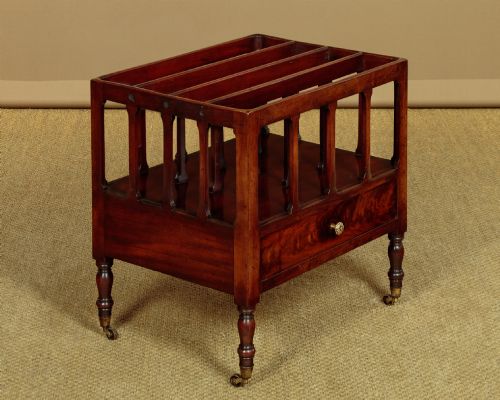
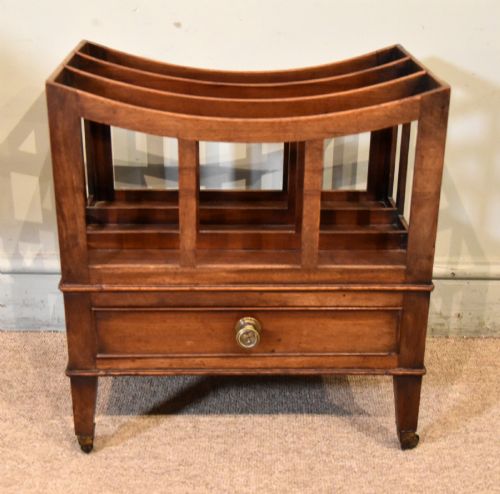
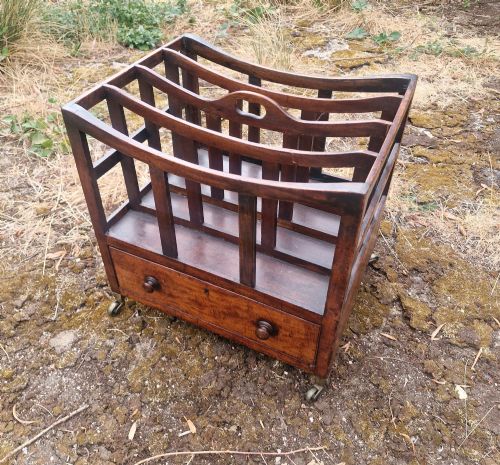
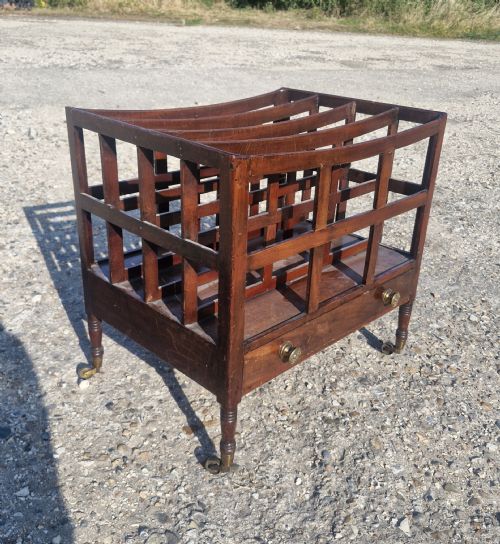
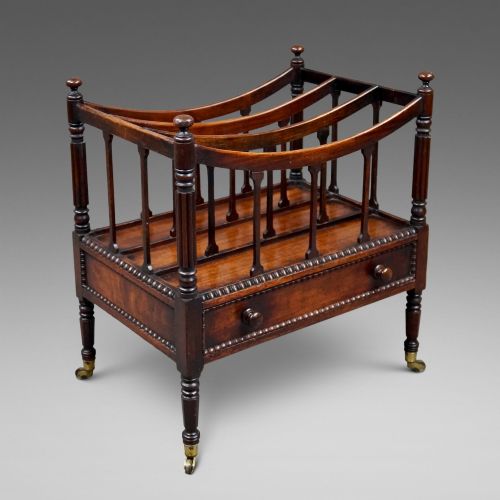
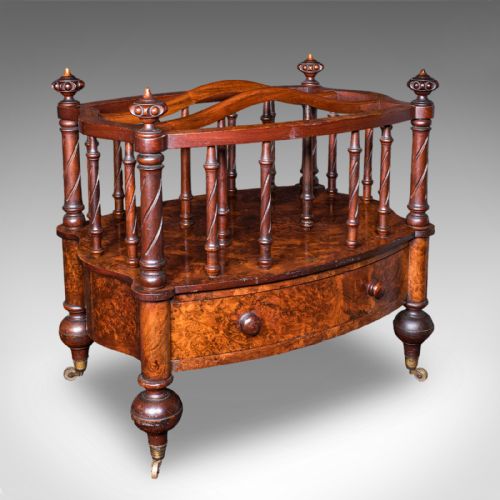
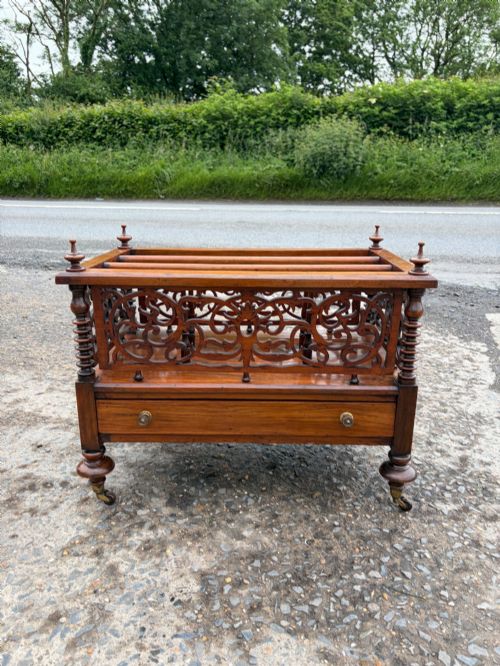
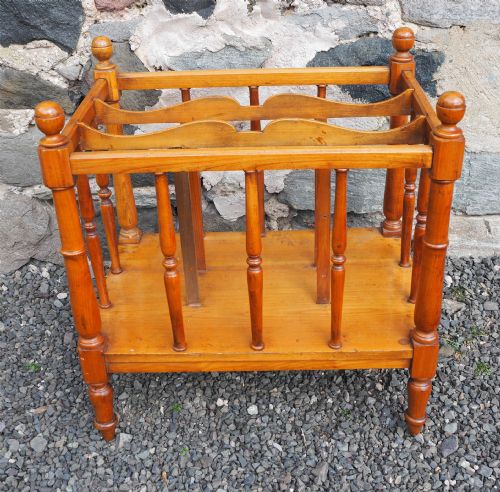
A victorian wooden canterbury is a dedicated stand designed for holding sheet music, newspapers and magazines, often featuring partitioned sections above a low drawer and castors. These pieces emerged strongly during the nineteenth century, with mahogany and walnut variants appearing frequently across the periods.
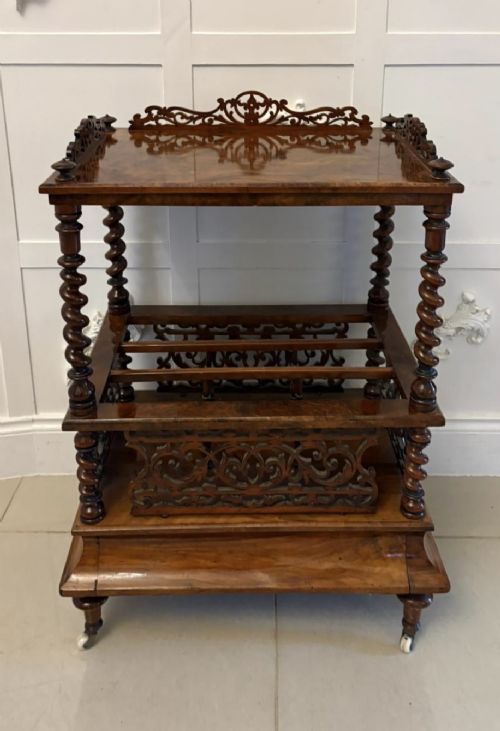
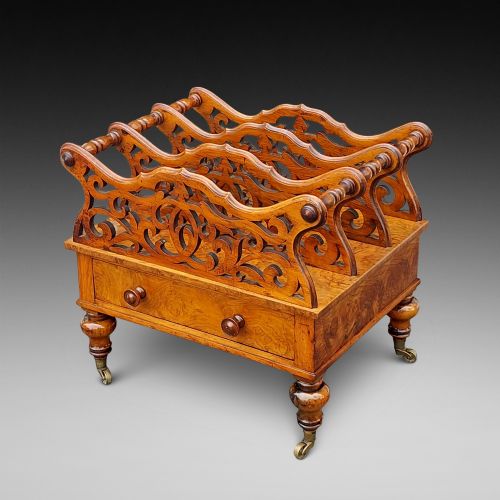
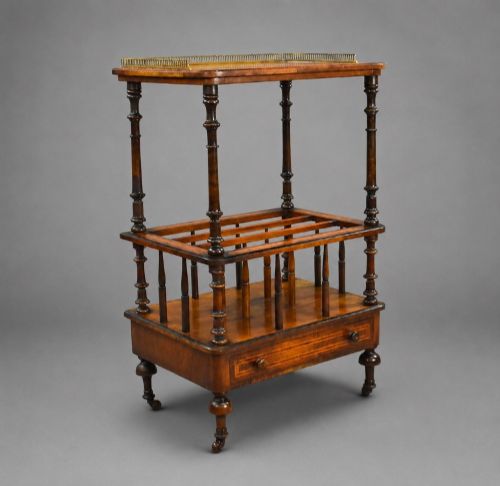
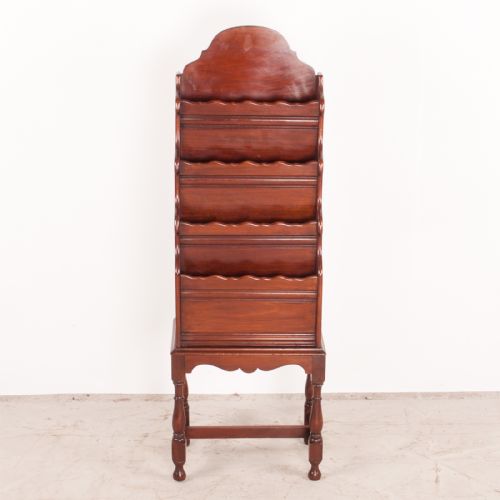
The selections span from Regency and William IV examples through to Aesthetic Movement cabinets and Edwardian pieces. Buyers will encounter freestanding music stands, tiered whatnots, and low magazine racks with pierced scroll divisions or turned spindles.
Materials and Technique
Cabinetmakers utilised rich timbers such as mahogany, burr walnut, rosewood, satinwood and ebonised wood to build these stands. Many pieces incorporate decorative marquetry inlay, brass mounts and ceramic or porcelain details.
Structural elements rely on joined divisions, turned spindles and sometimes a lower drawer fitted beneath the main rack. French polishing and careful timber selection defined the surface finish of these functional furnishings.
Materials span mahogany, burr walnut, rosewood, satinwood, fruitwood, brass and ceramic elements.
Judging Quality
The calibre of a piece rests upon the figure of the timber, particularly in burr walnut and figured mahogany surfaces. Sharply executed fretwork, crisp turning on spindles and intricate marquetry distinguish finer workshops from simpler production.
Proportion and structural integrity separate standard examples from exceptional ones. Pieces that retain original castors, smooth-running drawers and clean joinery demonstrate superior craftsmanship.
Henry Ogden and Son·Howard and Sons
The Victorian Wooden Canterbury Glossary
- Canterbury
- A low stand with partitioned upright sections used originally for holding music folios and later for magazines. It typically includes a small drawer at the base.
- Whatnot
- A piece of open shelving with multiple tiers supported by slender pillars, often combined with a canterbury base.
- Marquetry
- Decorative veneer work arranged in pictorial or geometric patterns using various coloured woods. It adds ornamental detail to the top surfaces and drawer fronts.
- Ebonised wood
- Timber stained or treated to imitate ebony. This dark finish gained popularity during the nineteenth century.
- Pierced scroll
- Cut-out woodwork shaped in curving, scroll-like forms. It defines the profile of many divider partitions.
Victorian Wooden Canterbury: Frequently Asked Questions
What is a victorian wooden canterbury used for?
These stands were originally constructed to hold sheet music near a piano or parlour instrument. Later, they served effectively for organising newspapers and periodicals in sitting rooms.
Today, they function well beside armchairs for holding books and magazines while adding period character to a room.
How do I identify a Regency canterbury?
Regency pieces often display classical lines, using dense timbers like rosewood or mahogany with restrained brass detailing. They frequently pre-date the Victorian era proper.
Turned supports and sabre legs or brass castors are common characteristics found in pieces from this earlier period.
Are all canterburys made of mahogany?
Mahogany appears frequently, but makers also utilised burr walnut, rosewood, satinwood, fruitwood and ebonised wood. Walnut became especially popular during the mid-Victorian decades.
Different timbers reflect the changing stylistic preferences of the nineteenth century, from dark Regency mahogany to figured walnut.
What is the difference between a whatnot and a canterbury?
A canterbury is primarily built around divided compartments for holding upright folios or magazines, often with a low drawer underneath. A whatnot consists mainly of open tiered shelves for display.
Some hybrid pieces combine both forms, featuring display tiers above the traditional divided rack.