




Victorian Wildlife Artwork
Victorian wildlife artwork captures the untamed spirit of nature through meticulous 19th-century oil paintings, delicate watercolours and signed animalier etchings.
Victorian Wildlife Artwork
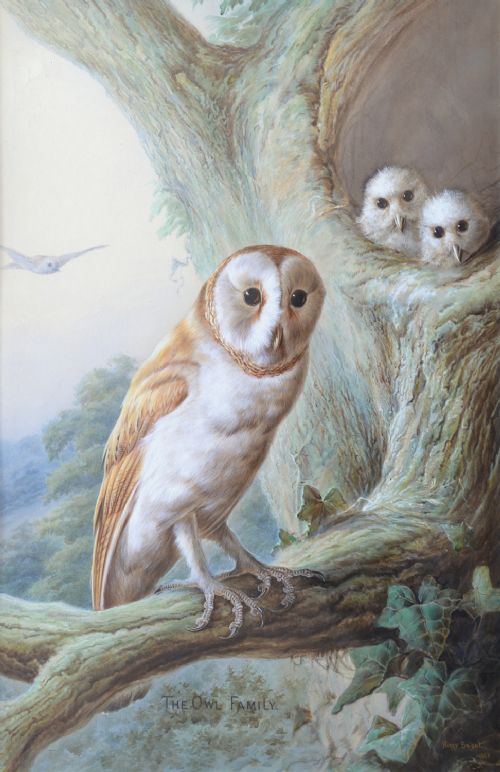
Victorian wildlife artwork encompasses framed prints, fine art paintings and studies on paper depicting animals and natural landscapes. These pieces record the detailed observation of creatures, from red squirrels and wild ducks to big cats and stags, produced across the 19th century and into the early decades of the 20th century.
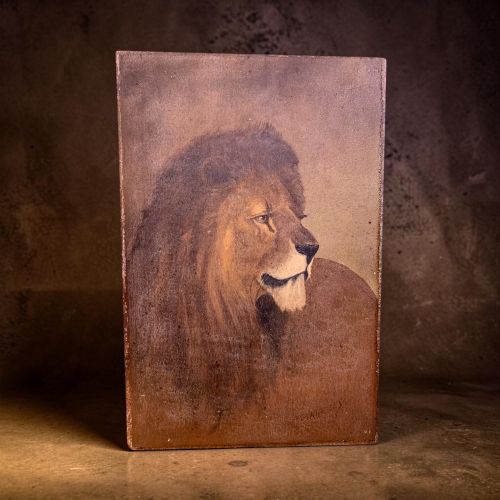
Buyers encountering this genre will frequently find works executed in oil paint on canvas, gouache and pastel, alongside signed artist proof etchings on vellum. The subjects range from naive folk art portraits of lions to naturalistic watercolours of birds among blossom.
The aesthetic bridges scientific naturalism and dramatic sporting art, reflecting period fascinations with animal behaviour, topography and rural habitats. Pieces often arrive framed in wood and gilt, preserving the original presentation favoured by Victorian collectors.
How they were made
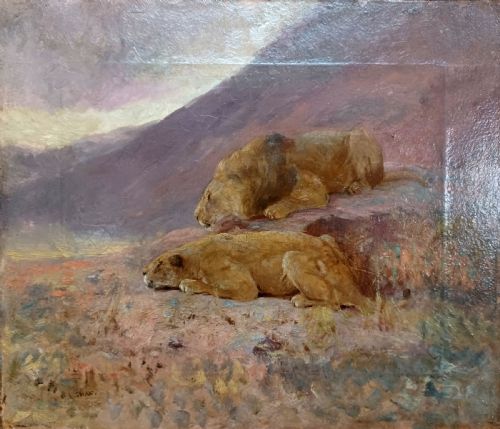
Artists utilised oil paint on canvas or paper to build depth and texture, particularly in large landscape and animal combat scenes. Watercolours and gouache permitted fine, precise detailing of feathers, fur and botanical elements such as apple blossom.
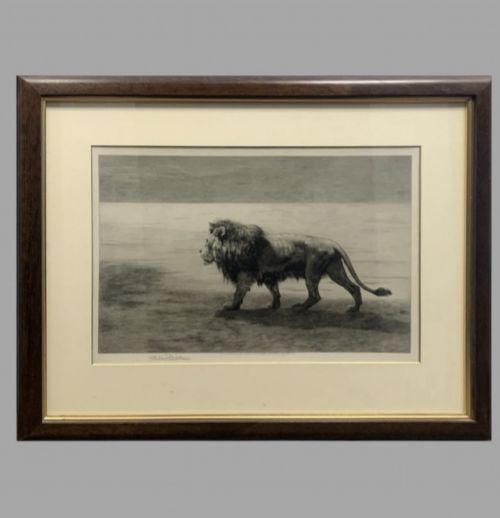
Etchings on vellum involved careful plate work and often carried artist proof stamps or signatures, demonstrating a high degree of printmaking skill. Wooden frames, frequently finished with gilt, completed the construction of these framed works.
Listings span the 19th century and early 20th century, utilising oil, canvas, paper, glass, ink and gilt across diverse styles like folk art and Victorian animalier.
What varies in quality
Quality in these pieces depends heavily on the anatomical accuracy and expressive force captured by the hand of the artist. Master works convey texture and movement convincingly, whereas lesser examples rely on stiff composition or formulaic background rendering.
The medium and condition dictate the overall standard, with signed artist proofs and original canvas oils generally representing more resolved artistic output than uncredited sketches or later photographic reproductions.
Herbert Dicksee·George Armfield·Cuthbert Edmund Swan·Thomas Blinks·Arthur Wardle·John Macallan Swan·Geza Vastagh·William Crampton·James Malcolm Stewart·Joseph Knight
The Victorian Wildlife Artwork Glossary
- Animalier
- A style focusing on the realistic depiction of animals, particularly predators and game in motion or repose. This genre gained significant popularity during the 19th century among sculptors and painters alike.
- Artist proof
- An impression of a print taken before the final edition is approved, usually marked by the artist. These are often prized by collectors for their early clarity and direct association with the creator.
- Gouache
- An opaque water-based pigment used to achieve rich, solid colour blocks and fine highlights. It is frequently combined with watercolour or pastel on paper surfaces.
- Vellum
- A fine parchment prepared from calfskin, prized as a durable and smooth surface for high-quality etching impressions. Prints on vellum possess a distinct creamy tone and tactile quality.
- Sporting art
- Depictions of hunting, game animals, and rural pursuits. This tradition informs many Victorian wildlife works that feature stags, foxes, and hounds in expansive country landscapes.
Victorian Wildlife Artwork: Frequently Asked Questions
What subjects appear in Victorian wildlife art?
These works feature a diverse range of fauna, including large predators such as lions, leopards and bears, alongside British game birds, ducks and red squirrels.
Artists also placed these animals within detailed natural habitats, spanning Devon moorlands, jungle trees and quiet country landscapes.
How do I care for antique watercolours and prints?
Works on paper, including watercolours and etchings on vellum, require protection from direct sunlight to prevent fading of the pigments and discolouration of the paper support.
Displaying them away from excessive humidity ensures the paper and framing materials remain stable over time.
What is the difference between an etching and an oil painting?
An etching is a printed multiple created by scratching a design into a metal plate, whereas an oil painting is a unique, hand-painted work on canvas or panel.
Etchings often showcase fine line work and tonal shading, while oil paintings offer rich textures and vibrant colour layering.
Are these works signed by the artists?
Many pieces feature artist signatures, estate stamps or annotations, particularly within the selection of signed proof etchings and listed fine art paintings.
Unsigned pieces also appear, often attributed through stylistic comparison to period movements like British naturalism or folk art.