




19th Century Wildlife Canvas
These 19th century wildlife canvas works capture nature and animals through traditional oil painting, offering a glimpse into historical depictions of fauna.
19th Century Wildlife Canvas
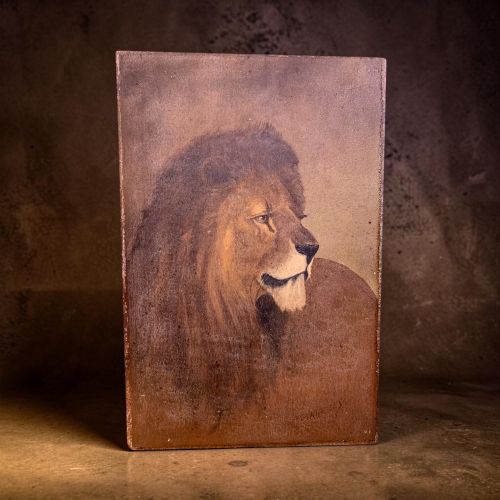
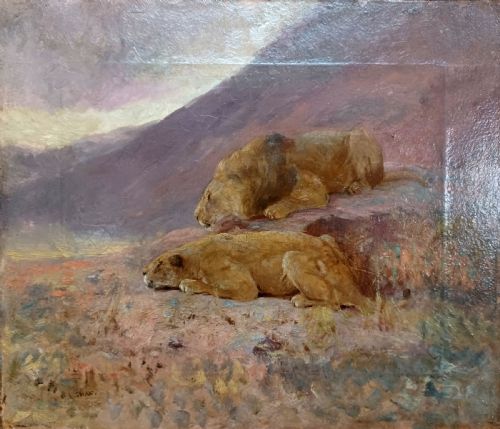
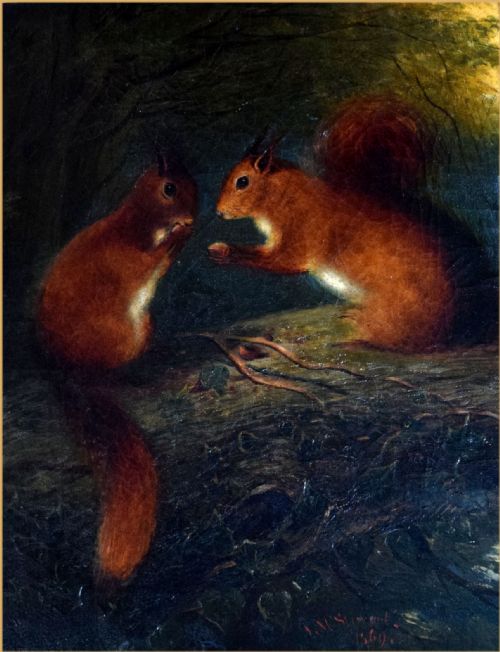
A 19th century wildlife canvas is an oil painting on canvas depicting animals, birds, or sporting scenes from the Victorian era and surrounding decades. Buyers searching this phrase encounter fine art oil paintings ranging from naive folk art depictions of lions to detailed studies of stags, squirrels, and ducks.
The pieces on this page span styles such as Victorian sporting art, folk art, animalier, and Highland romanticism. Common subjects include birds in flight, river bank scenes with ducks, and dramatic combats involving bears and hounds.
Origins and periods represented include Victorian works and pieces from around eighteen ninety up to nineteen twenty. These artworks serve as historical windows into how past artists observed and recorded the natural world.
How they were made
These works utilise oil paint applied to canvas supports, often framed in gilt wood, wood, or gold leaf. The combination of oil paint and canvas allowed artists to build rich textures and deep colour tones.
Frames frequently consist of gilded wood or carved wood, which complement the traditional oil paintings within. The physical construction relies on stretched canvas secured to wooden frames.
Listings feature oil paintings on canvas spanning the nineteenth century, including works from the Victorian period up to nineteen twenty.
What varies in quality
Quality in these oil paintings depends upon the precision of brushwork and the anatomical accuracy of the animals depicted. Finer works demonstrate a sophisticated handling of light, shadow, and natural movement.
The depth of the composition and the preservation of the canvas and original wooden or gilt frames also influence the overall standing of a piece. Naive folk art pieces offer a different charm compared to the academic realism seen in works after artists like Geza Vastagh or Thomas Blinks.
George Armfield·Cuthbert Edmund Swan·Thomas Blinks·Constant Ludovic Artz·Geza Vastagh·William Crampton·James Malcolm Stewart
The 19th Century Wildlife Canvas Glossary
- Canvas
- A heavy woven fabric used as a surface for oil painting. It is typically stretched over a wooden frame before the artist applies paint.
- Oil paint
- A slow-drying paint made by mixing pigments with a drying oil such as linseed. This medium permits subtle blending and rich colour saturation.
- Gilt wood
- Wood that has been coated with a thin layer of gold leaf or gold paint. Frames of this material are common around nineteenth-century fine art.
- Animalier
- A nineteenth-century artistic genre focusing on the faithful representation of animals. Practitioners of this style studied animal anatomy closely.
- Victorian sporting art
- A genre of painting depicting field sports, hunting scenes, and wildlife in natural landscapes. These works reflect the sporting interests of the nineteenth century.
19th Century Wildlife Canvas: Frequently Asked Questions
What subjects appear in these paintings?
The subjects range from lions and bears to red squirrels, stags, and ducks in flight. Artists recorded both dramatic wildlife encounters and quiet natural moments.
Scenes often place animals in country landscapes, river banks, or woodland settings characteristic of nineteenth-century naturalism.
How do I identify the period?
Dating relies on stylistic clues, artist signatures, and framing materials typical of the nineteenth century and early twentieth century. Canvas types and stretcher construction also offer chronological indicators.
Examining the specific genre, such as Victorian animalier or folk art, helps narrow down the production era.
Are these works painted on canvas?
Yes, the works utilise oil paint applied directly to stretched canvas supports. This combination was standard for fine art paintings of the period.
Many retain their original wooden or gilt wood frames from the nineteenth century.
How should I display them?
These oil paintings suit traditional interiors, studies, and living spaces where their historical character can be appreciated. Direct sunlight should be avoided to protect the oil paint and canvas.
Stable indoor humidity helps preserve both the canvas support and any gilded wooden framing.