


Victorian White Pottery Dogs
When you search for victorian white pottery dogs, you meet mantel figures shaped as spaniels, poodles, and terriers that once watched over Victorian hearths.
Victorian White Pottery Dogs
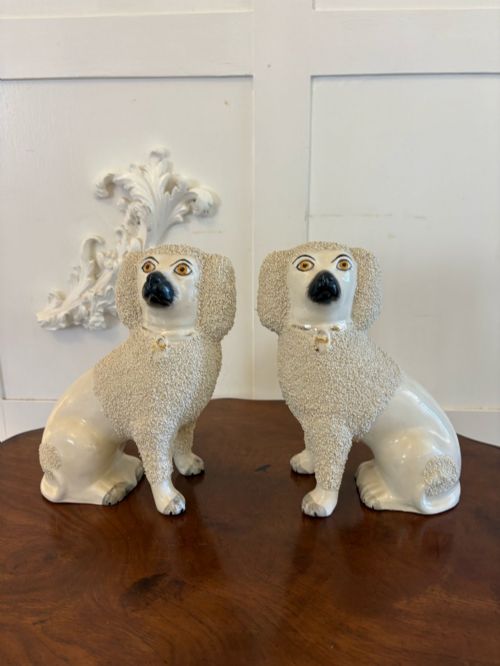
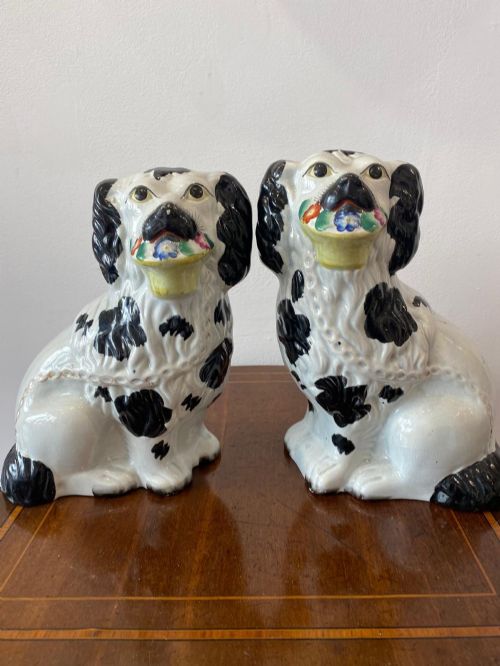
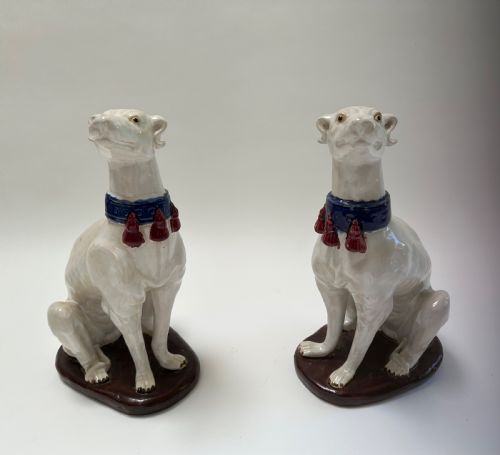
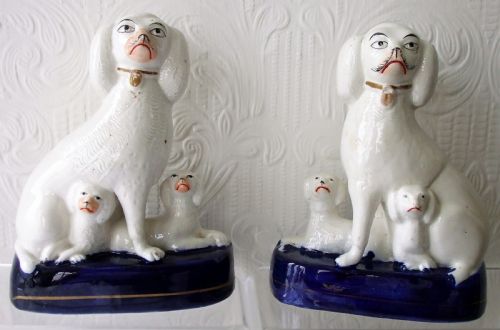
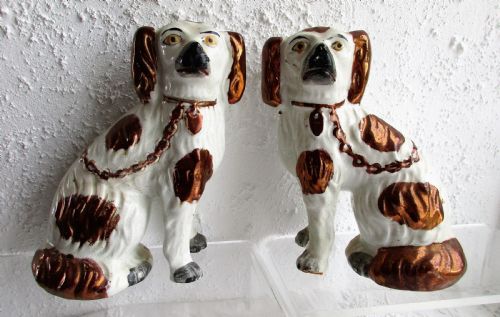
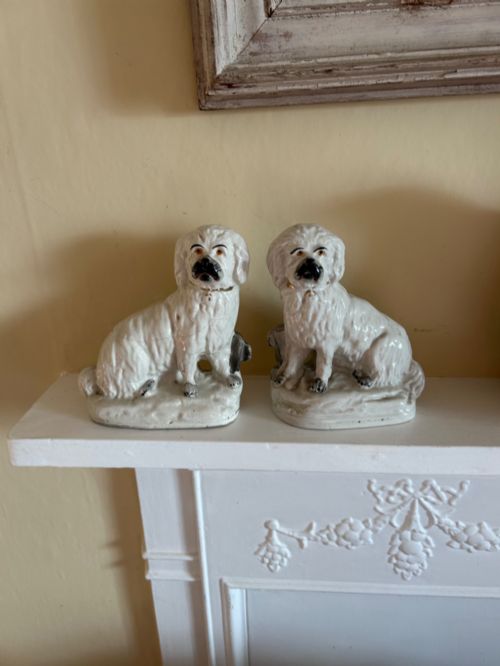
Victorian white pottery dogs appear most frequently as matched pairs meant to sit either side of a fireplace. These earthenware figures represent popular breeds such as spaniels, poodles, greyhounds, and maltese terriers, shaped in pottery and earthenware.
The evidence shows forms ranging from standard comforter spaniels to money boxes, inkwells, and quill holders. Makers produced these decorative objects throughout the nineteenth century, utilising styles spanning from traditional English work to Italian majolica.
Most pieces date from the mid to late Victorian decades, with the search phrase pointing directly to these ceramic figurines. Buyers encounter various scales, from miniature poodles up to large fireside pairs.
Materials and Construction
Potters built these figures using ceramic earthenware, shaping them in moulds before applying glazes. Many examples feature lead glaze surfaces, sometimes enhanced with enamel details or gold leaf and gilt collars.
The available listings span earthenware and ceramic figures produced across the nineteenth century, including distinct spaniels, poodles, and terriers.
Judging Quality and Character
Quality rests in the crispness of the moulding and the control of the hand painting on the face and eyes. Finer pairs display distinct facial expressions and careful application of gilt or enamel without messy bleeding.
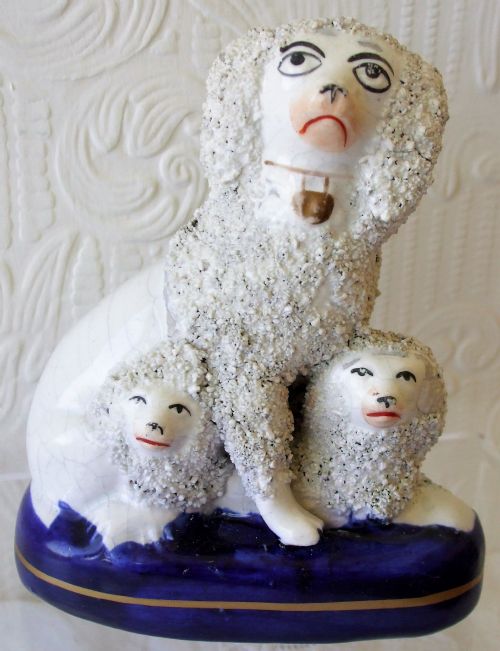
The presence of separate front feet or detailed elements like textured clay work elevates certain poodles and spaniels above simpler modelled versions. Weight, clear glaze consistency, and well-preserved painted highlights separate ordinary figures from superior examples.
Thomas Parr
The Victorian White Pottery Dogs Glossary
- Earthenware
- Porous pottery fired at lower temperatures, serving as the standard ceramic body for these nineteenth-century figures.
- Comforter spaniel
- A mantel dog modelled on the King Charles spaniel, traditionally placed on either side of a fireplace.
- Lead glaze
- A glossy coating applied to pottery before firing, giving these white figures their characteristic reflective shine.
Victorian White Pottery Dogs: Frequently Asked Questions
Where did people display these dogs?
Victorian households traditionally placed these ceramic figures in matching pairs on the mantelpiece above the fireplace.
They faced inward toward each other, creating a symmetrical arrangement that anchored the room's central hearth.
Are all these dogs spaniels?
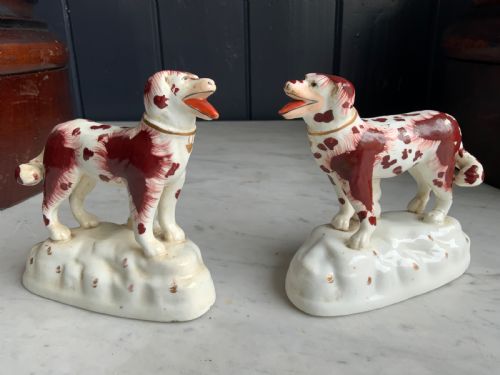
While spaniels represent a major portion of the figures, potters also modelled poodles, greyhounds, dalmatians, and terriers.
Poodles frequently feature textured clay work or woolly details, whilst other breeds show smooth white glazes with painted markings.
Did these figures have practical uses?
Most pieces served a purely decorative purpose as mantel ornaments intended to bring charm to the parlour.
However, specialised examples functioned as money boxes, inkwells, or quill holders alongside standard decorative figures.
How do I spot a true nineteenth-century pair?
Examine the weight of the ceramic body, the crazing in the lead glaze, and the hand-painted details on the face.
Nineteenth-century pieces show characteristic wear beneath the base and natural variations in the white glaze applied by the potter.