




Victorian Whippet Figurine
A victorian whippet figurine captures the lean elegance of the hound through earthenware, bronze and pottery.
Victorian Whippet Figurine
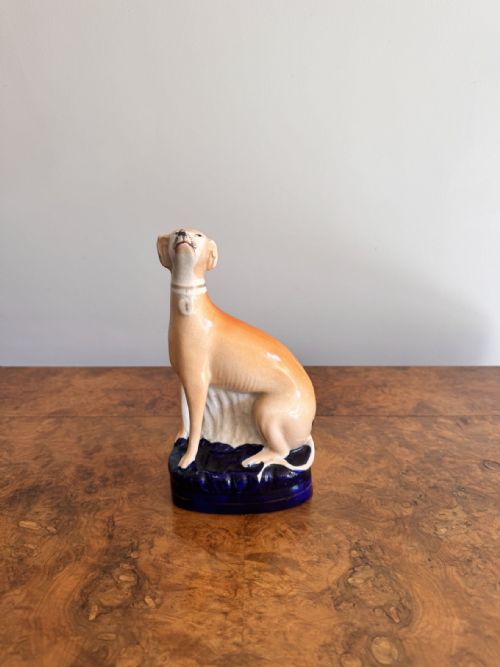
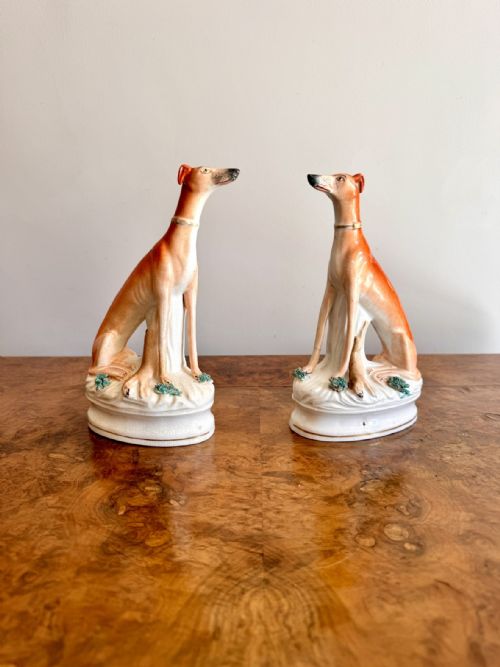
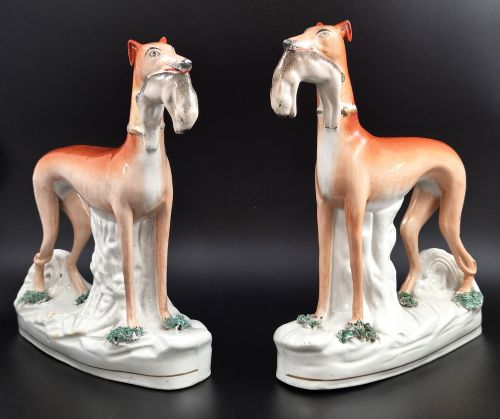
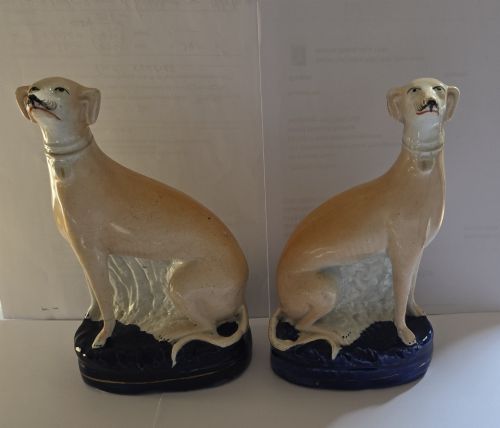
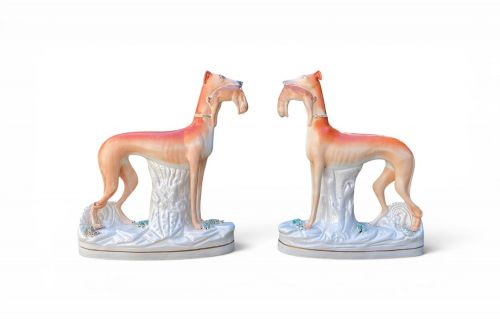
A victorian whippet figurine encompasses ceramic pottery and metal sculptures depicting hounds, often modelled as seated pairs or hunting dogs with hares. These decorative ornaments serve as inkwells, quill holders or desktop figures reflecting nineteenth-century domestic tastes.
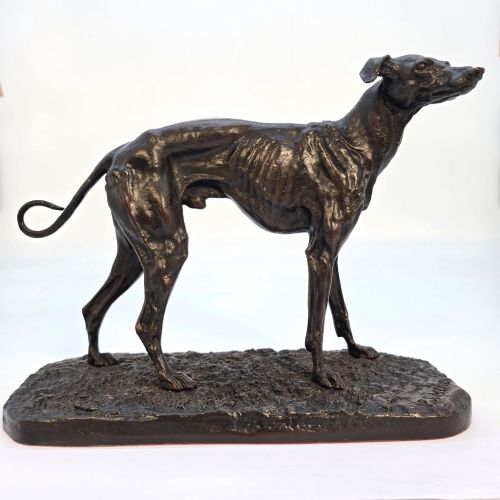
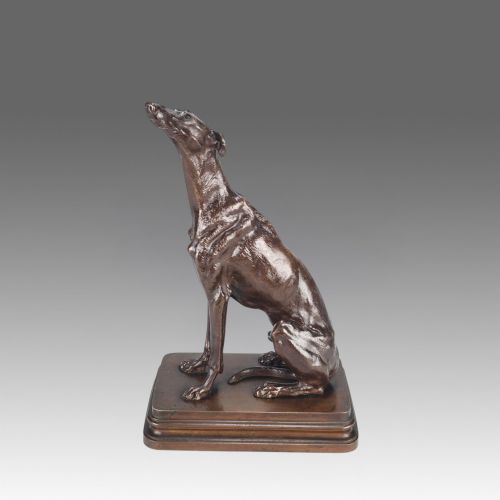
Staffordshire pottery versions dominate the selection, typically formed as glazed earthenware figures with enamel paint details. Buyers also encounter French animalier bronze studies and Italian majolica dogs within the available range.
How they were made
Pottery figures rely on earthenware bodies finished with lead glazes and hand-applied enamel paint to render the markings of the dogs and their prey. Bronze sculptures utilise metal casting techniques to capture muscular definition and texture in the animalier style.
Makers shaped the ceramic pieces in moulds before firing, applying underglaze painting and enamel decoration to add surface colour. Bronze examples involve lost-wax casting followed by chased surface finishing and patination.
Victorian Whippet Figurine Retail Price Guide 2026
Typical asking prices for victorian whippet figurine among the pieces listed under this phrase on Sellingantiques today, from the lower quarter to the upper quarter. They describe what is for sale here now, not the wider market.
Listings span earthenware, bronze and porcelain materials across Victorian and nineteenth-century periods.
What varies in quality
The distinction between tiers rests upon the crispness of the modelling and the precision of the hand-painted enamel decoration on earthenware. Superior bronze pieces exhibit fine chasing and detailed musculature that set them apart from standard domestic ornaments.
Scale and completeness also dictate distinction, particularly when pieces survive as matched pairs complete with hares or functional elements like inkwells. The depth of the glaze and the preservation of the original paint surface determine the character of the pottery.
P. J. Mène·Alfred Dubucand·Thomas Parr·Joseph Francois Victor Chemin
The Victorian Whippet Figurine Glossary
- Animalier
- A nineteenth-century artistic genre focusing on the realistic portrayal of animals, particularly prevalent in French bronze sculpture.
- Staffordshire pottery
- Earthenware produced in the industrial potteries of Staffordshire, famous for spill vases, animal figures and mantel ornaments.
- Majolica
- Tin-glazed earthenware featuring colourful opaque glazes, originating in Italy and revived in later historicist styles.
- Lead glaze
- A glossy transparent coating applied to earthenware before firing, giving pottery a smooth and protective finish.
Victorian Whippet Figurine: Frequently Asked Questions
What is a victorian whippet figurine?
These pieces are decorative ceramics and bronzes depicting whippets or greyhounds, often modelled as seated pairs.
They reflect nineteenth-century interior ornaments and functional items such as inkwells or paperweights.
How were ceramic figures decorated?
Potters applied lead glazes and hand-painted enamel colours to the moulded earthenware bodies.
This technique provided the distinctive facial expressions and markings seen on Staffordshire examples.
Where were these figures made?
Many originate from the Staffordshire pottery district in England, while others stem from French bronze foundries.
Continental workshops also produced ceramic and majolica interpretations of hunting dogs during the period.
How do bronze and ceramic versions differ?
Bronze examples use cast metal to achieve anatomical precision in the animalier style.
Ceramic pieces rely on earthenware and glaze to create domestic mantel ornaments and functional desk accessories.