





Victorian What Not Shelf
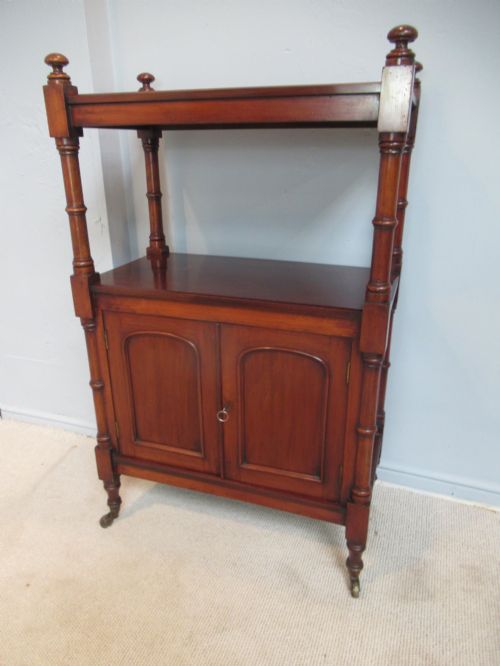
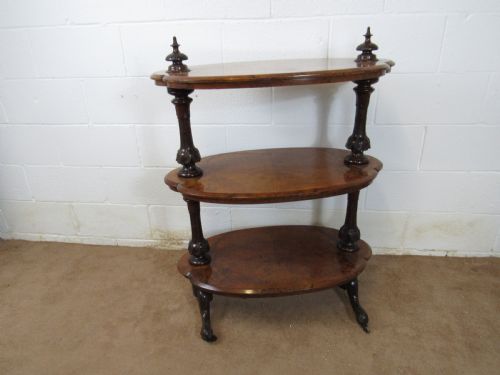
A victorian what not shelf provides tiered display space for books and ornaments, combining open shelving with small drawers.
Victorian What Not Shelf
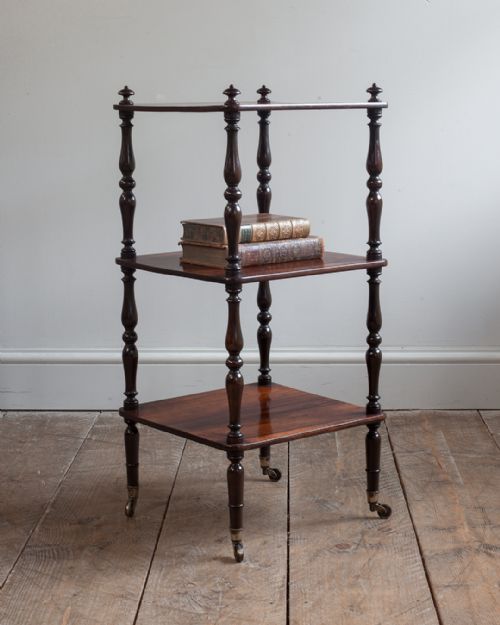
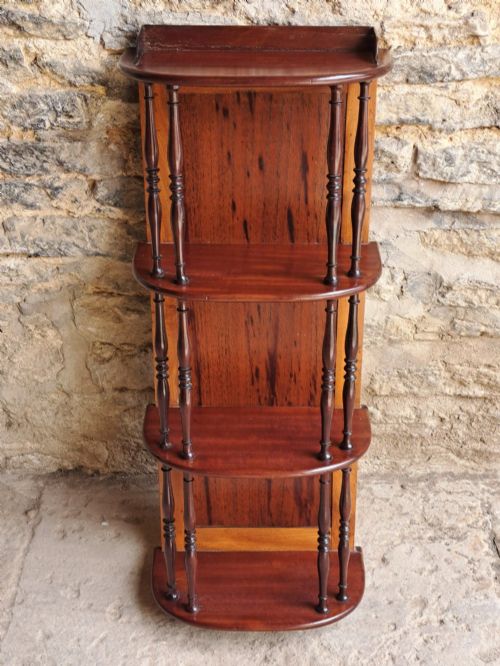
A victorian what not shelf offers open tiers supported by uprights, designed for displaying small objects and books in nineteenth-century interiors. These pieces appear in forms ranging from freestanding multi-tiered stands to corner units and wall-hanging shelves.
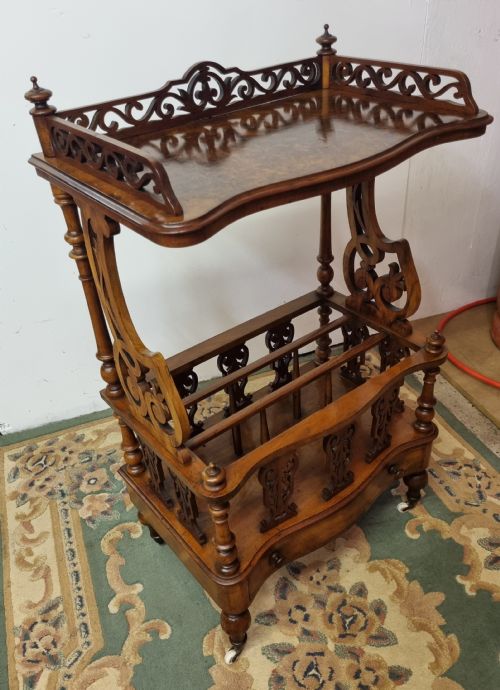
Mahogany and walnut predominate among the surviving examples, often featuring turned supports or barley twist columns. Many items incorporate single drawers or combine with music cabinets and canterburys.
The selection includes pieces spanning the nineteenth century, from William IV iterations through late Victorian designs. Etagere forms and corner cabinets share the same functional display purpose.
Materials and Construction
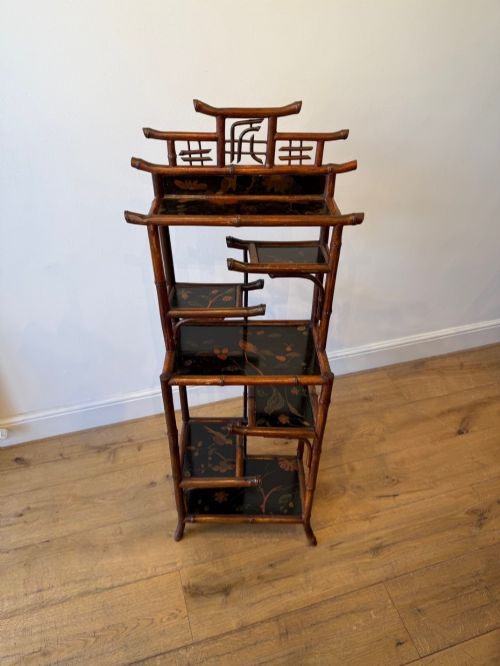
Cabinet makers utilised dense timbers including mahogany, walnut, burr walnut, and rosewood for their durability and grain patterns. Alternative materials such as bamboo and ceramic also appear in later nineteenth-century pieces.
Construction techniques involve tiered platforms secured by turned or twisted upright pillars, sometimes complemented by marquetry inlay or brass fittings. Drawers integrated into the lower sections rely on traditional dovetail joinery.
Victorian What Not Shelf Retail Price Guide 2026
Typical asking prices for victorian what not shelf among the pieces listed under this phrase on Sellingantiques today, from the lower quarter to the upper quarter. They describe what is for sale here now, not the wider market.
Some nineteenth-century makers combined reading desks with music stands, proving Victorians loved multitasking furniture as much as we do.
Assessing Quality and Craftsmanship
Quality rests in the selection of timber veneers, such as figured burr walnut or rich rosewood, and the crispness of turned supports like barley twist columns. Finer examples display meticulous marquetry inlay and well-fitted drawer construction.
The integration of secondary functions, such as music storage or serpentine shapes, distinguishes more ambitious pieces from standard utilitarian tiers. Proportions and stability across multiple tiers also define the standard of manufacture.
Gillows·Holland & Sons
The Victorian What Not Shelf Glossary
- Whatnot
- An open shelving unit with multiple tiers designed for displaying ornaments, books, and bric-a-brac. These pieces became popular during the nineteenth century for drawing room display.
- Etagere
- A piece of furniture consisting of a set of open shelves for displaying small objects. The term is often used interchangeably with whatnot.
- Marquetry
- Decorative veneer work formed by fitting together pieces of various woods or other materials to create pictorial patterns. It adds surface ornamentation to tabletops and shelf friezes.
- Serpentine
- A furniture shape characterised by a undulating front edge that curves inward in the centre and outward at the ends. This contour requires skilled woodworking.
Victorian What Not Shelf: Frequently Asked Questions
What is a whatnot shelf used for?
A whatnot shelf provides open tiers for displaying porcelain, ornaments, and books in Victorian reception rooms. They maximise vertical space in smaller parlours.
Lower tiers sometimes incorporate drawers or compartments for storing smaller household items and music sheets.
How do I identify a Victorian whatnot?
Look for stacked wooden platforms supported by turned uprights, barley twist columns, or bamboo framing. Nineteenth-century examples frequently utilise mahogany, walnut, or rosewood.
Details such as marquetry inlay, single drawers, and corner configurations are characteristic of the period.
Where should I place a corner whatnot?
A corner whatnot fits neatly into unused room angles, making them practical for smaller spaces. They provide display capacity without blocking walkways.
Pair them with complementary nineteenth-century seating or side cabinets in a study or drawing room.
What is the difference between an etagere and a whatnot?
The terms are often used interchangeably to describe multi-tiered display furniture from the nineteenth century. Etageres frequently lean towards decorative French styling.
Whatnots encompass a broader range of utilitarian and corner shelving units produced in Britain.