



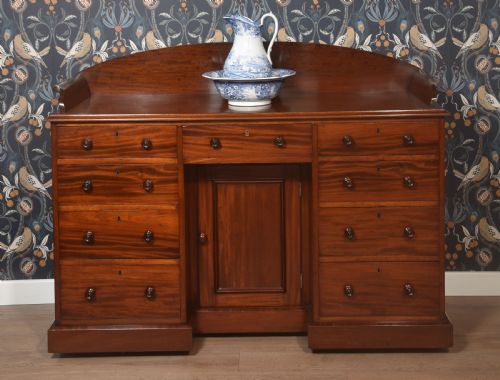


Victorian Washstand Chest
These victorian washstand chest pieces combine bedroom storage and washing surfaces for practical daily use.
Victorian Washstand Chest
A victorian washstand chest unites the storage of a chest of drawers with the washing function of a washstand, serving bedroom spaces with dual utility. Buyers seeking this form will encounter pieces spanning the nineteenth century through the early twentieth century.
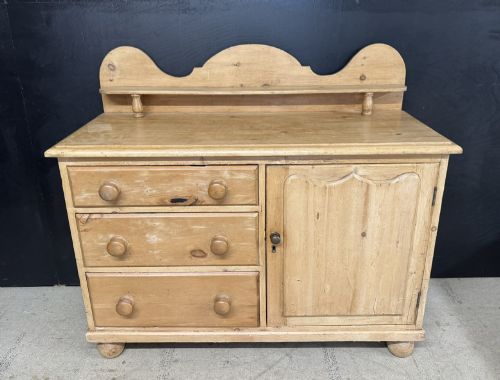
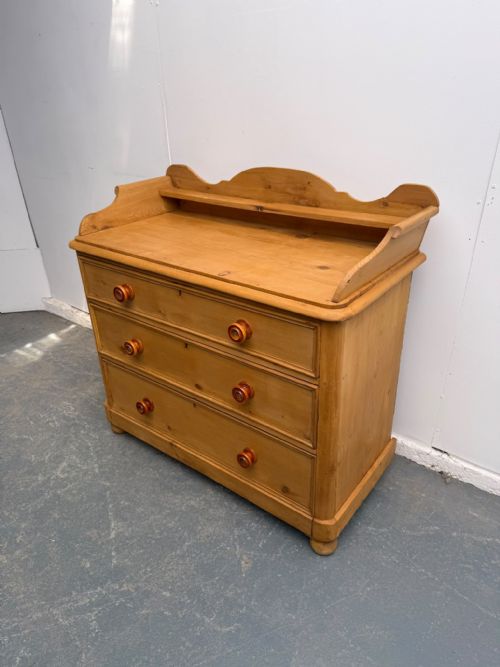
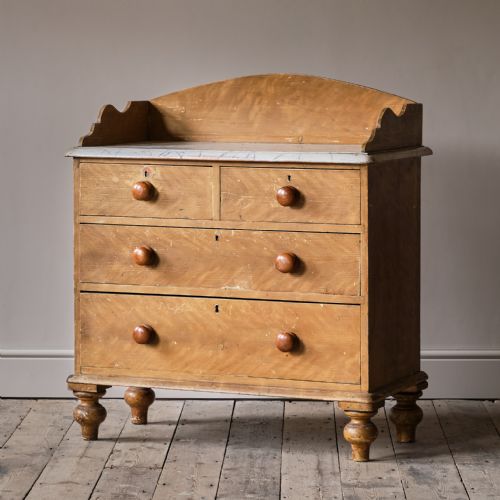
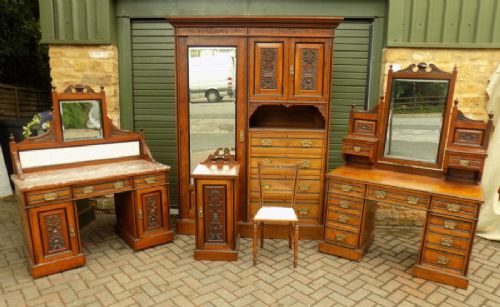
The evidence on this page shows examples ranging from pine and mahogany to burr walnut, ash, and faux bamboo. Forms vary from simple three-drawer pine chests to larger bedroom suites and marble-topped washstands.
Origin styles stretch from Victorian Country and French Provincial to Arts and Crafts and campaign designs. You are most likely to meet pine and mahogany variations featuring original paint finishes, galleries, or marble tops.
How they were made
Maker construction relies heavily on solid timbers such as pine, mahogany, walnut, and ash, often paired with rouge or white marble tops designed to handle water. Brass hardware and glass elements frequently furnish the fittings and pulls.
Surface treatments recorded in the evidence include traditional wax finishes alongside original paint applications and polished wood surfaces. Gallery backs and carved details appear across various styles, from campaign to rococo revival.
Victorian Washstand Chest Retail Price Guide 2026
Typical asking prices for victorian washstand chest among the pieces listed under this phrase on Sellingantiques today, from the lower quarter to the upper quarter. They describe what is for sale here now, not the wider market.
Materials recorded in current listings include pine, mahogany, walnut, ash, brass, marble, glass, and paint.
What varies in quality
The standard of timber selection and the retention of original surfaces dictate the character of each piece, distinguishing simple utility items from grander bedroom furniture. Grain figuring in mahogany and burr walnut marks out finer examples.
The presence of intact marble tops, matching dressing tables, and original painted finishes alters the visual presence. Structural integrity in drawer construction and gallery backs further separates standard pieces from more ambitious workshops.
The Victorian Washstand Chest Glossary
- Washstand
- A piece of furniture designed to hold a basin and jug for washing. They frequently incorporate marble tops to protect the wood from water splashes.
- Gallery back
- A raised timber border along the back and sides of a surface. This prevents items from sliding off and protects the wall.
- Campaign chest
- Portable furniture made in sections with brass corners and recessed handles. Designed for easy transport by military officers.
- Faux bamboo
- Wood turned and carved to imitate natural bamboo stalks. This style gained popularity during the nineteenth century.
- Burr walnut
- Wood taken from the growth growths of a walnut tree, showing intricate swirling patterns. It is sliced into veneers for fine cabinet work.
Victorian Washstand Chest: Frequently Asked Questions
What is a victorian washstand chest?
A victorian washstand chest is a hybrid piece of bedroom furniture that merges drawer storage with a dedicated washing surface, often finished with a marble top.
These pieces served 19th-century bedrooms where piped indoor plumbing was absent, providing a practical station for morning ablutions alongside clothing storage.
How do I identify the wood types?
Pine provides a lighter, softer timber often found in country and painted pieces, while mahogany and walnut offer deeper, richer tones.
Closer inspection of grain patterns and weight will typically reveal whether you are looking at solid softwood, dense hardwood, or applied veneer.
Where were these pieces used?
They belonged primarily in the bedrooms and dressing rooms of 19th-century homes, ranging from country cottages to substantial townhouses.
Their dual functionality made them space-saving additions where a separate chest of drawers and wash table would crowd the room.
What styles are available?
The selection includes Victorian Country, French Provincial, Arts and Crafts, and campaign styles, alongside faux bamboo and rococo revival influences.
Each style reflects the specific aesthetic preferences and regional cabinet-making traditions of the nineteenth and early twentieth centuries.