





Victorian Walnut Press
A victorian walnut press offers serious nineteenth-century storage, combining rich burr veneers and substantial timber in forms built to last.
Victorian Walnut Press
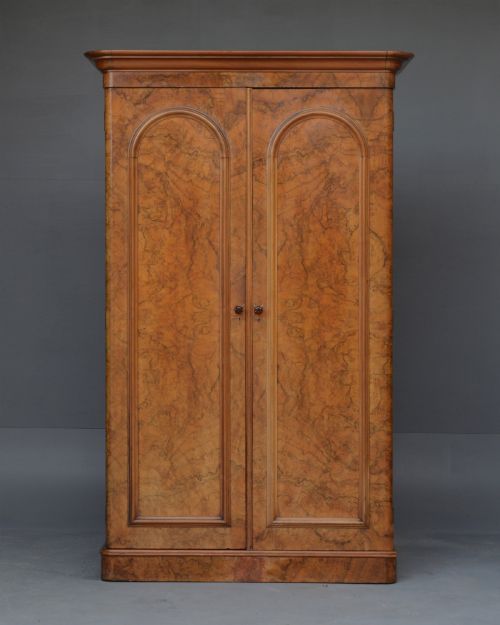
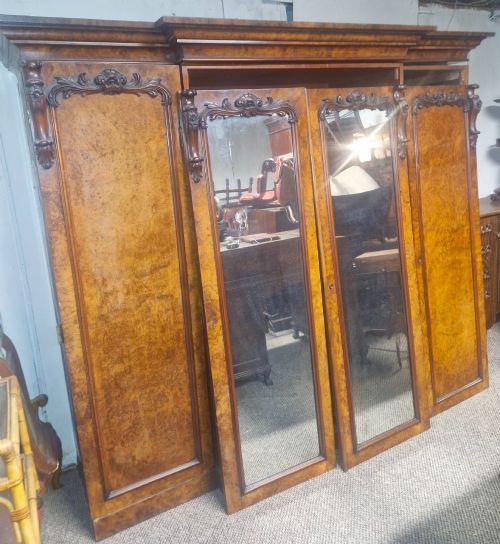
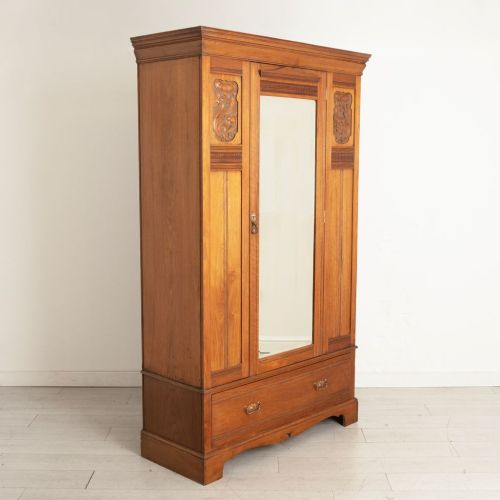
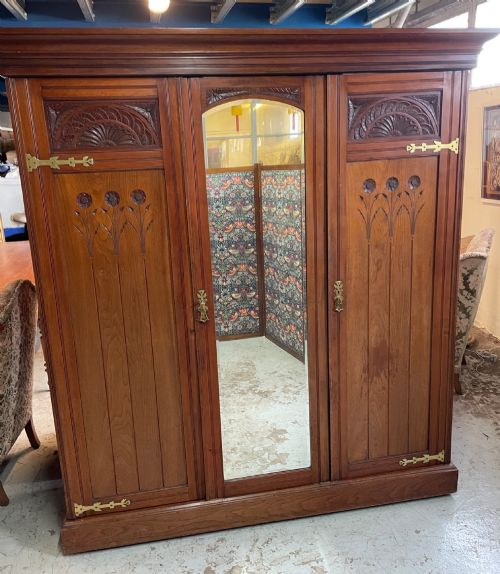
A victorian walnut press brings grand nineteenth-century proportions and warm timber tones into domestic spaces, serving as a traditional home for linens and clothing. These large storage pieces appear in various forms across this page, ranging from towering triple wardrobes and compactums to linen presses fitted with internal drawers.
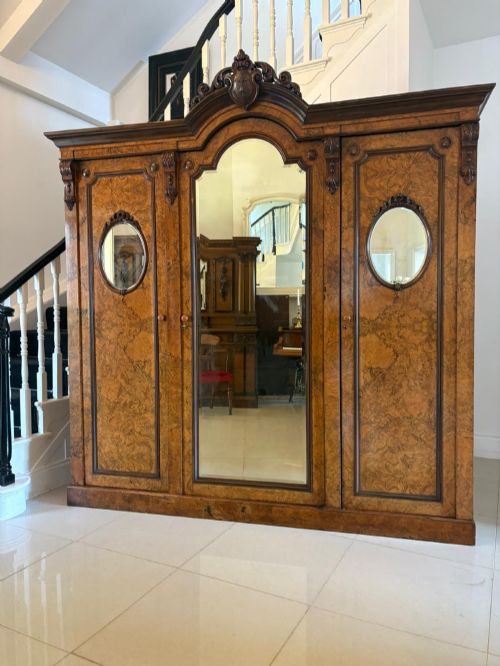
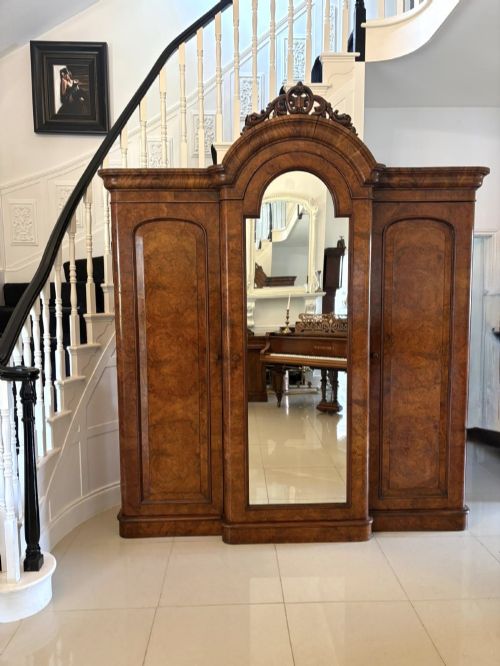
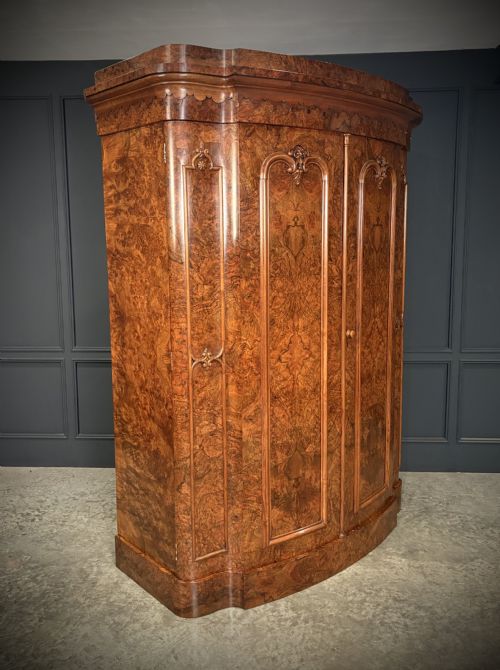
Buyers will most frequently encounter substantial multi-door cupboards and combination pieces from the Victorian era and the later nineteenth century. Many examples utilise striking burr walnut veneers, brass hardware, and occasionally mirror glass doors to create an imposing centrepiece for a bedroom.
Materials and Construction
Cabinet makers relied on solid walnut and mahogany frames, applying highly figured burr walnut veneers to large flat surfaces to display dramatic grain patterns. Secondary timbers such as satin walnut and maple also appear in internal components and specialised combination layouts.
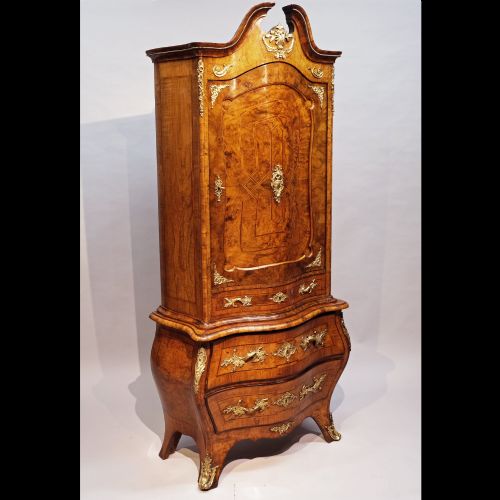
Structural embellishments include carved details, brass mounts, ormolu accents, and inset bevelled mirror glass within the heavy timber doors. Master carpenters constructed these large storage units to dismantle into sections for transport, facilitating installation in period properties.
Victorian Walnut Press Retail Price Guide 2026
Typical asking prices for victorian walnut press among the pieces listed under this phrase on Sellingantiques today, from the lower quarter to the upper quarter. They describe what is for sale here now, not the wider market.
Listings feature a wide chronological span from early Victorian to the 1890s, encompassing Arts and Crafts and Grunderzeit stylistic influences.
Factors of Quality
The distinction between standard utility storage and exceptional examples rests primarily in the choice and matching of timber veneers. Pieces utilising highly figured burr walnut across wide door panels demonstrate superior craftsmanship and demand greater attention from original makers.
Structural complexity also dictates standing, with multi-door compactum wardrobes and fitted linen presses representing higher tiers of Victorian cabinet making. Elaborate carving, integrated drawer banks, and original brass fittings elevate the stature of a wardrobe far above simple panelled versions.
Shapland & Petter
The Victorian Walnut Press Glossary
- Burr Walnut
- A timber derived from the irregular growth or burl of a walnut tree, highly prized for its swirling, decorative grain patterns. Cabinet makers sliced this wood into thin veneers to cover large cupboard doors.
- Compactum
- A multi-functional Victorian wardrobe featuring a combination of hanging space, linen slides, and internal drawers. This layout maximised bedroom storage efficiency within a single architectural unit.
- Linen Press
- A traditional storage cabinet designed originally for flat textiles, housing sliding trays in the upper section and drawers below. These pieces reflect domestic organisation before modern fitted closets.
- Ormolu
- Gilded bronze mounts and decorative details applied to furniture. This finish adds metallic contrast to dark walnut surfaces.
- Grunderzeit
- A late nineteenth-century Central European historicist style influencing furniture design. Pieces from this aesthetic frequently utilise rich walnut veneers and robust architectural proportions.
Victorian Walnut Press: Frequently Asked Questions
How do I fit a large wardrobe?
Most nineteenth-century wardrobes and presses were constructed in modular sections designed to dismantle for delivery and room placement.
Buyers should check ceiling heights and access routes carefully, as these heavy timber cabinets often exceed standard door frames when fully assembled.
What is a compactum wardrobe?
A compactum is a specialised multi-functional storage unit that combines hanging space with banks of internal drawers and linen slides.
This clever internal architecture allowed Victorians to store varied apparel within a single substantial cabinet.
How do I care for walnut veneer?
Walnut timber and delicate nineteenth-century veneers require stable room humidity and protection from direct sunlight to prevent warping and fading.
Regular dusting with a dry cloth maintains the surface sheen without moisture damage.