


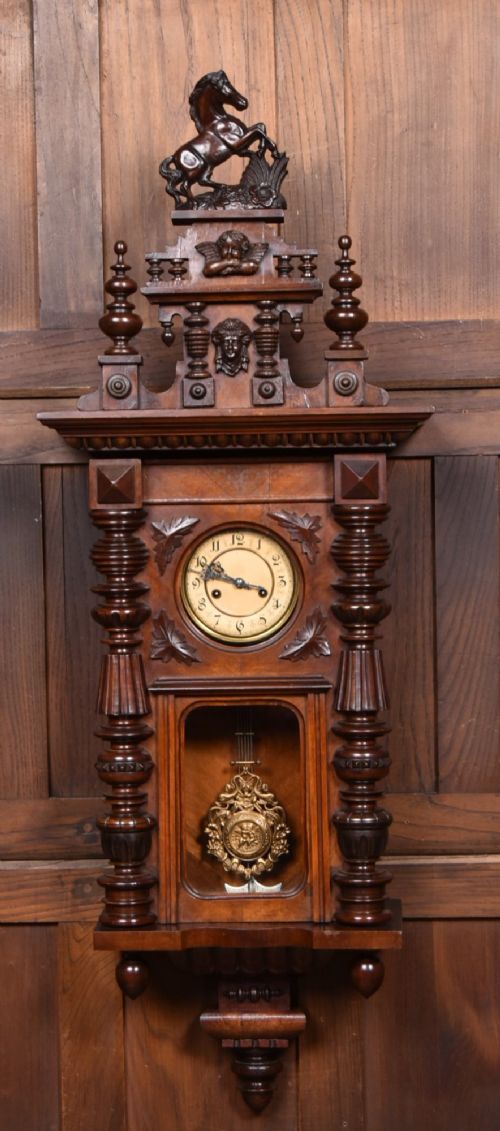


Victorian Walnut Chime
These Victorian walnut chime pieces are substantial horological and acoustic works in rich timber, offering a classic presence for the home.
Victorian Walnut Chime
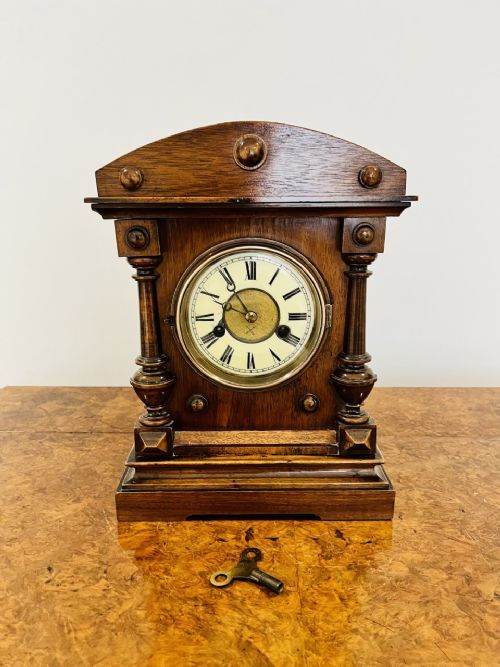
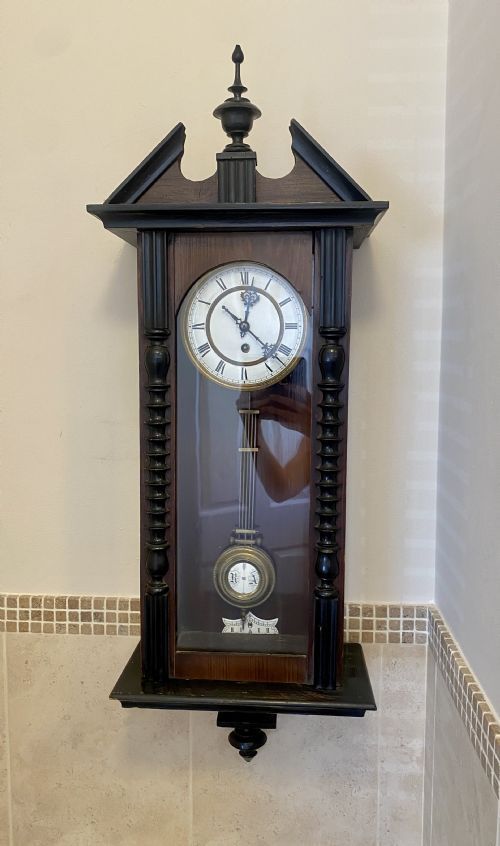
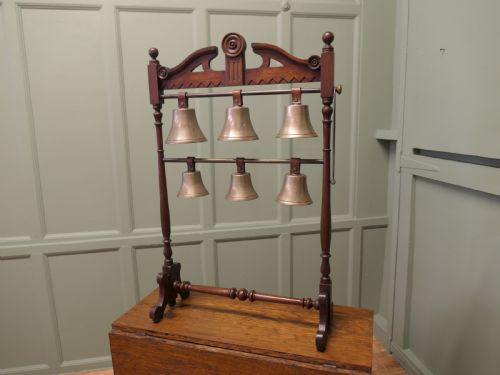
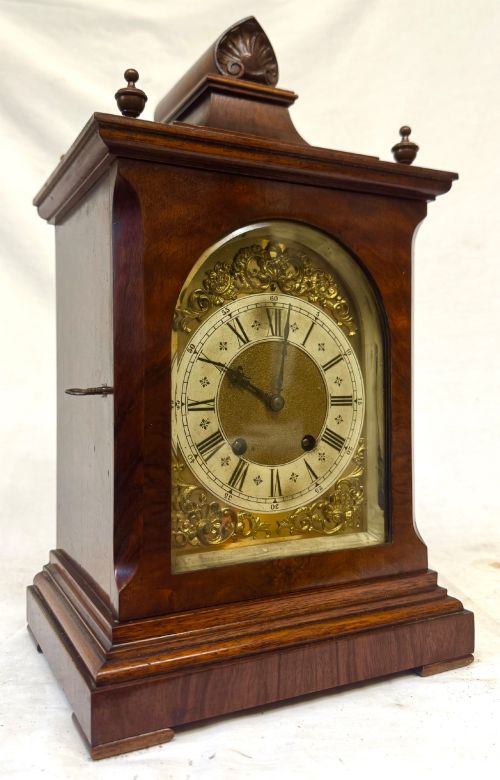
When you search for Victorian walnut chime, you encounter a selection of nineteenth-century clocks, bracket clocks, wall clocks, and dinner gongs housed in walnut and burr walnut timber. These pieces range from German workshop productions to domestic bracket clocks and large acoustic gongs.
The most common forms on this page are mantel and wall clocks alongside tuned brass musical bells and dinner gongs. They span several decades of the nineteenth century and transitional periods around nineteen hundred, reflecting diverse decorative movements.
Materials and construction
Cabinet makers utilised solid walnut and decorative burr walnut veneers over secondary timbers, often framing the timber with carved details or geometric moulding. Ormolu mounts, glass panels, and brass dials or bezels complete the structural and visual composition of these cases.
Victorian Walnut Chime Retail Price Guide 2026
Typical asking prices for victorian walnut chime among the pieces listed under this phrase on Sellingantiques today, from the lower quarter to the upper quarter. They describe what is for sale here now, not the wider market.
The listings here include items from the nineteenth century, Victorian era, and nineteen hundred, constructed in walnut, burr walnut, brass, and glass.
Markers of quality
The distinction between ordinary and superior pieces rests upon the precision of the movement and the intricacy of the cabinet work. Finer examples display complex triple fusee or striking mechanisms alongside select burr walnut grain configurations.
Stylistic cohesion also dictates standing, where Gothic revival, Arts and Crafts, or German historicism influences are executed with particular depth and restraint. The integration of acoustic elements, such as tuned musical bells or substantial dinner gongs, separates standard timepieces from ambitious decorative items.
Lenzkirch·Winterhalder & Hofmeier·German H.A.C.
The Victorian Walnut Chime Glossary
- Burr walnut
- A figured timber veneer obtained from the growth growths of the walnut tree. It produces highly decorative, swirling grain patterns across clock cases and gong boards.
- Fusee
- A conical pulley used in clock movements to maintain an even pull as the mainspring unwinds. This mechanism improves the timekeeping accuracy of the clock.
- Bracket clock
- A portable clock designed to sit on a bracket or shelf. These pieces frequently feature substantial brass movements and carrying handles.
- Dinner gong
- An acoustic instrument mounted on a wooden board, struck with a mallet to summon people to meals. The evidence includes walnut-mounted examples with brass bells or tubes.
Victorian Walnut Chime: Frequently Asked Questions
What is a Victorian walnut chime clock?
These are nineteenth-century timepieces housed in walnut or burr walnut cases designed to indicate hours and intervals with acoustic chimes or bells.
They combine mechanical gear trains with wooden cabinetry, reflecting the stylistic preferences of the period.
How do mantel clocks differ from wall clocks?
Mantel clocks are generally built as freestanding bracket or shelf pieces with flat bases and decorative side details. Wall clocks are designed to hang securely from vertical surfaces, often featuring long glazed doors.
Both forms utilise walnut timbers and mechanical movements but serve different spatial functions in a room.
What is a dinner gong?
A dinner gong is a percussion instrument mounted on a wooden board, designed to produce a resonant acoustic signal for household gatherings.
In this selection, the gongs are framed in walnut or burr walnut with brass bells or metal tubes.
How do you identify nineteenth-century styles?
You observe the decorative vocabulary applied to the walnut cases, such as Gothic revival arches, Arts and Crafts simplicity, or German historicist ornament. These details align with the production periods recorded across the listings.
Materials like ormolu mounts, silvered metal dials, and enamel further indicate the aesthetic of the manufacturing era.