
Victorian Wall Hooks
Victorian wall hooks are practical hallway fixtures that mount on timber backboards to hold coats and hats, bringing period character to an entrance.
Victorian Wall Hooks
Victorian wall hooks are architectural hardware mounted on timber backboards, designed to organise outerwear in halls and cloakrooms. The pieces appearing in these listings span the nineteenth and early twentieth centuries, encompassing domestic English designs and continental workshops.
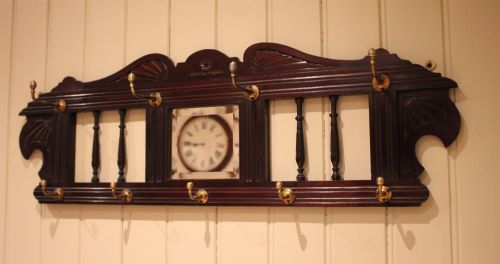
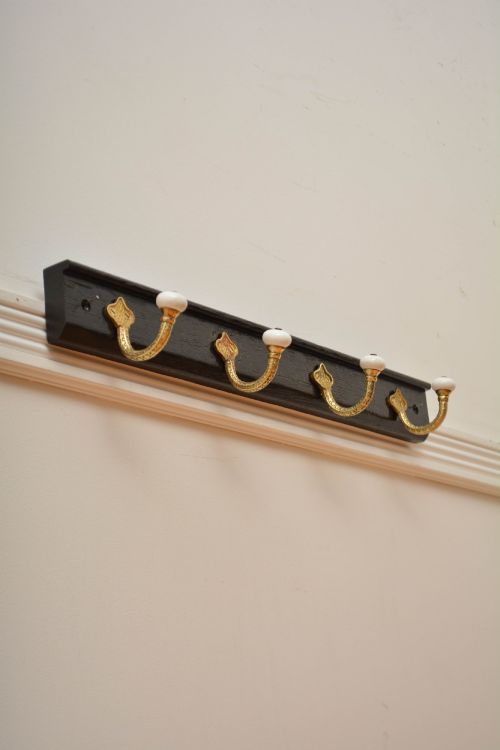
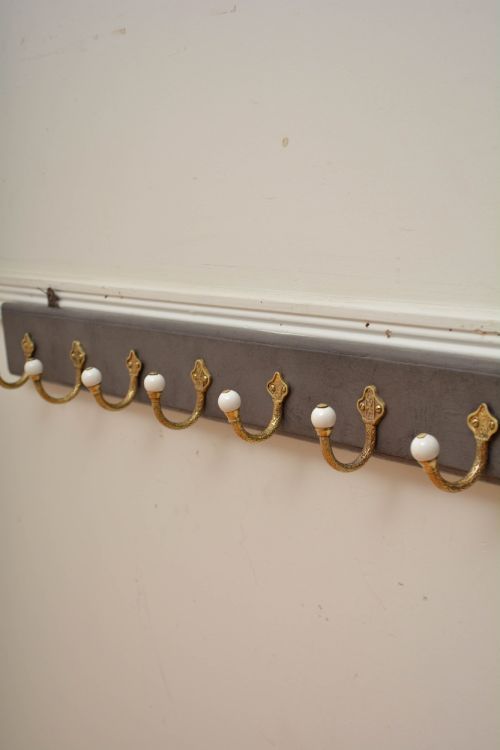
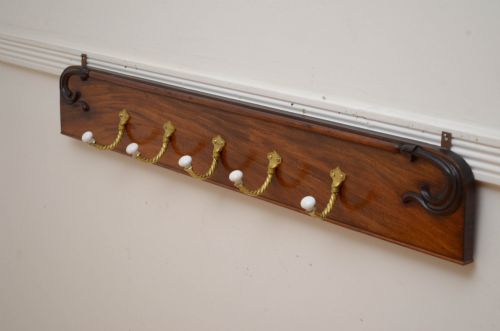
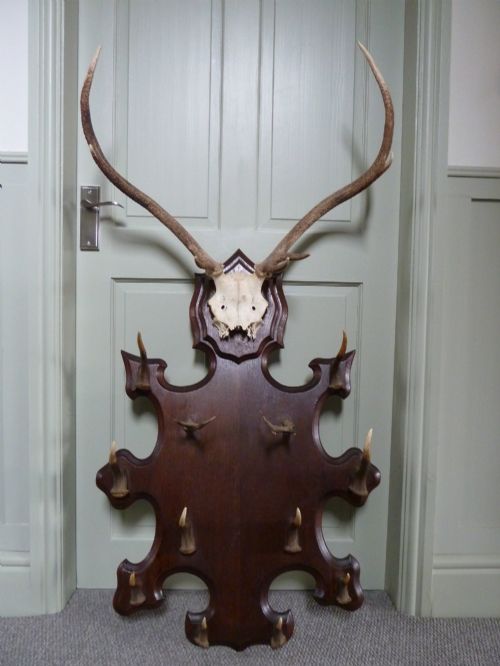
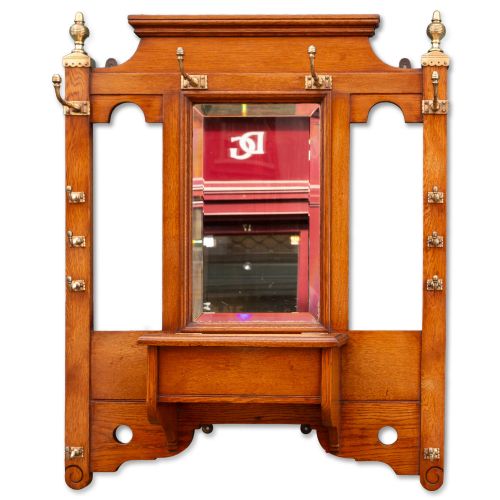
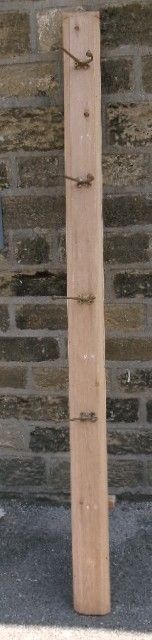
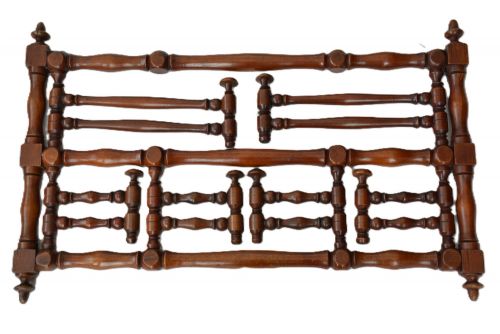
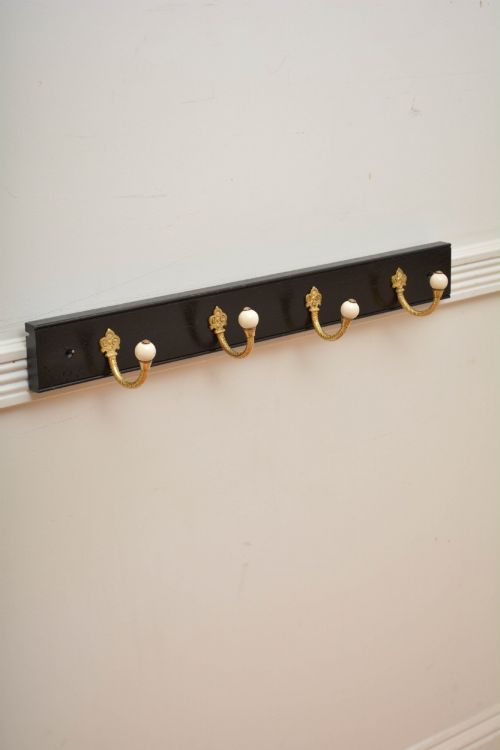
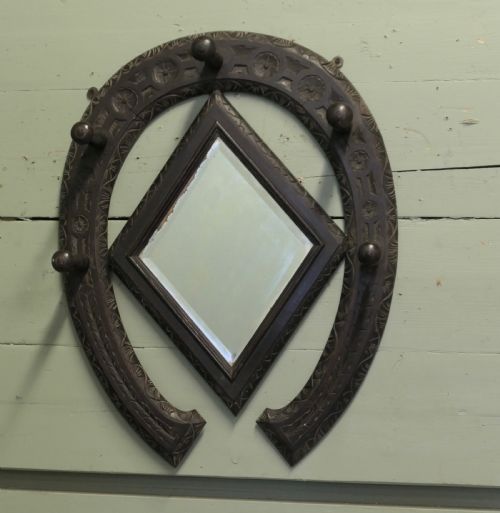
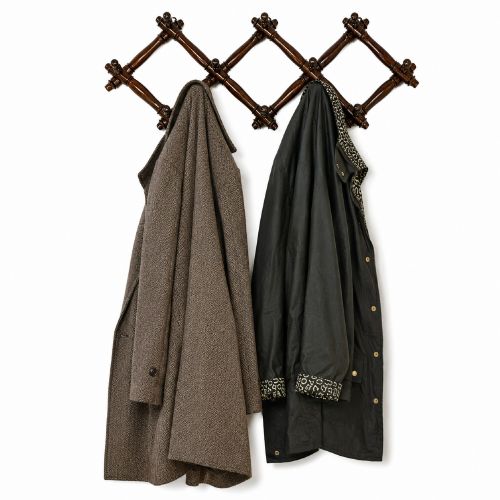
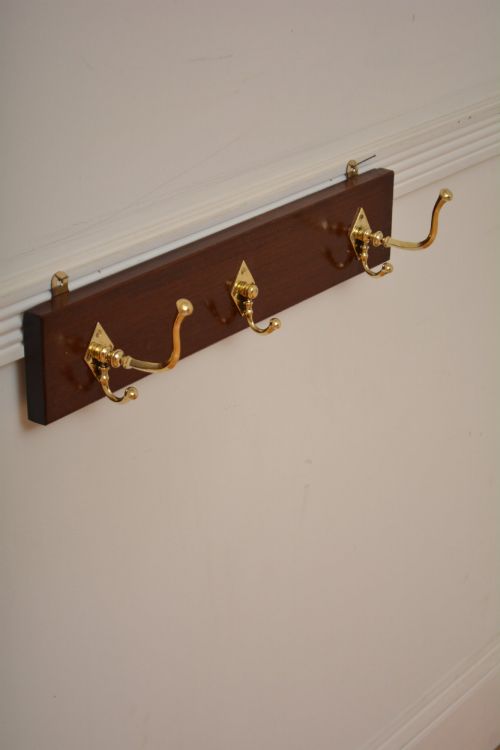
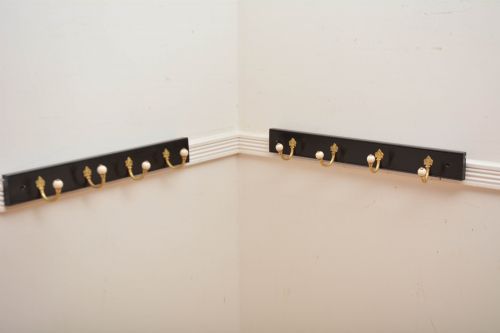
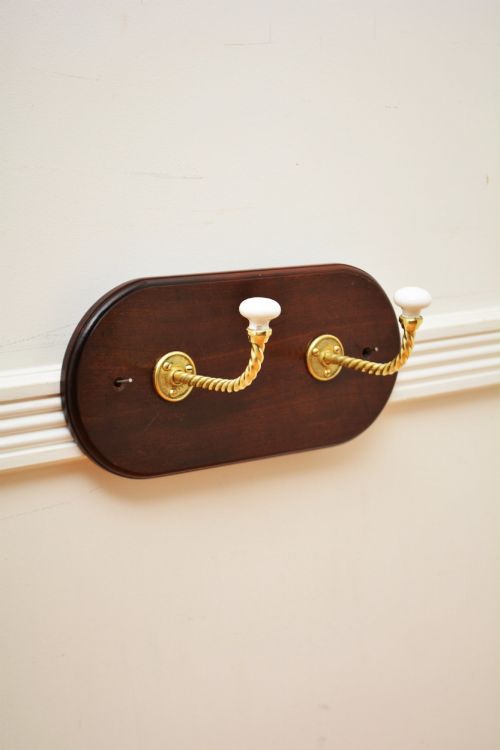
Most items on this page take the form of wall-mounted coat racks and rows of double brass hooks fixed to mahogany, oak, or pine boards. These range from simple functional boards with ceramic knobs to elaborate hall mirrors and taxidermy mounts.
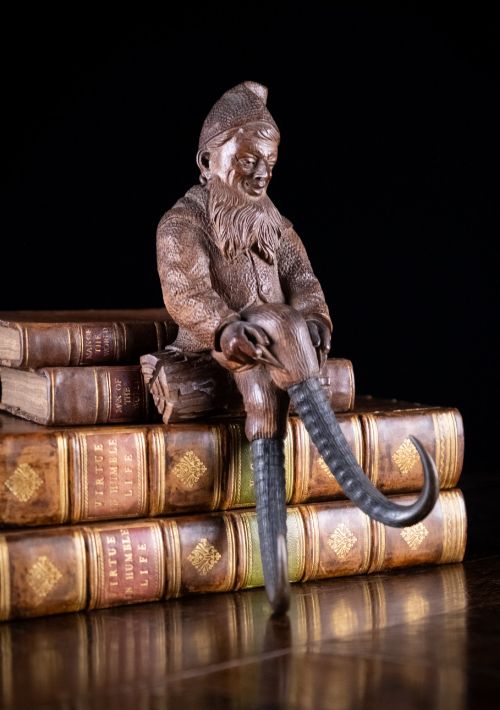
Buyers also encounter specialised regional variants such as Black Forest carved wood pieces and French brass fixtures. These diverse forms share a common purpose of providing sturdy wall hanging space while displaying period craftsmanship.
How they were made
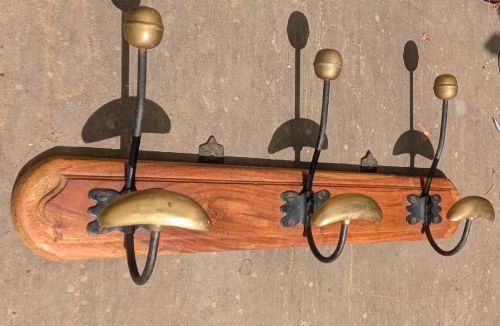
Makers utilised cast brass, bronze, and ormolu for the hooks themselves, often combining them with porcelain knobs or ceramic inserts. These metal elements were fastened to solid timbers such as mahogany, oak, walnut, and ebonised pine.
Carved wooden pieces relied on traditional joinery and hand-carving techniques, as seen in Black Forest animal forms and bentwood frames. Backboards were frequently shaped, polished, or fitted with bevelled mirrors and cast mounting plates.
Listings feature periods from the 1870s through the 1920s, combining brass, glass, mahogany, ceramic, and oak materials.
What varies in quality
Quality rests in the weight and casting definition of the metal hooks and the selection of cabinet timbers. Superior examples feature heavily cast brass plates, crisp chasing, and dense hardwoods like mahogany or golden oak rather than soft secondary woods.
The integration of decorative elements such as porcelain knobs, hand-carved animal motifs, and integrated mirror plates separates standard utility boards from finer reception hall pieces.
The Victorian Wall Hooks Glossary
- Backboard
- The timber panel that supports a row of hooks and provides screw holes for wall mounting. It is typically shaped or polished to match interior joinery.
- Ebonised
- Timber treated with a dark stain or finish to imitate ebony. This treatment was popular on Victorian pine and oak.
- Ormolu
- Gilded bronze or brass applied to decorative hardware and mounts. It offers a bright golden finish on French pieces.
- Bentwood
- Wood steamed and bent into curved shapes. It forms the lightweight frames of Thonet racks.
- Portmanteau
- A large wall-mounted rack fitted with multiple hooks and shelf space for hats. These fixtures served grand entrance halls.
Victorian Wall Hooks: Frequently Asked Questions
How do I mount a coat rack securely?
These heavy timber and metal pieces require solid wall fixings to bear the weight of winter coats. Use appropriate wall plugs or screw directly into timber studs.
Check the spacing of the original mounting holes on the backboard to distribute the load evenly across the wall.
Were these racks used only in hallways?
While primarily designed for reception halls, cloakrooms, and entranceways, smaller rows of hooks suited bedrooms and nurseries. Variations like key cupboards also served domestic administration.
Their robust construction allowed them to hold heavy garments and hats near main entry points.
How do I identify the period of a rack?
Examine the timber species, screw types, and casting style of the brass hooks. Mahogany and heavy brass indicate mid to late nineteenth-century manufacture.
Stylistic cues such as Aesthetic Movement geometry or Gothic Revival motifs help narrow down the decade of production.
Can these hold heavy winter coats?
Solid brass and iron hooks mounted on thick oak or mahogany backboards are exceptionally strong. They were built to support heavy woollen overcoats and wet garments.
Ensure the mounting screws engage with structural wall elements before loading the hooks.