



Brass Hall Tree Hooks
Brass hall tree hooks bring enduring utility and period character to an entryway, holding everyday coats and hats with solid metal weight.
Brass Hall Tree Hooks
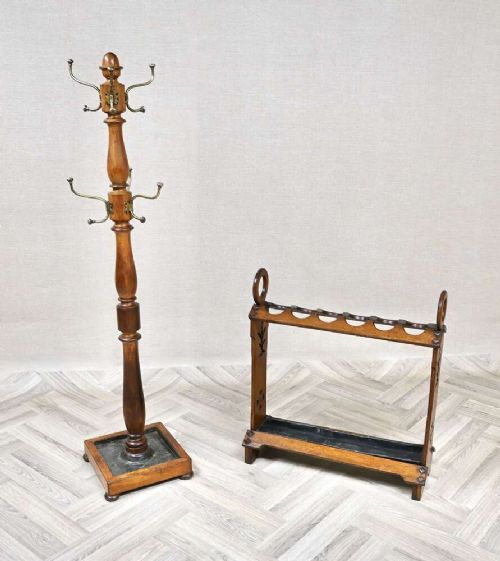
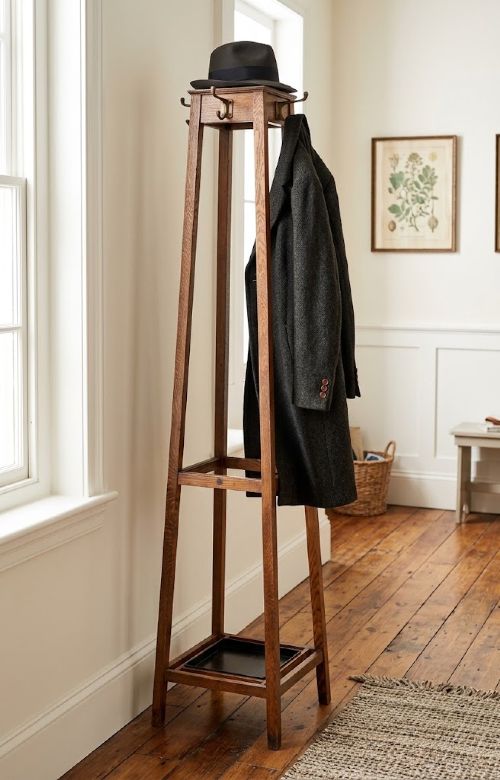
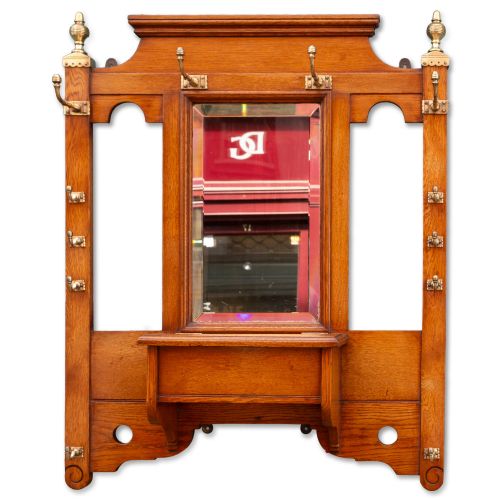
Brass hall tree hooks appear across various formats, from wall-mounted coat racks to larger hall stands and coat stands. When searching for brass hall tree hooks, a buyer typically encounters pieces integrated into larger stands or mounted upon wooden backs.
The selections span the Victorian era, the 19th century, and the early twentieth century, including the Arts and Crafts movement and Victorian Gothic Revival styles. These items served a practical domestic purpose in period hallways and vestibules.
Common forms include oak and walnut hall stands alongside hanging coat racks fitted with brass elements. The materials paired with brass include oak, mahogany, walnut, glass, marble, and ceramic.
How they were made
Makers utilised solid timbers such as oak, walnut, and mahogany to form the backboards and structural frames of coat racks and hall stands. These woods were often polished to highlight natural grain patterns.
Brass components were cast and mounted securely to the timber structures to bear the weight of heavy garments. Additional decorative or functional elements like marble inserts, glass, and ceramic details were incorporated into the larger hall stands.
Brass Hall Tree Hooks Retail Price Guide 2026
Typical asking prices for brass hall tree hooks among the pieces listed under this phrase on Sellingantiques today, from the lower quarter to the upper quarter. They describe what is for sale here now, not the wider market.
A narrow hall stand ensures nobody squeezes past your winter overcoat without a minor physical struggle.
What varies in quality
Substantial weight and gauge of the brass separate heavier, utilitarian pieces from lighter alternatives. Solid timber construction in oak or walnut indicates a higher standard of manufacture compared to veneered or lesser woods.
Integration of secondary materials such as marble, ceramic, or glass points to superior craftsmanship. The precision of the joinery and the detailing within styles like Arts and Crafts or Victorian Gothic Revival define the upper tier of the range.
Jas. Shoolbred
The Brass Hall Tree Hooks Glossary
- Hall Stand
- A piece of hallway furniture combining coat hooks, umbrella holders, and frequently a mirror or glove box. They organise outerwear near an entrance.
- Arts and Crafts
- A design movement valuing honest construction, simple forms, and visible handcrafting. It emerged in the late nineteenth century in reaction to industrial mass production.
- Walnut
- A dense, dark hardwood prized for its rich colour and durability. Cabinetmakers selected it for fine Victorian and Edwardian furniture.
Brass Hall Tree Hooks: Frequently Asked Questions
What periods do these pieces date from?
The listings span the Victorian era, the nineteenth century, and early twentieth-century decades including nineteen-ten and nineteen-twenty.
Styles range from plain Victorian to Arts and Crafts and Victorian Gothic Revival.
How were brass hooks mounted?
Hooks were generally screwed directly into wooden backboards of oak, walnut, or mahogany for wall mounting.
On larger hall stands, they formed an integral part of the standing furniture piece.
What woods appear alongside the brass?
Oak and walnut are frequently seen, alongside mahogany in various nineteenth-century items.
Some pieces also incorporate marble, ceramic, or glass elements.
Are these items wall mounted or freestanding?
The evidence includes both wall-mounted coat racks and freestanding hall stands or coat trees.
Both formats utilise brass hooks for hanging garments.