





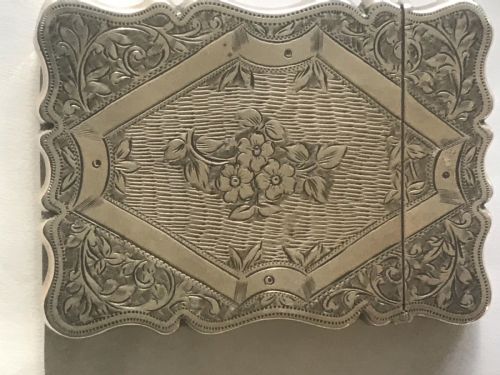
Victorian Visiting Card Holder
These Victorian visiting card holder pieces are small, pocketable containers designed for social calls, offering a tangible connection to nineteenth-century etiquette.
Victorian Visiting Card Holder
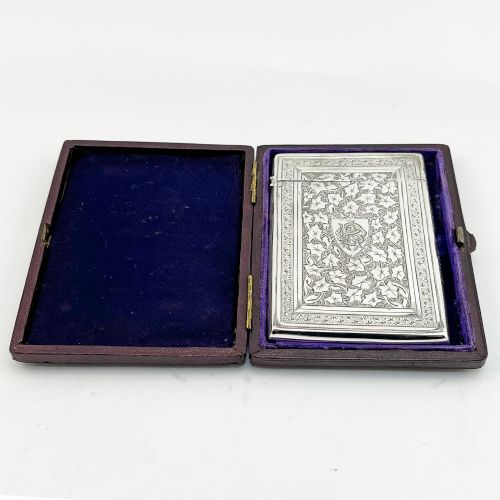
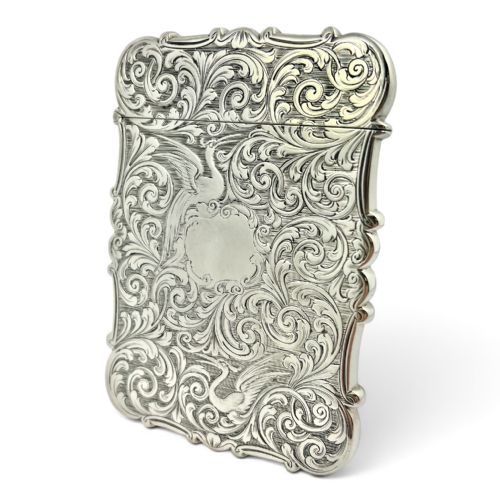
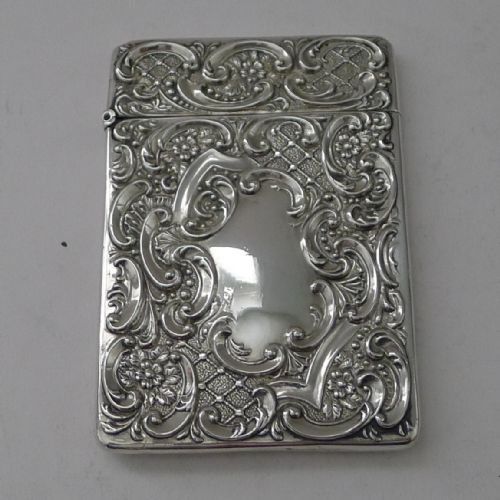
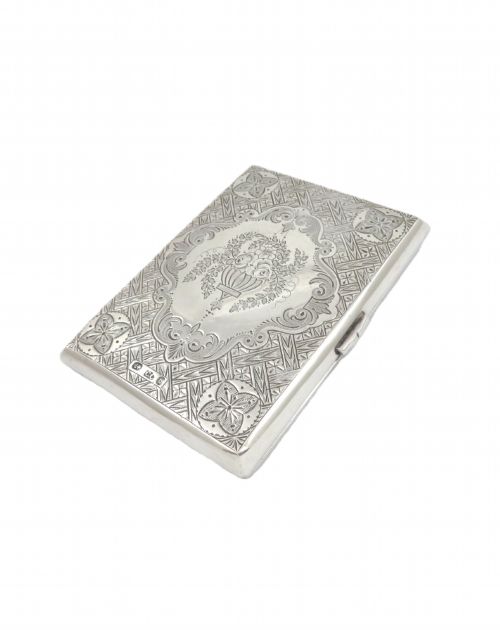
A victorian visiting card holder is a compact case designed to protect delicate paper calling cards during nineteenth-century social calls. The listings on this page predominantly feature sterling silver, alongside organic materials such as tortoiseshell, mother of pearl, bone, and Connemara marble.
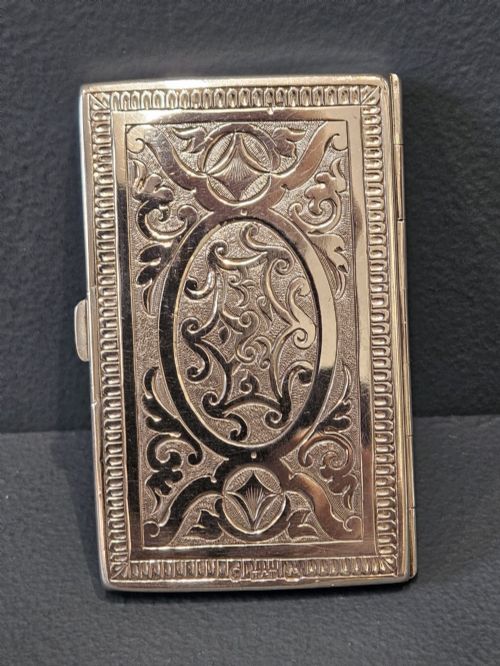
Most examples date from the Victorian and Edwardian periods, stretching chronologically from the mid-nineteenth century into the early twentieth century. These items take the form of slim card cases, calling card cases, and combination pieces that include stamp storage or aide-memoire pads.
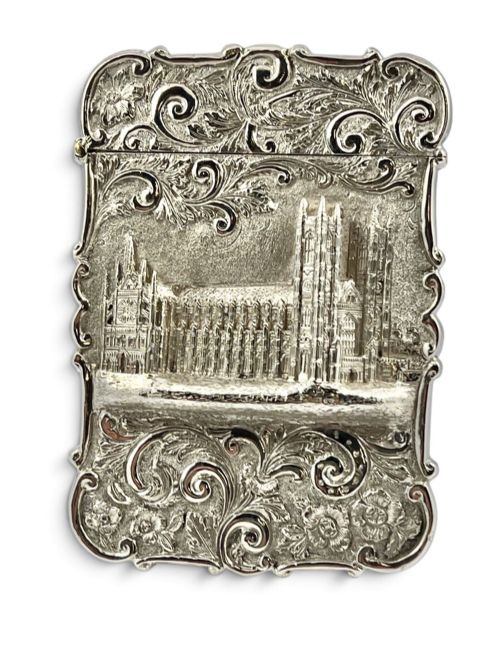
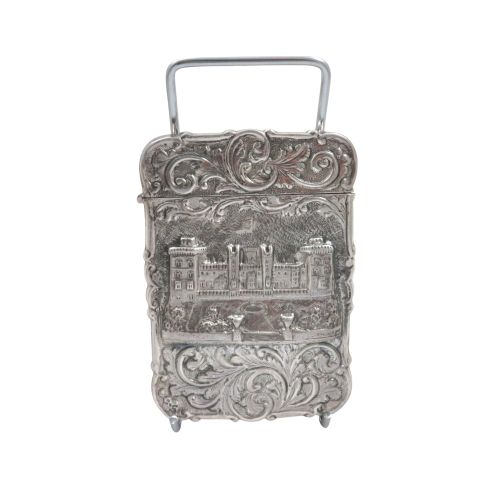
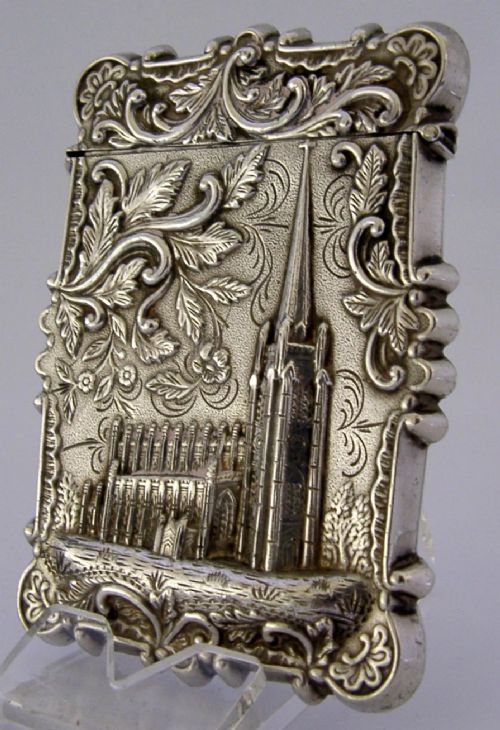
The regional origins and styles span local English production, Birmingham silversmithing, American output, and Anglo-Indian or Indian silver work. Castle top designs depicting notable landmarks like Windsor Castle, Trinity Church, and St Paul’s Cathedral appear alongside geometric and engraved motifs.
How They Were Made
Silversmiths utilised sterling silver to create rigid outer structures, frequently employing engine turning, crisp hand engraving, and deep repoussé work to depict deities, foliage, or architectural scenes.
Workers combined materials by mounting iridescent mother of pearl and dark tortoiseshell onto structural foundations, or by framing Connemara marble within silver mounts.
Hinged lids and fitted internal compartments required precise metalworking to ensure the thin cases closed securely while protecting paper contents.
Victorian Visiting Card Holder Retail Price Guide 2026
Typical asking prices for victorian visiting card holder among the pieces listed under this phrase on Sellingantiques today, from the lower quarter to the upper quarter. They describe what is for sale here now, not the wider market.
Listings span the Victorian and Edwardian eras, incorporating sterling silver, tortoiseshell, mother of pearl, and Connemara marble.
What Varies in Quality
The distinction between standard production and top-tier work rests on the depth and clarity of the decoration, particularly in architectural castle top scenes where the sharpness of the engraving defines the maker's skill.
Material selection alters the character of a piece, moving from plain silver surfaces to complex multi-material constructions featuring carefully matched tortoiseshell or inlaid mother of pearl.
Maker attribution also elevates certain items, as signed or marked pieces by established silversmiths demonstrate superior finishing in the hinges, catches, and overall weight of the metal.
Nathaniel Mills·George Unite
The Victorian Visiting Card Holder Glossary
- Castle top
- A style of card case featuring a detailed engraving or relief of a famous building or landmark on the cover. These architectural views often depict cathedrals or royal residences.
- Calling card
- A small paper card left during social visits to announce a caller's presence. These cards required rigid protective cases to prevent bending in pockets or reticules.
- Repoussé
- A metalworking technique where the smith hammers the design from the reverse side to form a raised relief on the front. This method creates tactile, three-dimensional decorative scenes.
- Aide-memoire
- A small notebook or memorandum tablet incorporated into a card case. It allowed the owner to jot down social engagements and reminders.
- Connemara marble
- A distinctive green ornamental stone sourced from Ireland. It appears set into silver frames on select period items.
Victorian Visiting Card Holder: Frequently Asked Questions
What is a Victorian visiting card holder?
A small pocket case used in the nineteenth century to store and transport paper calling cards.
These accessories protected delicate cards from damage while their owners made formal social visits.
How were card cases used?
Gentlemen and ladies carried them during social calls to leave paper cards when hosts were absent.
They kept the cards crisp and clean until presentation.
What materials are common?
Sterling silver forms the primary structure for the majority of surviving examples on this page.
Other pieces incorporate tortoiseshell, mother of pearl, bone, and Connemara marble.
What is a castle top case?
A specialised design featuring a raised or engraved depiction of a famous landmark on the cover.
Examples include specific buildings like Windsor Castle or St Paul's Cathedral.