


Victorian Village Landscape Painting
A victorian village landscape painting brings home the calm of rural life through period brushwork and soft natural tones.
Victorian Village Landscape Painting
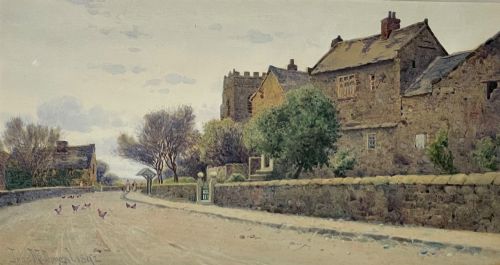
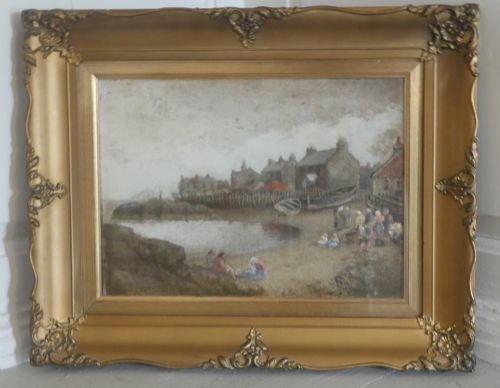
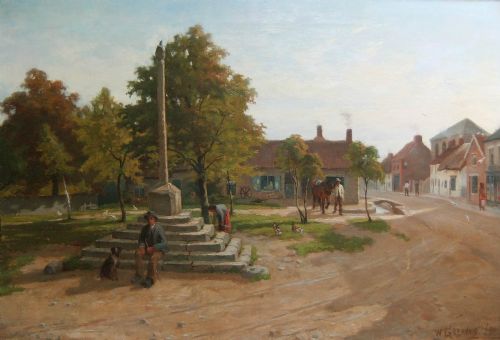
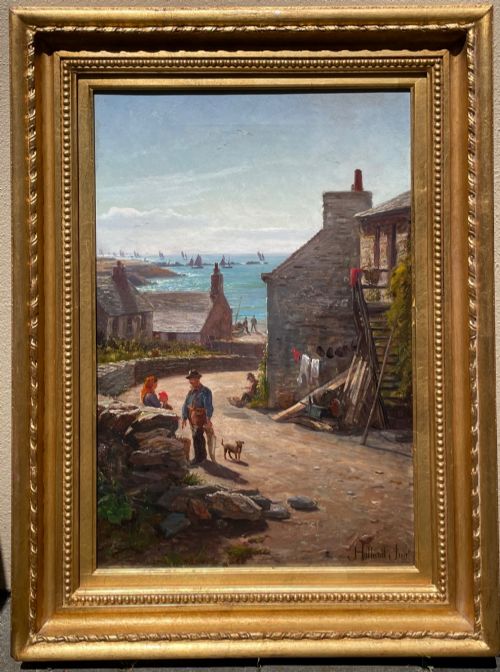
A victorian village landscape painting depicts rural settlements, country lanes and coastal hamlets across nineteenth century Britain and Europe. These works capture specific locations from Yorkshire to the Isle of Man, often showing cottages, inns and daily village activities.
The version most frequently found on this page is a modest watercolour on paper or an oil painting on canvas, housed in a gilt frame. Artists of the period documented regional life with careful observation of local architecture and natural light.
Subjects range from Thameside villages and Welsh coastal views to quiet country watercolours and pastoral scenes with figures. Each piece reflects the nineteenth century fascination with traditional rural communities before industrial expansion.
Materials and construction
These works rely primarily on oil paint applied to stretched canvas or panel, and watercolours painted on paper surfaces. Artists used traditional pigments bound in oil or water-soluble gums, layered to create depth in skies, foliage and stone cottages.
Support materials include wood panels, paper sheets and woven canvas secured to wooden stretchers. Many pieces retain their period gilt frames, which use composition ornament over a wooden core to set off the painted surface.
Several artists painted donkey rides by the water's edge, proving that nineteenth century villagers enjoyed a slow commute too.
What separates works in quality
Quality rests on the precision of the drawing, the handling of light and shadow, and the artist's ability to render atmosphere. Stronger works display confident brushwork in the rendering of figures, foliage and architectural details rather than repetitive formulaic foliage.
The condition of the pigment and the integrity of the canvas or paper surface also distinguish examples. Works that retain their original unblemished paint layers and period gilt frames offer a more complete historic survival.
John McDougal·Edward Mills·William Greaves·John Holland·Arthur Tucker·Charles Vickers·George Gregory·Frederick G. Coulridge·John Edward Bale·Robert Hollands Walker·David Woodlock·Henry Sykes·Robert McGregor·B W Leader·J.V.R. Parsons·John Ritchie·Georgina Lara·Carleton Grant·Eugene Battaille·Alfred Rimmer·Joseph Thors·Joseph Hughes Clayton·John Holland Snr·John Baragwanath King
The Victorian Village Landscape Painting Glossary
- Watercolour
- A painting method where fine pigment is suspended in a water-soluble binder and applied to paper. It yields transparent washes that capture delicate atmospheric effects.
- Oil on canvas
- Pigment mixed with drying oils applied to a woven fabric stretched across a wooden frame. This medium allows for rich colour saturation and textured impasto.
- Gilt frame
- A wooden picture surround covered with a thin layer of gold leaf or metallic gilt powder. It provides a reflective border that isolates the painting from its surroundings.
- Genre painting
- Artwork depicting scenes from everyday life, ordinary people, and domestic or rural settings. These pieces offer insight into social history and local customs.
- Panel painting
- A flat piece of wood used as a rigid support for oil or tempera paint. Wood panels were common before canvas became the dominant support.
Victorian Village Landscape Painting: Frequently Asked Questions
How do I date a village landscape painting?
Examine the clothing of any figures, the style of the architecture, and the materials used in the canvas and stretcher. Period signatures, dates inscribed on the reverse, and framing clues often narrow down the decade.
Compare the brushwork and palette to known examples from the same artist or regional school. Nineteenth century works frequently display specific tonal preferences and mounting methods characteristic of their era.
Where should I hang an oil painting?
Choose an interior wall away from direct sunlight, dampness and extreme temperature fluctuations. Stable indoor conditions protect both the canvas and the delicate gilt frame from warping or cracking.
Ensure the hanging hardware securely supports the weight of the wooden stretcher and frame. Proper positioning at eye level allows the fine details of the village scene to be appreciated clearly.
What is the difference between oil and watercolour?
Oil paint uses a slow-drying oil binder that allows for rich blending, textured brushstrokes and deep colour saturation on canvas or panel. Watercolour employs a water-based binder on paper, creating luminous transparent washes.
Watercolours require protection under glass to prevent moisture damage, whereas oil paintings on canvas remain exposed to the air. Each medium offers a distinct visual texture suited to capturing rural light.