





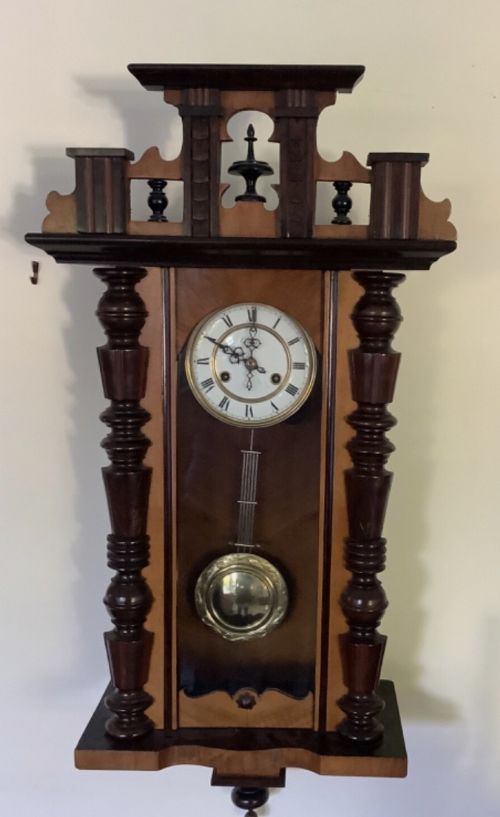

Victorian Vienna Regulator Clock
A victorian vienna regulator clock brings precision timekeeping and stately presence to a wall, driven by weight-driven movements and architectural cases.
Victorian Vienna Regulator Clock
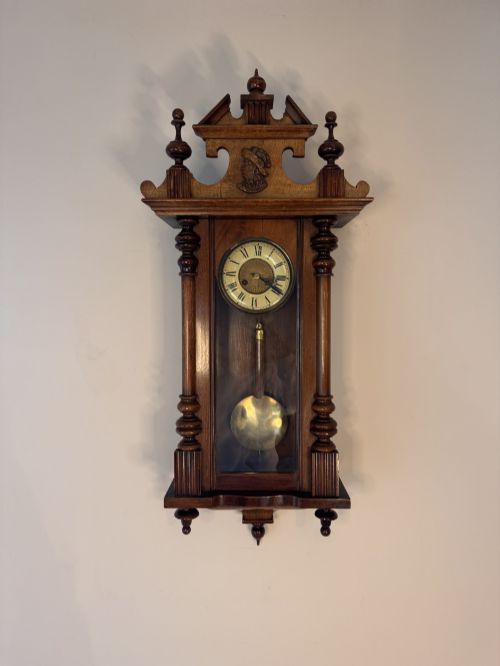
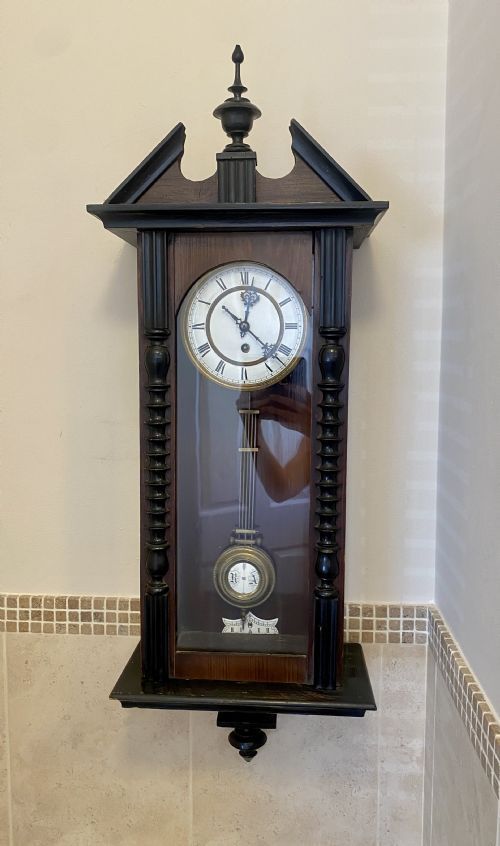
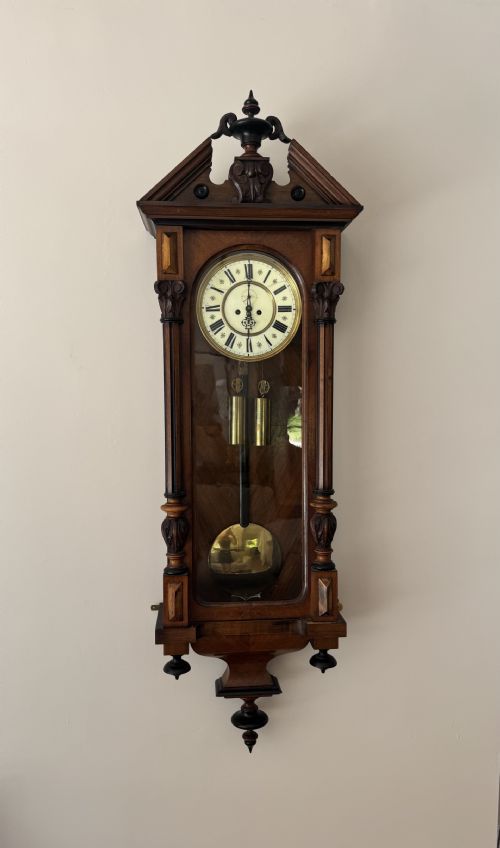
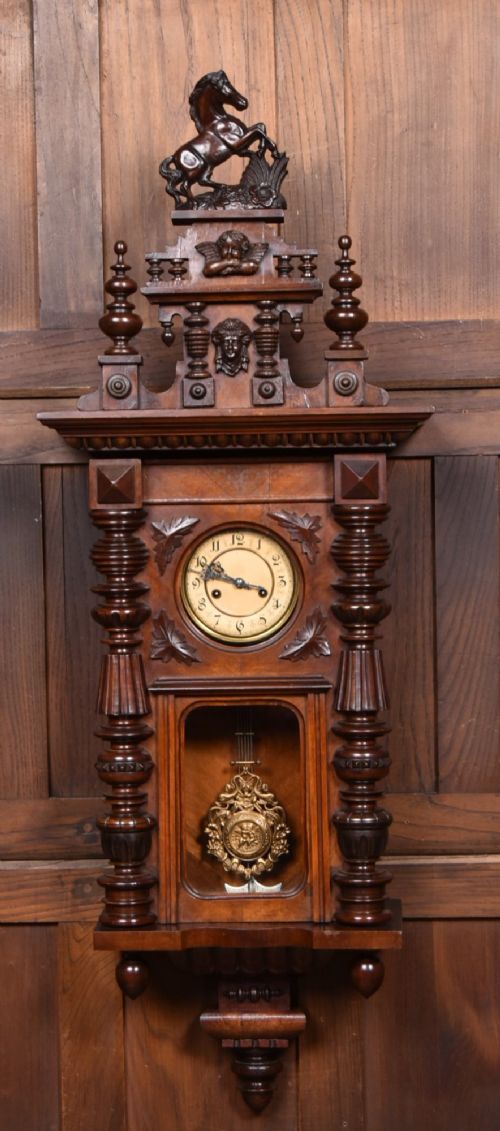
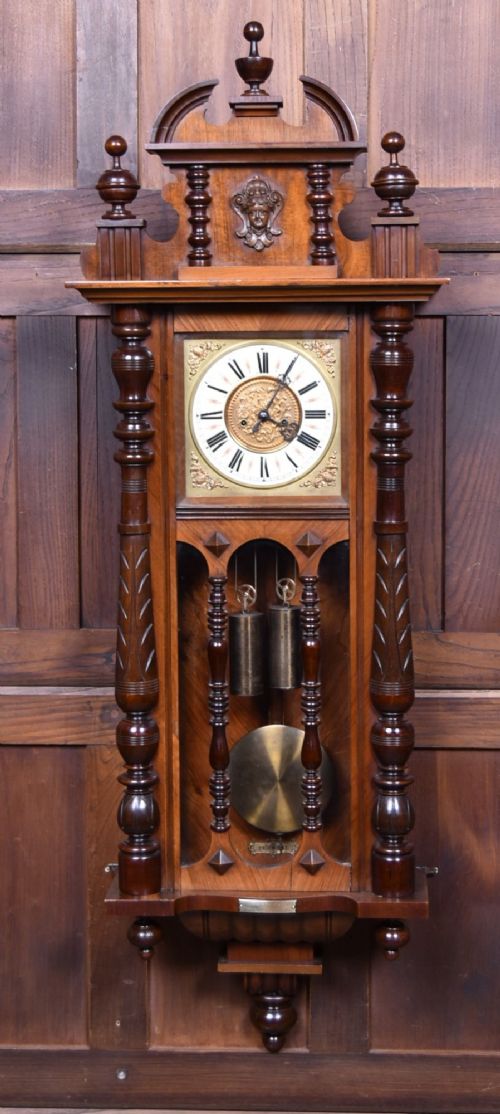
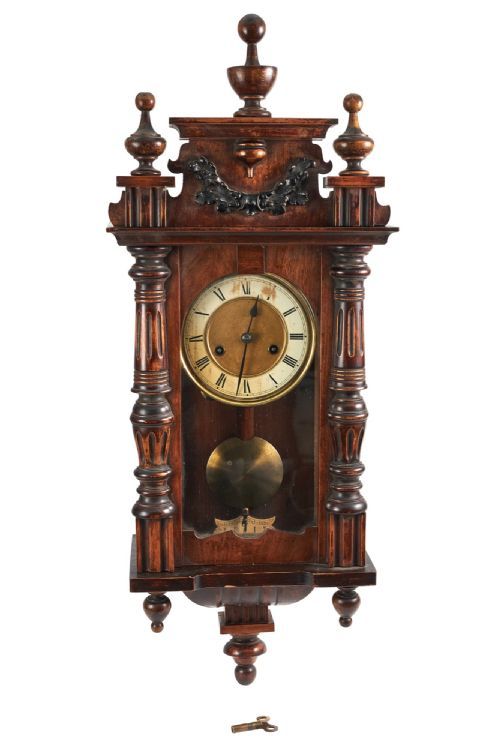
A victorian vienna regulator clock is a precise timekeeper designed to hang upon a wall, emerging primarily in the nineteenth century from Austrian and German workshops. These pieces span periods from the mid nineteenth century through to nineteen hundred, taking the form of striking wall clocks, miniature timepieces, and drop dial designs.
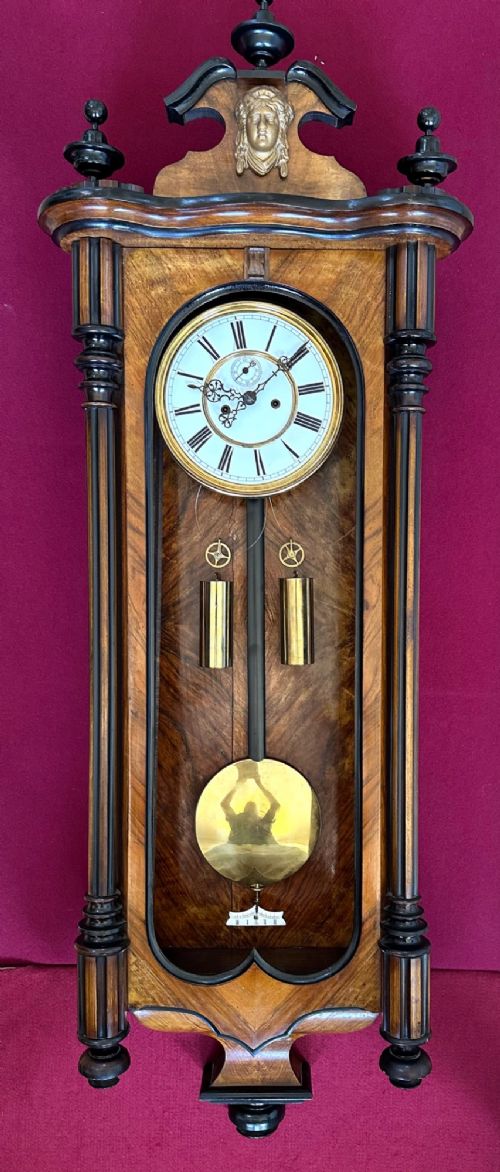
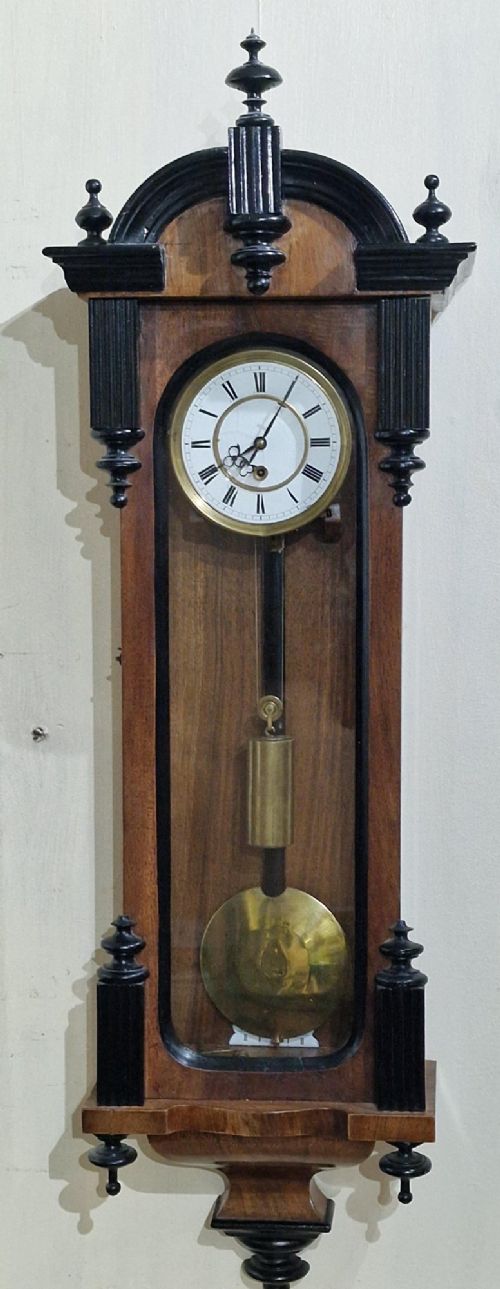
Most examples encountered on this page date from eighteen sixty to eighteen eighty, housed in walnut cases with glazed doors that reveal the swinging pendulum. Buyers find single, double, and triple weight movements, alongside spring-driven variants, all housed within the distinctive regulator case style.
Materials and construction
Cases utilise timber such as walnut, burr walnut, oak, and ebonised wood, shaped into architectural facades with carved detailing and glass panels. Brass forms the heavy weights and swinging pendulums that drive and regulate the internal mechanism.
Dial faces incorporate crisp enamel or porcelain rings with Roman numerals, protected behind glazed bezels. Movements are constructed from brass and steel parts, built to run for eight days or a full month on a single winding.
Victorian Vienna Regulator Clock Retail Price Guide 2026
Typical asking prices for victorian vienna regulator clock among the pieces listed under this phrase on Sellingantiques today, from the lower quarter to the upper quarter. They describe what is for sale here now, not the wider market.
Listings feature walnut, burr walnut, oak, and ebonised wood cases housing brass and enamel components.
What separates the finest examples
Quality rests in the precision of the movement and the execution of the wooden case, where crisp hand-carving and figured burr walnut veneers elevate an ordinary piece. Master makers integrated refined compensating pendulums and robust weight-driven gear trains that maintain superior timekeeping accuracy.
The architectural proportions of the case and the clarity of the enamel dial dictate the visual balance of the clock. Finer pieces display harmonious pediments, matching brass hardware, and well-preserved internal components that reflect meticulous nineteenth-century craftsmanship.
AG Lenzkirch·Gustav Becker·Johann Baptist Beha
The Victorian Vienna Regulator Clock Glossary
- Regulator
- A precision pendulum clock designed for high accuracy, historically used as a standard to set other timepieces. They feature long cases with glazed front doors to observe the movement.
- Vienna regulator
- A term describing nineteenth-century Austrian and German wall clocks modelled on the precise regulators made in Vienna. They typically feature weight-driven movements and tall, glass-fronted wooden cases.
- Double weight
- A movement driven by two suspended brass weights, usually powering both the timekeeping train and a striking mechanism. This setup allows the clock to run for longer periods without manual intervention.
- Enamel dial
- A face made by fusing powdered glass to a metal base at high temperatures, creating a smooth, durable surface. These dials feature painted numerals and minute tracks.
- Ebonised wood
- Timber treated with a finish that mimics the dark, dense appearance of ebony. Makers applied this technique to highlight architectural mouldings and contrast against lighter walnut veneers.
Victorian Vienna Regulator Clock: Frequently Asked Questions
How do I wind a wall clock?
Use the appropriate winding key to turn the arbors on the dial face until the weights reach their upper position.
Take care not to overwind the mechanism, stopping as soon as resistance is felt.
Where should I hang my clock?
Mount the clock on a sturdy interior wall using a secure fixing that supports the full weight of the case and movement.
Ensure the wall is flat so the case hangs plumb, allowing the pendulum to swing evenly without catching.
Why does the clock lose time?
A clock often loses time if the pendulum bob is positioned too low on the suspension rod, requiring a slight upward adjustment of the regulating nut.
Changes in room temperature or uneven wall mounting can also alter the beat of the pendulum.
How do I set the pendulum swinging?
Give the pendulum bob a gentle push to one side until you hear an even tick-tock rhythm from the escapement.
Avoid pushing the pendulum too hard, as an excessive swing can cause the movement to trip or stop.