


Victorian Upholstery Settee
A victorian upholstery settee brings deep-buttoned comfort and period presence to a room, built around a robust timber frame.
Victorian Upholstery Settee
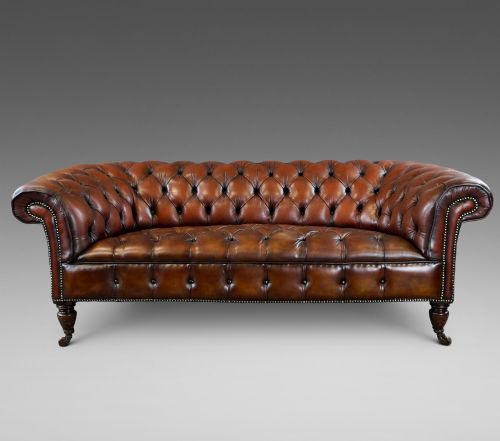
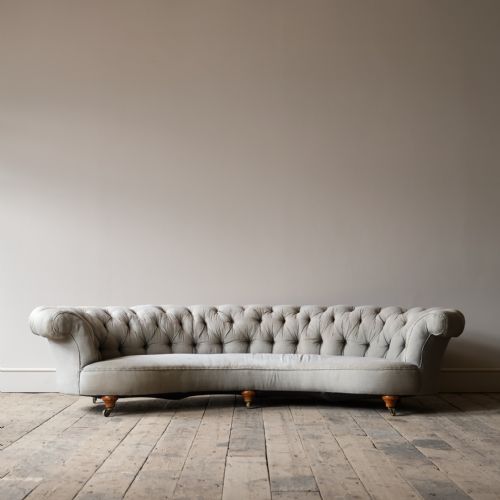
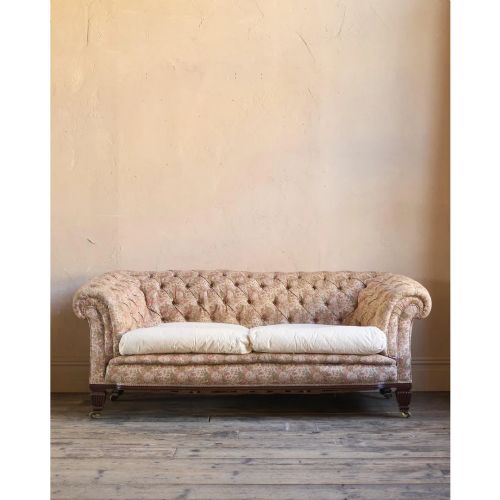
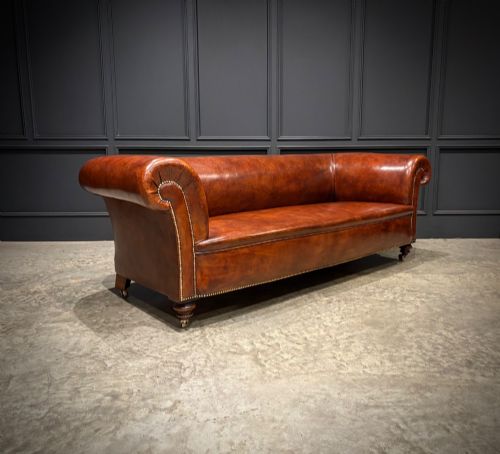
A victorian upholstery settee is a seated furniture form designed for multiple occupants, appearing across nineteenth-century styles such as the Aesthetic Movement, Rococo Revival, and Napoleon III. These pieces range from substantial leather Chesterfields to carved showwood frames upholstered in damask, velvet, or calico.
The pieces listed on this page originate primarily from the nineteenth century, including specific dates around 1850, 1880, 1890, and 1900, alongside Edwardian examples. Forms encompass scroll-arm sofas, double-end settees, and large salon suites reflecting English Country House and French Chateau aesthetics.
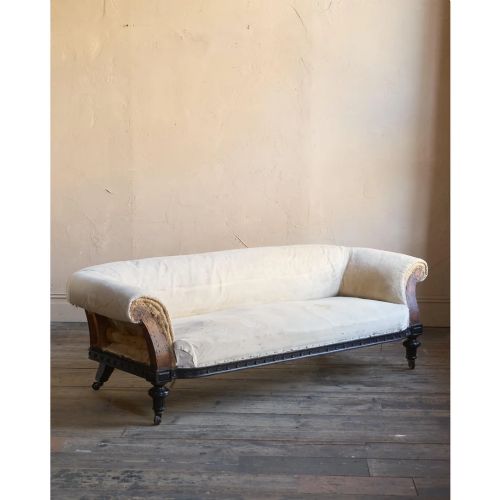
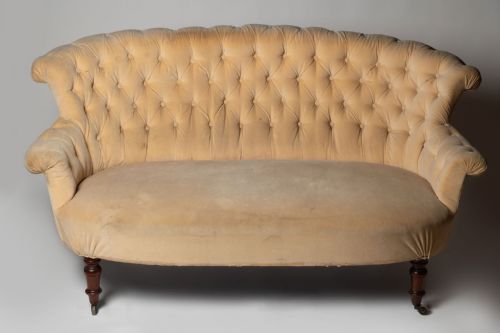
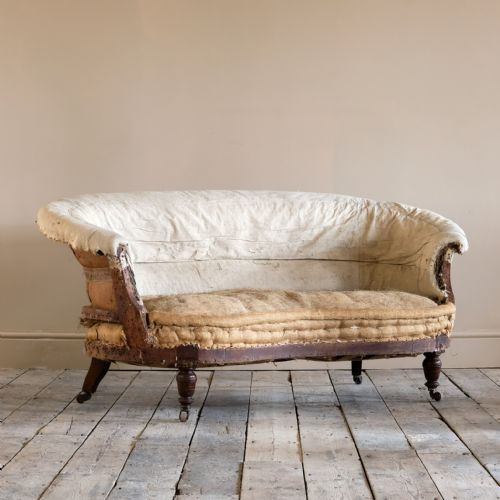
Buyers seeking a victorian upholstery settee encounter diverse configurations, from button-backed mahogany showwood frames to unrestrained frames sold specifically for fresh upholstery. The selection spans compact two-seaters and expansive salon seating designed for formal reception rooms.
Materials and construction methods
Makers constructed the structural frames of a victorian upholstery settee using hardwoods such as mahogany and walnut, supplemented by internal support webbing and heavy hessian foundations. These timbers were frequently carved with ornamental details like lion paw feet or serpentine showwood borders.
Upholstery layers relied on traditional stuffings enclosed in calico or original ticking, finished with surface coverings of leather, velvet, or damask secured by brass tacks. The deep-buttoned effect, characteristic of many examples, required precise tensioning through the internal padding to the wooden frame.
Some nineteenth-century frames wait patiently in bare calico, like guests arriving before the ball.
Assessing quality in period seating
The refinement of the showwood carving separates standard production from superior pieces, particularly where hand-carved details on walnut and mahogany frames exhibit crisp execution and balanced proportions. The integrity of the underlying timber frame determines the structural longevity of the piece.
The sophistication of the upholstery technique, from the regularity of buttoning to the selection of high-grade leather, velvet, or damask, distinguishes finer examples. Surviving original ticking or early upholstery materials indicates a preserved state that influences the character of the furniture.
Howard & Sons·Hampton & Sons
The Victorian Upholstery Settee Glossary
- Chesterfield
- A large upholstered sofa characterised by arms and back of the same height, frequently featuring deep buttoning. This form remains a staple of nineteenth-century seating.
- Showwood
- Exposed timber framework on an upholstered piece where the polished wood of the arms, legs, or crest rail remains visible around the fabric. Mahogany and walnut are typical showwood materials.
- Calico
- A plain-woven cotton fabric utilised as the foundational inner layer beneath the final decorative upholstery cover. It holds the stuffing tightly in position.
- Hessian
- A coarse woven fabric, typically made from jute fibres, employed as strong webbing or foundation support beneath internal padding. It provides structural tension for the seat.
- Damask
- A reversible figured fabric woven on a jacquard loom, frequently utilised for formal nineteenth-century salon seating. It displays patterned motifs that catch the light.
Victorian Upholstery Settee: Frequently Asked Questions
What defines a victorian upholstery settee?
A victorian upholstery settee is a nineteenth-century double or triple seat featuring padded upholstery, enclosed in materials ranging from leather to velvet over mahogany or walnut frames.
These pieces reflect diverse design influences, including Rococo Revival curves and the clean lines of the Aesthetic Movement.
How do I care for leather upholstery?
Leather-covered settees require regular dusting with a dry cloth and occasional application of appropriate leather balms to prevent drying out. Direct sunlight and heat sources should be avoided to protect the hide.
Preserving the original leather maintains the historic character of nineteenth-century Chesterfields and salon suites.
Where were these settees placed?
Original locations included formal drawing rooms, libraries, and large reception halls within English Country Houses and urban residences. They served as primary social seating for entertaining guests.
Today, these substantial forms function as focal points in large living spaces or studies.
How do I identify a Howard & Sons piece?
Attribution to Howard & Sons relies on stamped maker marks on the wooden frame legs, specific castors, or remnants of original ticking upholstery. Their work is known for substantial proportions and quality internal stuffing.
Comparing construction details with documented examples helps confirm the workshop origin.
What is button-backed upholstery?
Button-backed upholstery involves pulling the outer fabric deep into the internal stuffing and securing it with buttons in a diamond lattice pattern. This technique creates distinct folds and firm tension across the backrest.
It is a common feature on Victorian salon suites and Chesterfield sofas.