

Victorian Upholstered Reading Chair
A victorian upholstered reading chair offers deep comfort and structural ingenuity, built for long hours with a book.
Victorian Upholstered Reading Chair
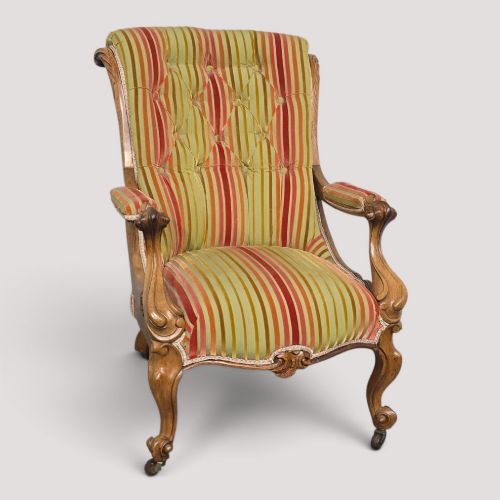
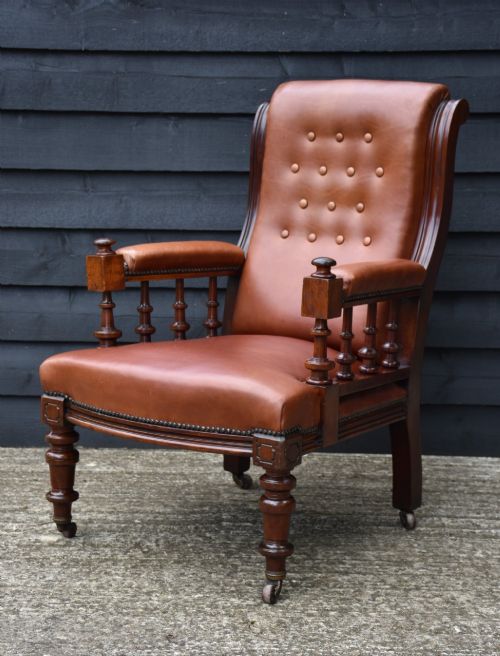
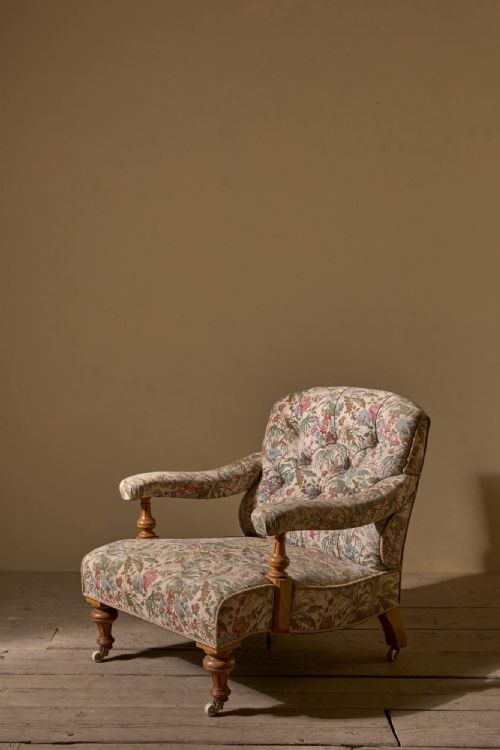
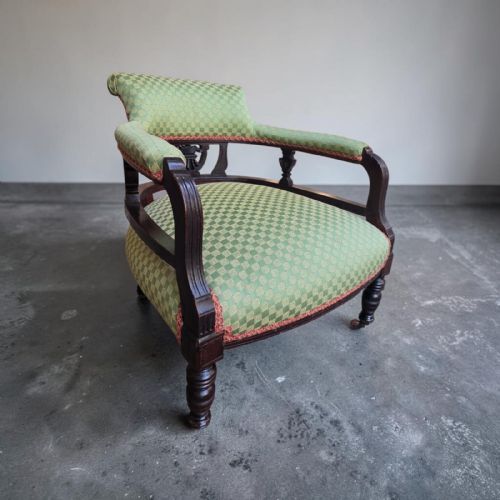
A victorian upholstered reading chair combines generous padding with functional design elements intended for study and relaxation. Buyers searching for a victorian upholstered reading chair encounter diverse forms, including library armchairs with reading stands, adjustable backrests, and country house open armchairs.
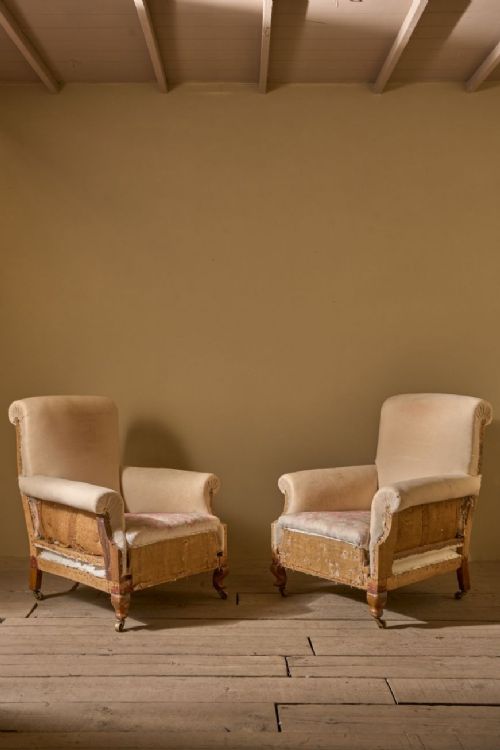
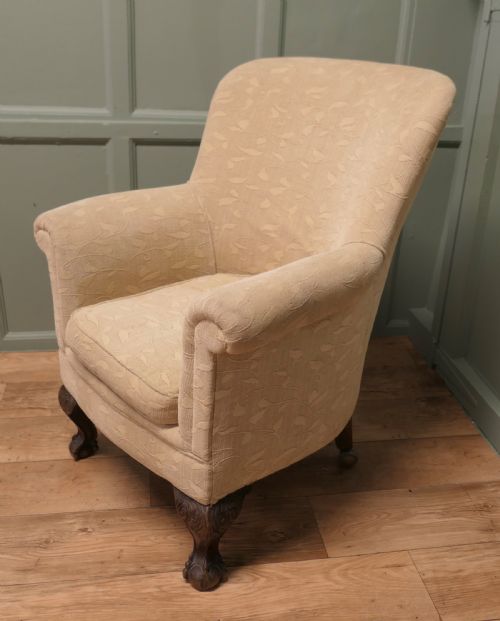
The materials span mahogany, walnut, oak, and rosewood frames paired with leather, fabric, velvet, calico, and hessian upholstery. Stylistic influences range from early and mid-Victorian periods to Regency, William IV, Aesthetic Movement, and Arts and Crafts designs.
Most examples originate from the nineteenth century, with specific pieces dating from eighteen fifty, eighteen sixty, eighteen eighty, and eighteen ninety. Makers and styles such as Howard and Sons, Gillows, and Queen Anne Revival appear frequently among the listings.
Materials and construction methods
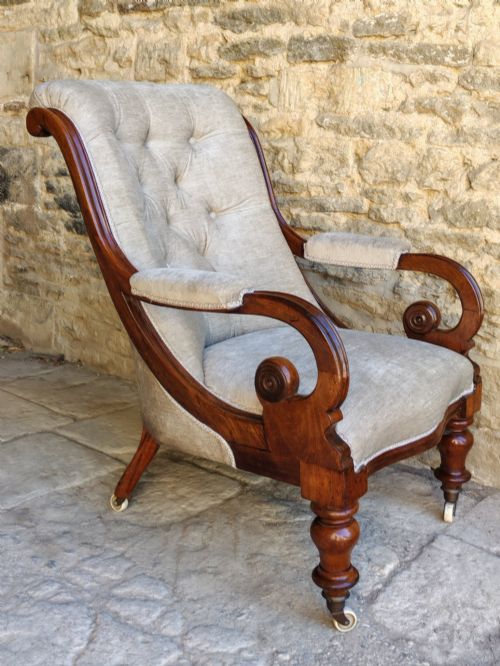
Makers constructed frames from dense hardwoods like mahogany, walnut, oak, and rosewood, ensuring stability under heavy use. These timber frames often feature carved details, reeded legs, or aesthetic movement accents.
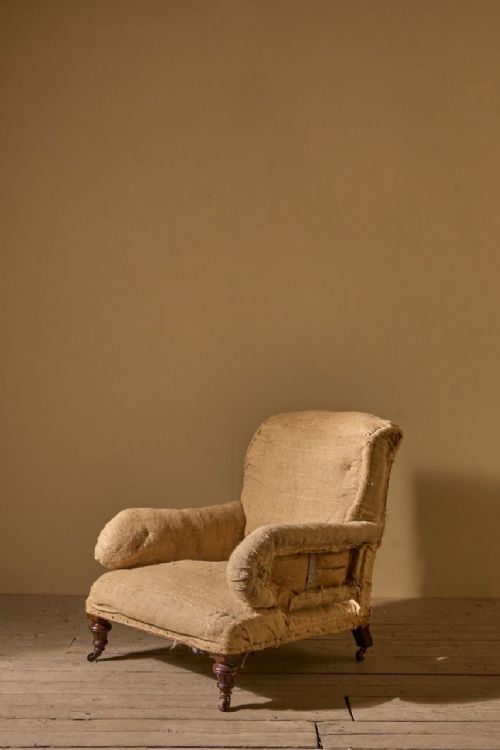
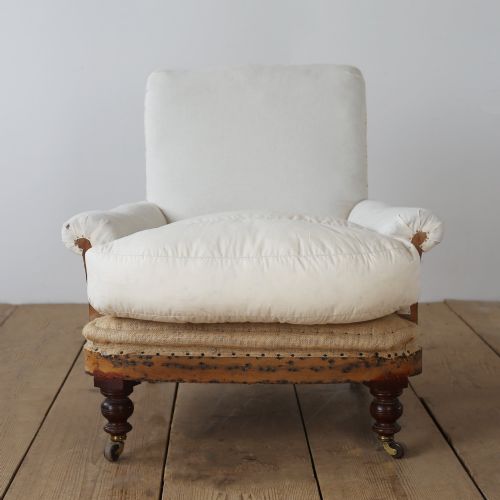
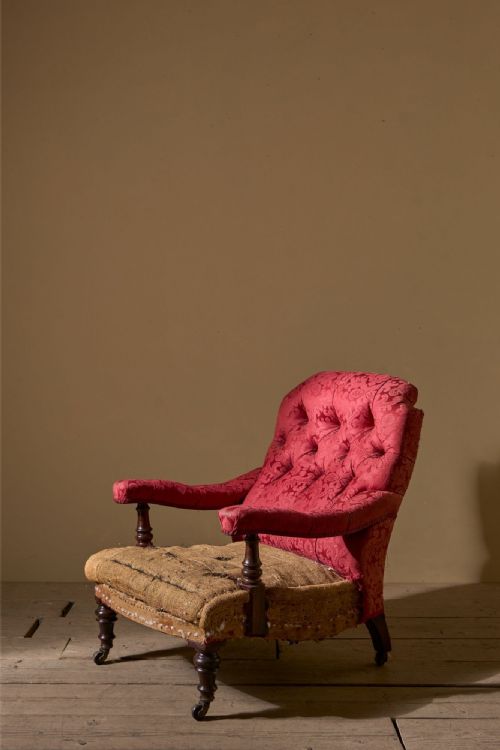
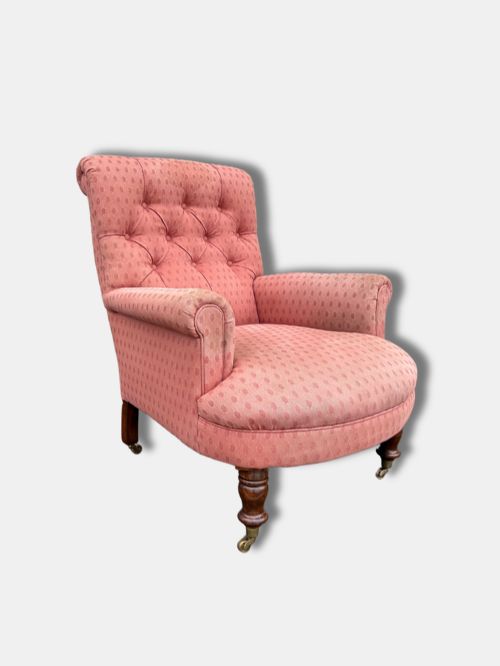
Internal support relied on traditional stuffing materials such as hessian and calico before applying surface coverings of leather, velvet, or fabric. Button back upholstery and adjustable backrests added mechanical complexity to the seating.
Several armchairs arrive equipped with reading stands, proving that nineteenth-century readers took their comfort as seriously as their literature.
Distinguishing quality in construction
Quality rests upon the integrity of the hardwood timber frame and the precision of the joinery beneath the upholstery. Finer examples exhibit meticulous carving, robust internal webbing, and sophisticated mechanical adjustments for reading stands or reclining backs.
Attribution to prominent makers or workshops elevates a piece, as does the retention of original leather or fabric coverings. The balance between ergonomic proportion and decorative restraint defines the superior specimens.
Howard and Sons·Gillows·Morris and Co·Holland and Sons·Morison and Co·C Hindley and Sons
The Victorian Upholstered Reading Chair Glossary
- Button back
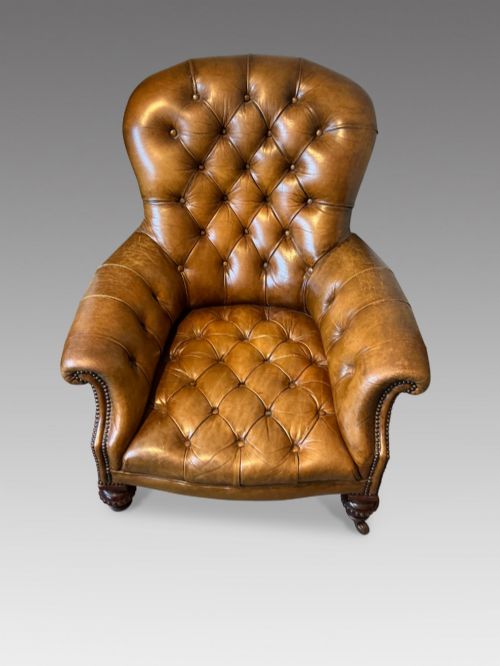
- Upholstery technique where deep buttons are pulled through the padding in a grid pattern. This secures the filling and creates distinct tufted cushions.
- Library armchair
- Sturdy seating designed for studies, typically featuring leather upholstery and substantial wooden frames. These chairs often incorporate reading stands or writing surfaces.
- Wing armchair
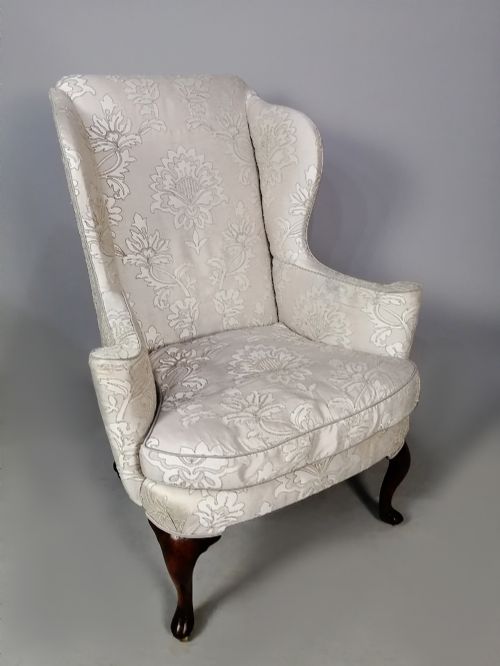
- Seating with protective side panels attached to the backrest. These wings historically blocked drafts and retained warmth around the occupant.
- Adjustable backrest
- Mechanical system allowing the seat back to recline or alter angle. This mechanism supported changing postures during extended periods of reading.
- Open armchair
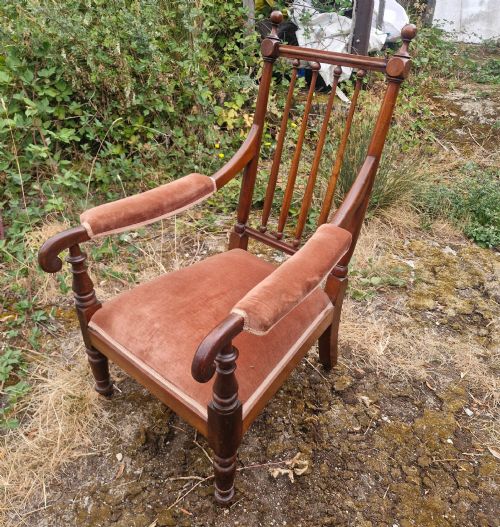
- Chair design featuring un-upholstered wooden arms. These exposed frame elements often display carved mahogany or walnut details.
Victorian Upholstered Reading Chair: Frequently Asked Questions
What is a Howard and Sons style chair?
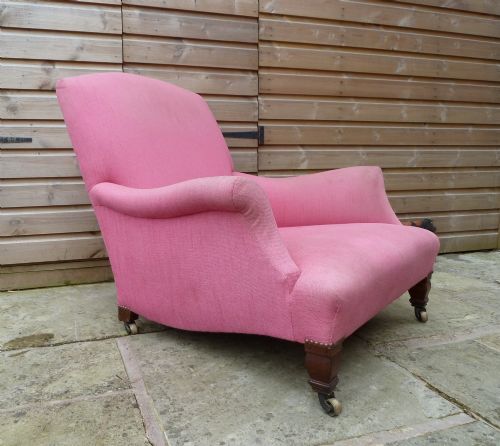
Howard and Sons pieces are renowned nineteenth-century English armchairs known for supreme comfort and meticulous upholstery standards. They often feature branded castors and low-slung profiles.
Listings demonstrate that their distinct aesthetic influenced many contemporary and later workshops. Collectors prize both signed pieces and those created in this specific manner.
Are these chairs suitable for daily use?
These nineteenth-century chairs were built with durable hardwoods like oak, mahogany, and walnut to withstand generations of domestic life. Their sturdy construction makes them practical for contemporary sitting rooms and studies.
Upholstery materials such as leather and heavy velvet offer resilience. Ensuring the internal webbing remains sound will maintain their functional longevity.
How do I date a Victorian armchair?
Dating relies on observing structural styles, timber choices, and secondary materials like calico and hessian. Early Victorian pieces often show William IV or Regency influences in their carved mahogany frames.
Later nineteenth-century examples incorporate Aesthetic Movement or Arts and Crafts details. Maker stamps and specific construction techniques also provide clear chronological markers.