
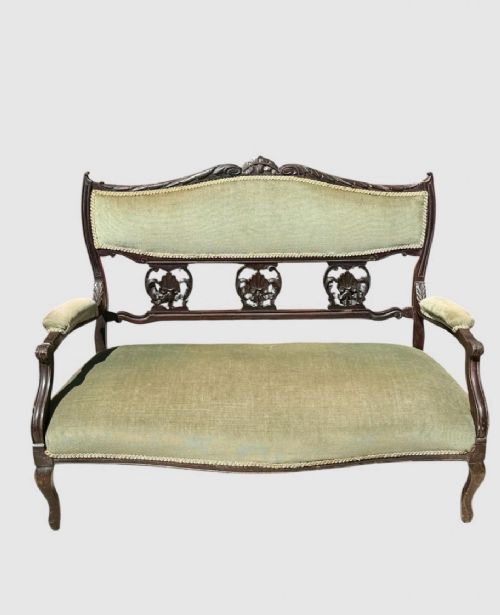
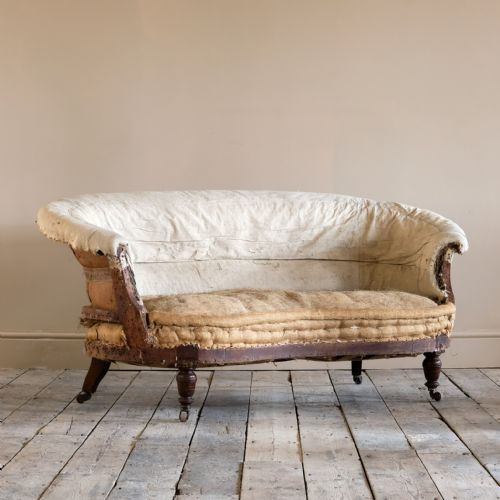


Victorian Two Seater Settee
A victorian two seater settee brings compact nineteenth-century proportion and rich upholstery into a modern room.
Victorian Two Seater Settee
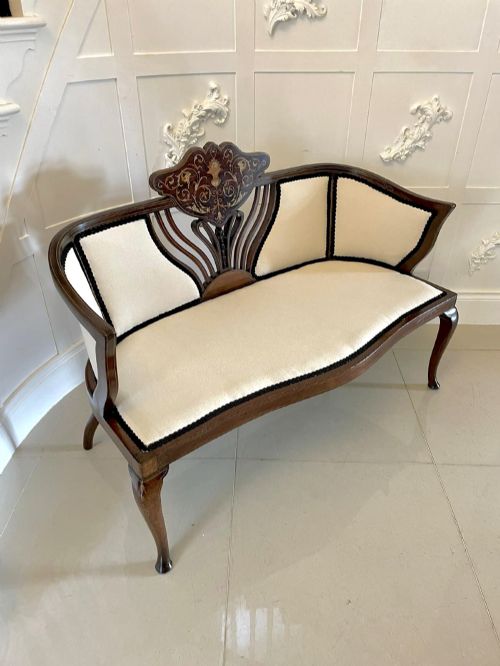
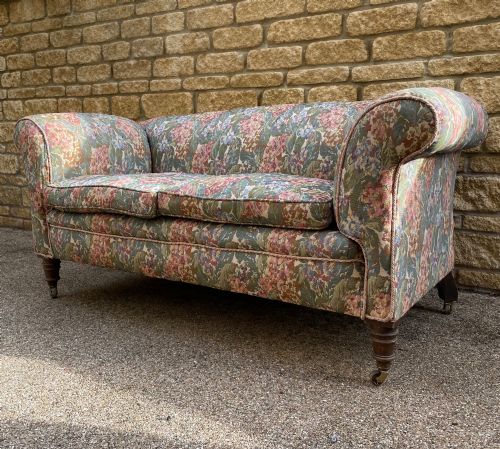
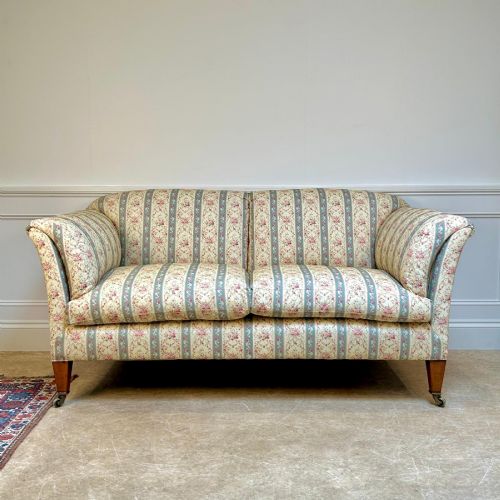
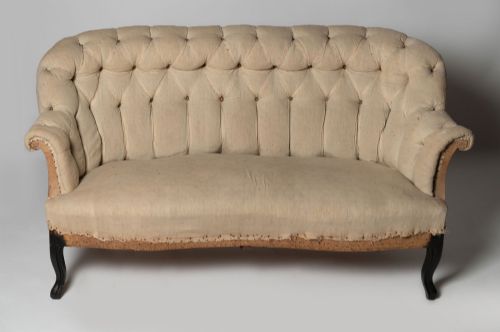
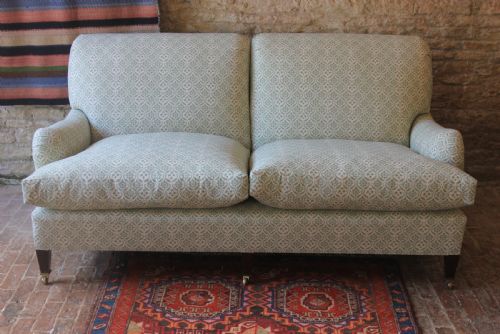
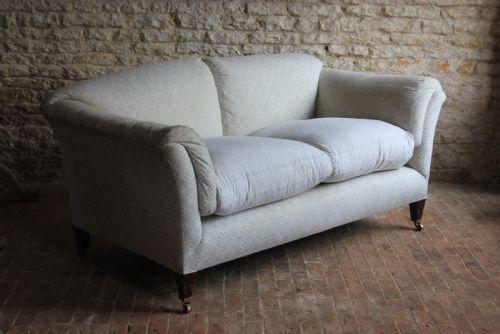
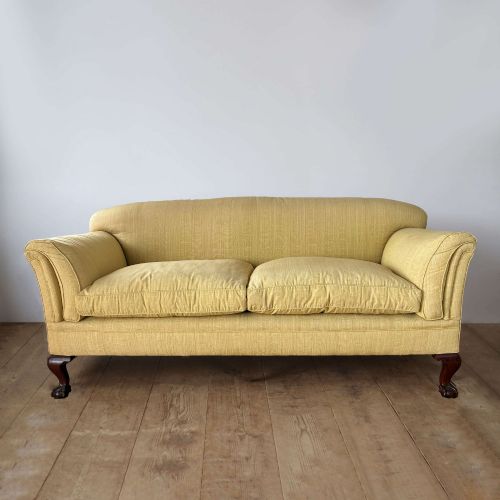
A victorian two seater settee provides intimate seating framed in dark hardwoods, meeting the demand for smaller footprint parlour and drawing room furniture. Pieces appearing on this page span the nineteenth century and encompass formal revival designs alongside simpler country house forms.
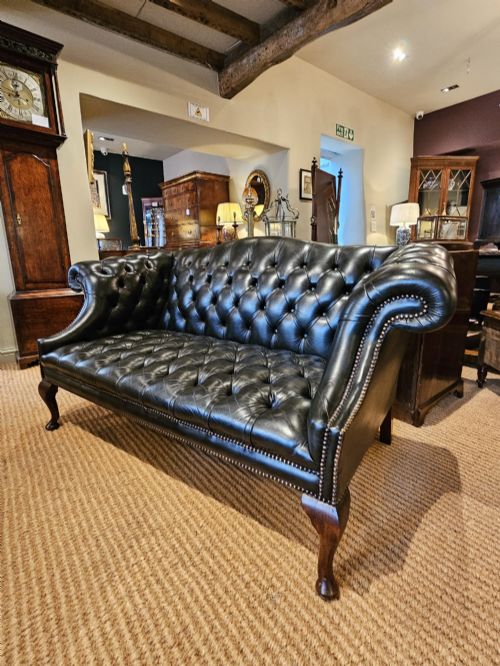
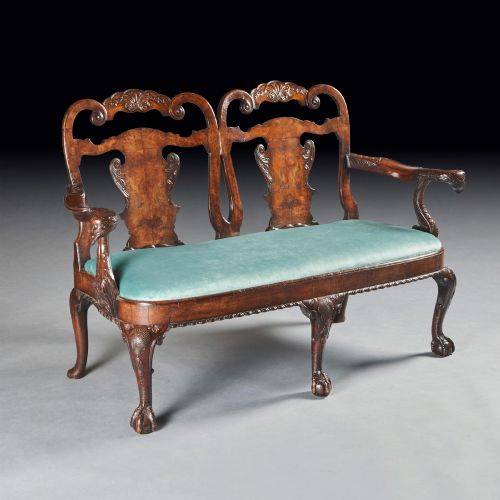
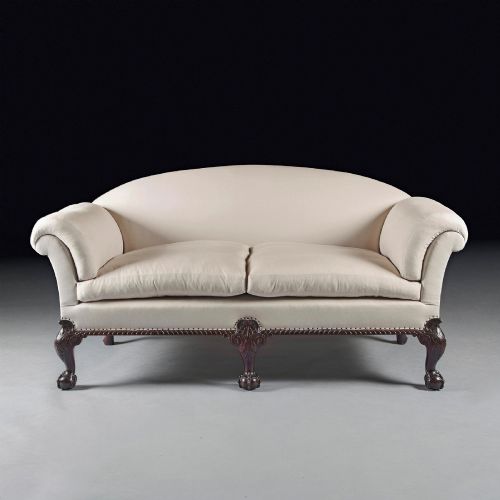
The selection ranges from button-backed leather Chesterfields and drop-arm loungers to walnut twin-chair back sofas and mahogany inlaid frames. Makers often drew inspiration from earlier George II or Chippendale designs, adapting classic proportions for nineteenth-century domestic use.
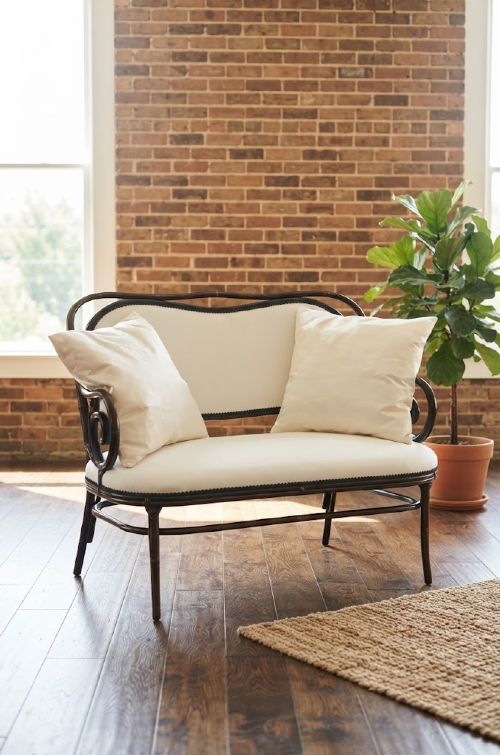
Buyers encounter variations including ebonised aesthetic movement frames, rosewood structures, and compact love seats upholstered in velvet, fabric, or hand-dyed leather. These diverse configurations reflect the shifting tastes of the period, from ornate rococo revival to restrained revivalism.
How They Were Made
Frames rely on solid timbers such as walnut, mahogany, rosewood, and hardwood, frequently shaped through turning, carving, or steam-bending. Structural stability depends on traditional joinery paired with sturdy secondary woods to support heavy sprung interiors.
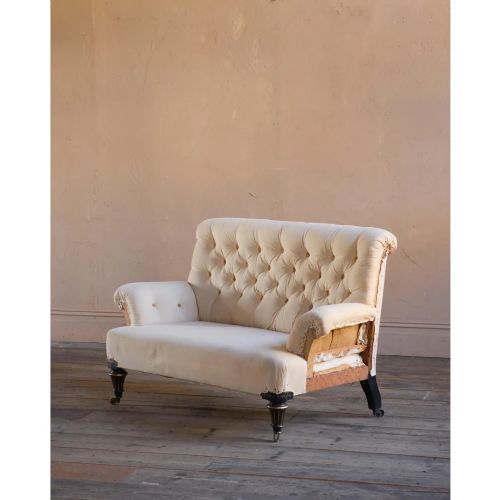
Upholstery techniques utilise traditional fillings like horsehair beneath layers of durable fabric, velvet, or hand-dyed leather. Details such as brass castors, ball and claw feet, button-backed panels, and fine wood inlay complete the construction.
Listings feature walnut, mahogany, rosewood, and hardwood frames paired with leather, velvet, and fabric upholstery.
What Varies in Quality
The distinction between standard production and top-tier pieces rests on the crispness of timber carving and the sophistication of the frame silhouette. Superior examples display fluent hand-carved details, balanced proportions, and careful selection of figured walnut or inlaid mahogany.
Execution of the upholstery work and the integrity of the underlying sprung frame determine daily comfort and longevity. Workshop attribution, particularly pieces bearing maker stamps on legs or castors, elevates the standing of a settee significantly.
Howard and Sons·Jackson and Graham·Hampton and Sons·Butlers of Dublin
The Victorian Two Seater Settee Glossary
- Drop-arm
- A sofa mechanism allowing one or both armrests to lower into a horizontal position, creating a daybed effect.
- Chesterfield
- A deep-buttoned upholstered sofa featuring arms and back of the same height.
- Ebonised
- Wood finished with a dark stain or polish to imitate the appearance of expensive ebony.
- Inlay
- Decorative wood or brass pieces set flush into the timber surface to form patterns.
- Horsehair
- Traditional organic stuffing material utilised in period upholstery for firm support.
Victorian Two Seater Settee: Frequently Asked Questions
Where did people place a victorian two seater settee?
These compact seats found homes in drawing rooms, private boudoirs, and smaller Victorian parlours where full-scale sofas proved too large.
Today they function effectively as statement seating in modern hallways, bedrooms, or living spaces.
How do I identify the upholstery materials?
Period pieces feature traditional coverings including hand-dyed leather, woven fabric, velvet, and horsehair fillings.
Many surviving pieces have undergone re-upholstery while retaining their original timber frames and internal webbing.
What is the difference between a settee and a sofa?
Historical terminology often uses settee, sofa, and couch interchangeably across nineteenth-century records.
In practice, a settee typically denotes a lighter, two-seat wooden framed piece, whereas a sofa often implies heavier upholstery.
How do I recognise the design period?
Stylistic clues include carved walnut frames, mahogany inlays, aesthetic movement ebonising, and revival motifs drawn from George II designs.
Turned wooden legs and brass castors further help date pieces to the broader nineteenth-century timeline.