





Victorian Twine Box
These nineteenth-century desk accessories, known as a victorian twine box, tidy loose string for everyday use while displaying fine turned timber and metalwork.
Victorian Twine Box
A victorian twine box is a functional desk accessory designed to house and dispense string cleanly through a central aperture. The pieces on this page span the nineteenth century and the Edwardian era, showing how workspaces managed everyday cordage.
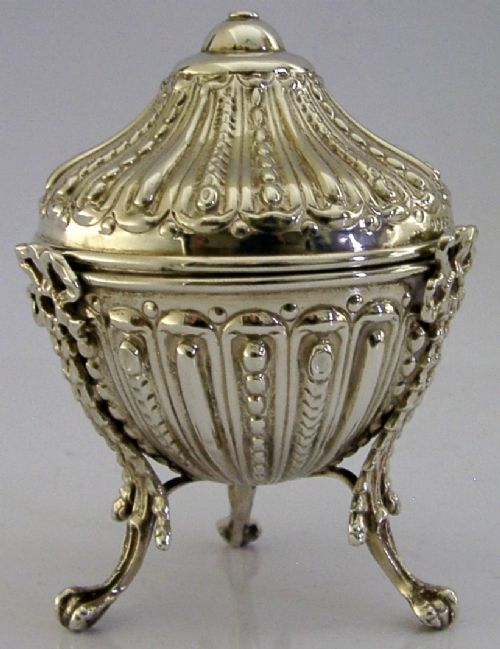
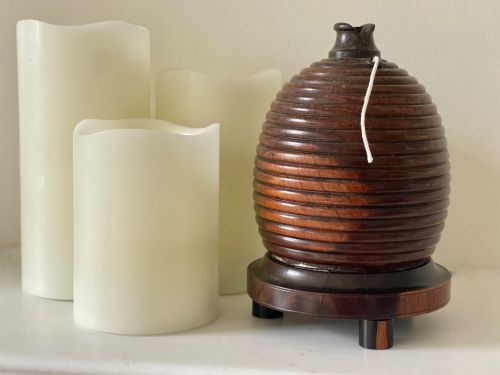
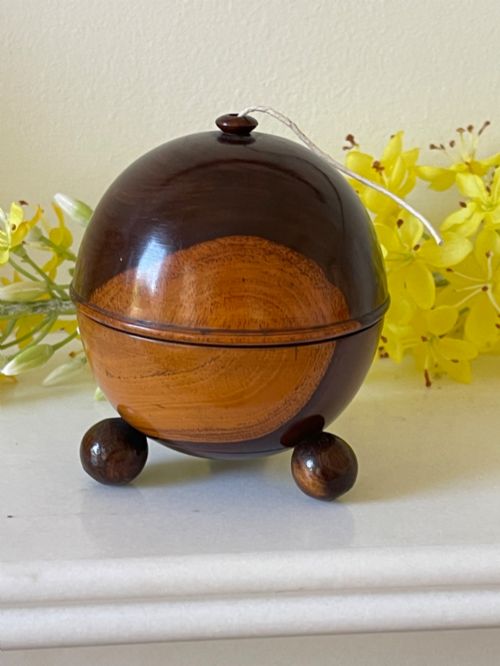
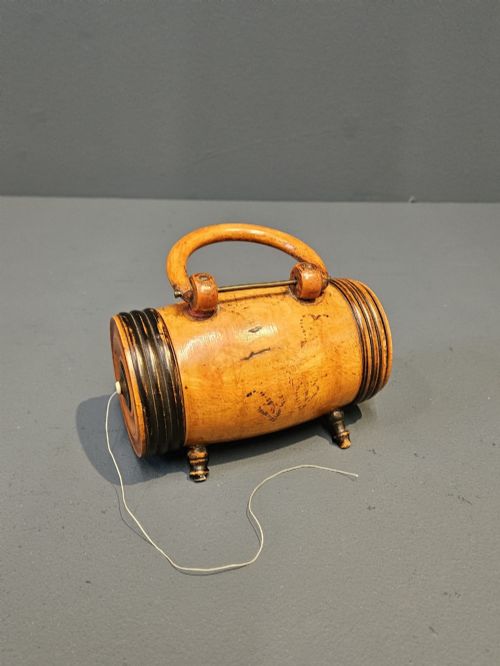
Most examples take distinct turned forms, often shaped as barrels, globes, or beehives to enclose the ball securely. These wooden vessels sit alongside sterling silver mounts and glass jars fitted with metal cutters.
Makers utilised native and exotic timbers such as sycamore, fruitwood, lignum vitae, and maple to turn these compact containers. Some items also display Mauclineware transfers or tortoise shell panels alongside silver lids.
How they were made
Woodturners shaped the timber bodies on a lathe, hollowing the interior to hold a ball of twine while cutting precise lids and integral metal cutters. Sycamore, fruitwood, and turned hardwood provide the smooth, dense surfaces seen across the wooden barrels and spherical holders.
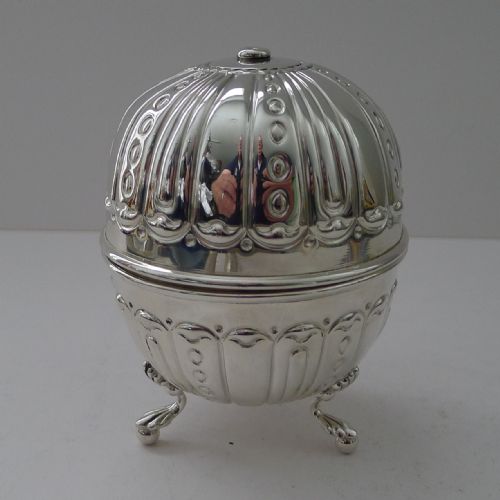
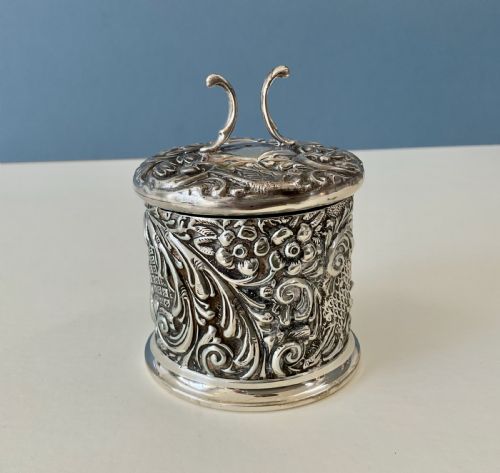
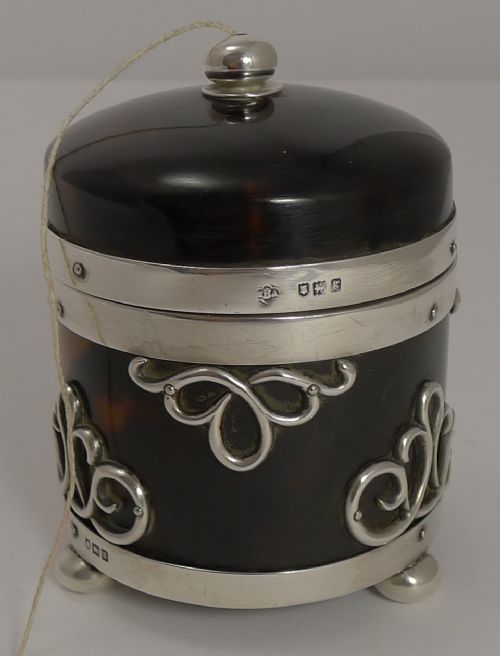
Silversmiths combined sterling silver with glass and tortoise shell to create more decorative containers for the desk. These combined materials required precise metal collars and hinged lids to secure the glass jars and organic shells.
Victorian Twine Box Retail Price Guide 2026
Typical asking prices for victorian twine box among the pieces listed under this phrase on Sellingantiques today, from the lower quarter to the upper quarter. They describe what is for sale here now, not the wider market.
Listings on this page include pieces from the nineteenth century, the Victorian era, and the Edwardian period.
What varies in quality
Quality rests in the crispness of the turning on wooden examples, where balanced proportions and clean grain pattern distinguish the work. Dense timbers like lignum vitae and well-figured fruitwood show superior material selection compared to softer maples.
The presence of an original metal cutter affects the utility and completeness of the piece. Silver mounts also introduce variation, where hallmarked sterling components elevate the status of the desk accessory.
The Victorian Twine Box Glossary
- String barrel
- A cylindrical wooden desk container shaped to hold a ball of twine and feed the end through the top. These pieces often feature threaded lids and turned bases.
- Treen
- Small wooden domestic objects made by turning or carving. This material group includes the sycamore and lignum vitae string holders found in nineteenth-century interiors.
- Mauclineware
- Souvenir wooden items decorated with photographic transfers or tartan patterns. An example on this page uses turned maple wood in this distinctive nineteenth-century style.
- Sterling silver
- An alloy of silver containing ninety-two point five percent pure silver by mass. This metal forms the decorative lids and mounts on glass and wooden string boxes.
Victorian Twine Box: Frequently Asked Questions
What is a victorian twine box?
A victorian twine box is a small desk accessory designed to hold a ball of string and dispense it neatly through a hole in the lid.
These pieces kept workspaces tidy by preventing string from tangling while offering decorative turned wood or silver ornamentation.
How did people use string boxes?
Users placed a ball of twine inside the wooden barrel or glass jar, threading the loose end through the metal cutter on the lid.
This allowed clerks and household writers to pull and snip cord quickly without unravelling the entire ball.
What materials are common in these boxes?
Turned hardwoods such as sycamore, fruitwood, lignum vitae, and maple dominate the wooden examples on this page.
Silversmiths also combined sterling silver with glass and tortoise shell to produce more ornate desk containers.
How do I date a twine box?
Dating relies on material styles, assay marks on silver mounts, and characteristic turning patterns from the nineteenth century and Edwardian periods.
Wooden treen shapes like beehives and spherical bodies point towards nineteenth-century production methods.