


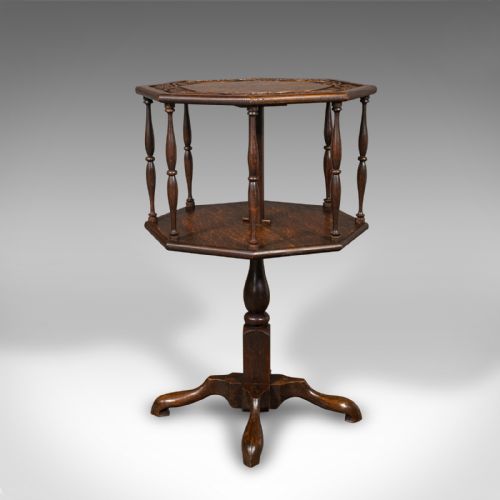
Victorian Turned Spindle Table
A victorian turned spindle table brings exceptional linear rhythm and warmth into a room, offering practical surface space with fine turned detail.
Victorian Turned Spindle Table
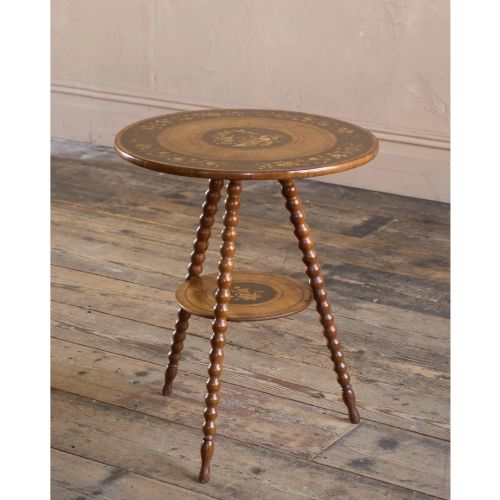
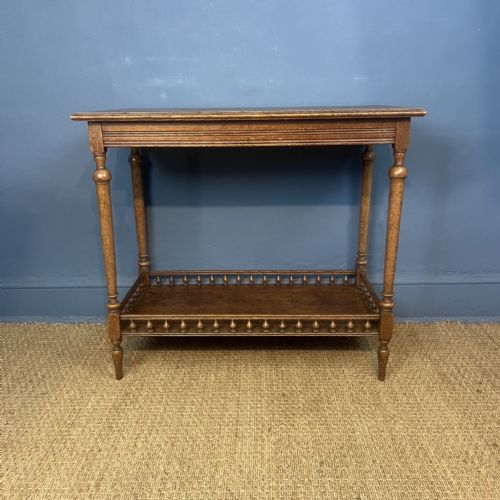
A victorian turned spindle table encompasses side tables, occasional tables, and centre pieces featuring characteristic turned uprights or legs. The materials span walnut, mahogany, oak, and ebonised wood, reflecting periods from the mid-nineteenth century through to the Edwardian era.
Buyers will encounter various stylistic interpretations, including Aesthetic Movement, Anglo-Moorish, and Arts and Crafts expressions. These tables often incorporate additional tiers, shelving, or gate-leg constructions suited for domestic display and utility.
Materials and construction
The construction relies on solid hardwoods such as walnut, mahogany, and oak, alongside ebonised finishes and rosewood veneers. Turned members, bobbin legs, and spindles are shaped on a lathe to create repetitive geometric rhythms.
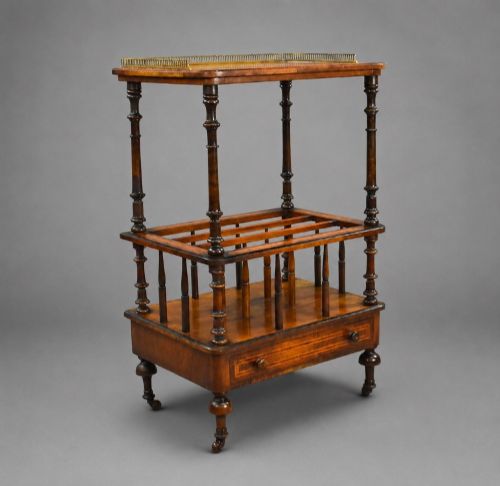
Inlaid marquetry, brass fittings, and ceramic elements frequently accent the primary timber framework. Joinery methods range from traditional gate-leg pivots to multi-tiered frame assemblies supported by spindle uprights.
Listings feature walnut, mahogany, oak, rosewood, and ebonised wood across Victorian, Edwardian, and Arts and Crafts periods.
Craftsmanship and distinction
Quality rests upon the crispness of the spindle turning and the selection of timber veneers. Finely figured burr walnut or rich rosewood elevates a piece above standard domestic pine or simpler oak examples.
Structural integrity of the tiered platforms and the precision of inlaid marquetry details distinguish masterwork pieces. The cohesion of style, whether Aesthetic Movement or Anglo-Moorish, dictates the refinement of the finished furniture.
The Victorian Turned Spindle Table Glossary
- Spindle
- A slender, turned piece of wood forming legs, rails, or decorative uprights. These elements define the linear character of the furniture.
- Bobbin leg
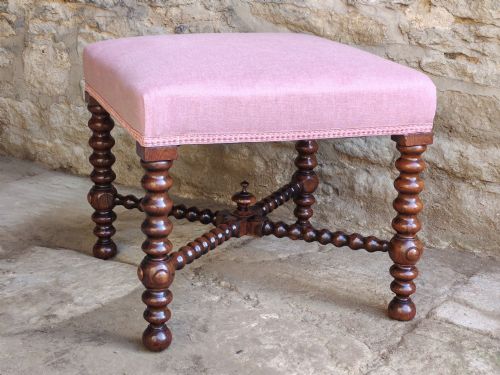
- A series of rounded wooden spheres turned along the length of a furniture leg. This decorative turning style is common in nineteenth-century seating and tables.
- Marquetry
- Decorative patterns created by fitting thin pieces of wood veneer onto a structural base. It frequently ornaments table tops with floral or geometric motifs.
- Ebonised
- Timber treated to resemble ebony through staining or painting. This dark finish gained popularity during the Victorian Aesthetic Movement.
- Canterbury
- A low piece of furniture featuring vertical partitions designed for holding sheet music or books. Some examples incorporate spindle supports and drawers.
Victorian Turned Spindle Table: Frequently Asked Questions
What is a victorian turned spindle table?
A victorian turned spindle table is a small occasional or side table featuring slender, lathe-turned wooden uprights or legs. These tables date primarily from the nineteenth century and reflect design movements such as Aesthetic and Arts and Crafts.
They serve as decorative and functional items, often including multiple tiers or shelves for displaying small objects. The use of turned spindles creates an open, airy silhouette compared to heavy solid timber furniture.
How were these tables used originally?
In Victorian homes, these tables served multiple domestic purposes as occasional, side, or centre pieces. They held lamps, books, decorative ceramics, and writing materials in parlours and drawing rooms.
Tiered variants and models with shelves provided extra storage for reading matter without occupying excessive floor space. Their portability allowed them to be repositioned easily for tea or parlour games.
How do I care for walnut and mahogany?
Maintenance requires keeping timber furniture away from direct sunlight and sudden temperature shifts to prevent veneer lifting. Dusting regularly with a soft, dry cloth preserves the polished surface without moisture damage.
Occasional application of appropriate wax polish maintains the lustre of walnut and mahogany grains. Avoid placing damp items directly onto the unsealed wood surfaces.
How do I identify an Aesthetic Movement table?
Aesthetic Movement tables typically feature ebonised finishes, geometric lines, and sometimes Anglo-Moorish or Japanese-inspired detailing. They often utilise contrasting brass elements and delicate spindle work to create a refined visual lightness.
Construction dates generally cluster around the late nineteenth century, reflecting a shift towards art for art's sake in interior design. The integration of lower shelves and subtle inlay work further characterises this stylistic group.