
Victorian Turned Mahogany Table
A victorian turned mahogany table brings the warmth of dense timber and the sculptural rhythm of lathe work into a room.
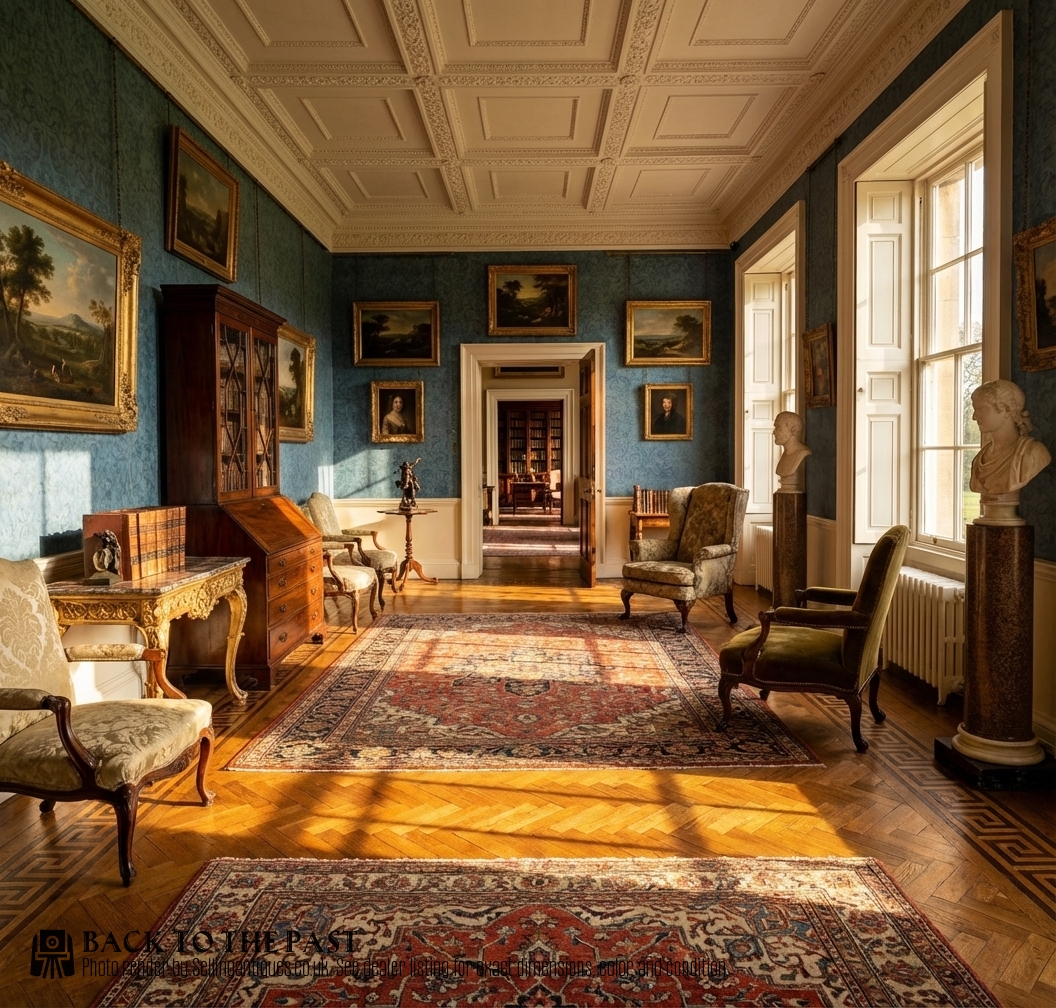
Victorian Turned Mahogany Table
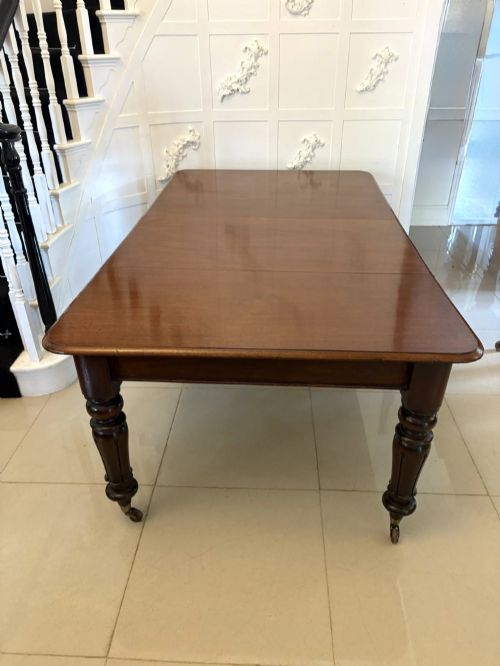
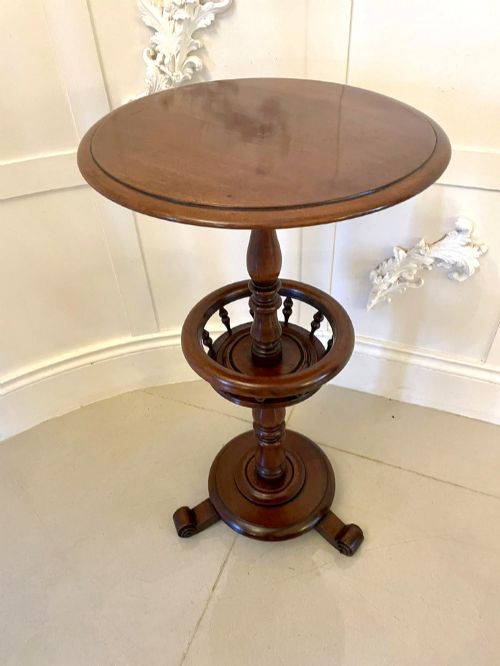
A victorian turned mahogany table appears in many domestic guises, from compact wine stands and sutherland designs to substantial wind-out dining pieces and library desks. Most examples originate from the nineteenth century, reflecting an era when workshops utilised solid timber and mechanical ingenuity for everyday household utility.
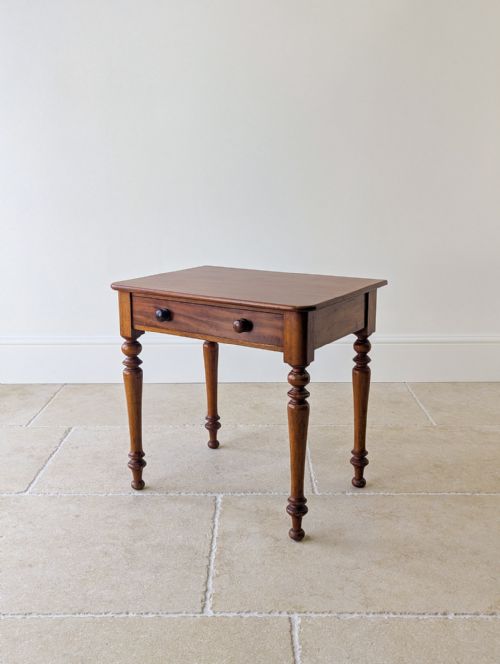
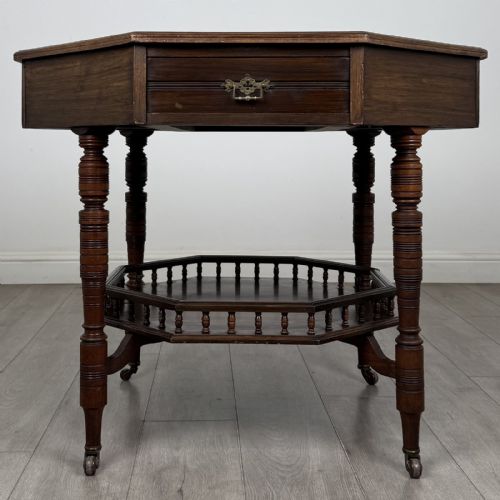
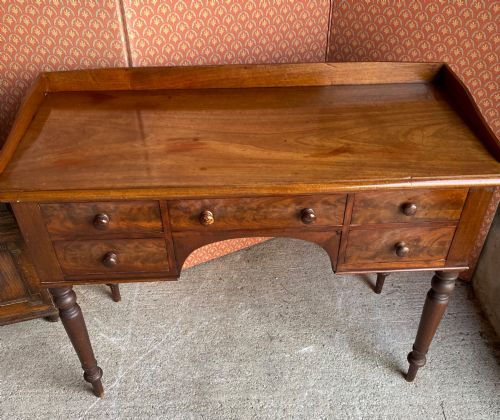
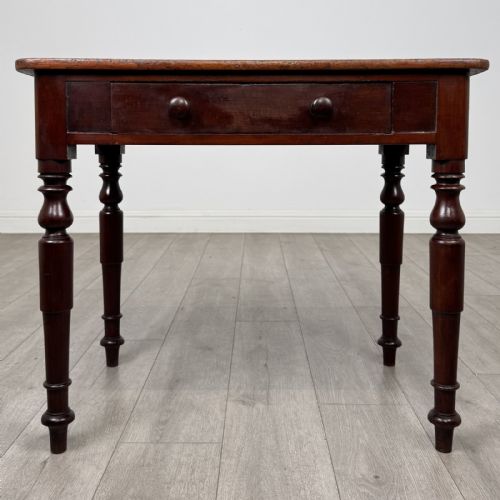
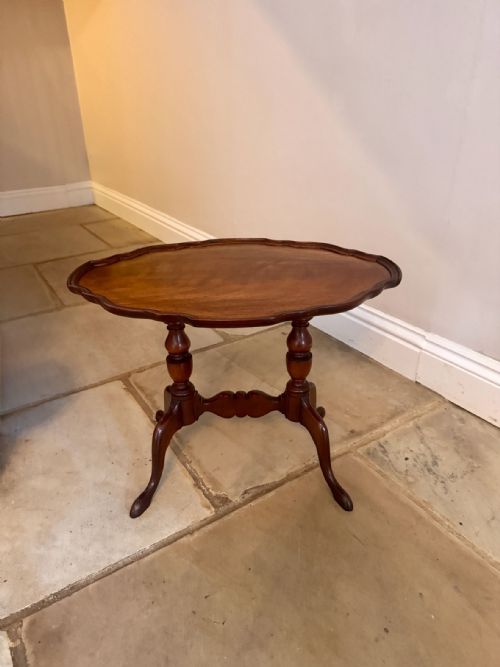
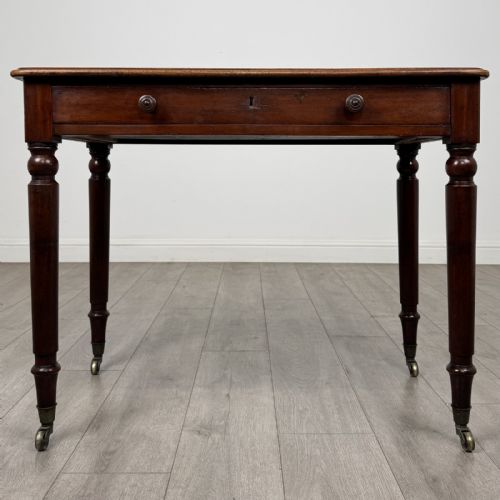
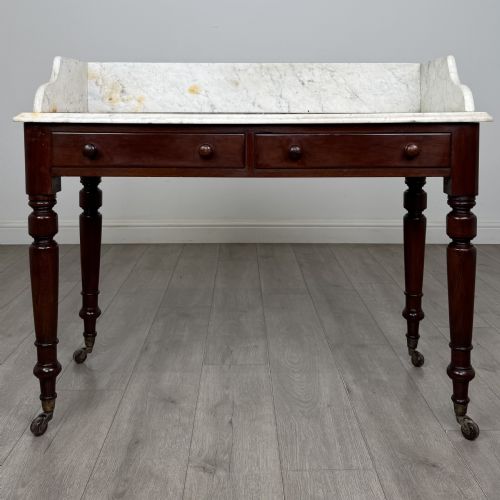
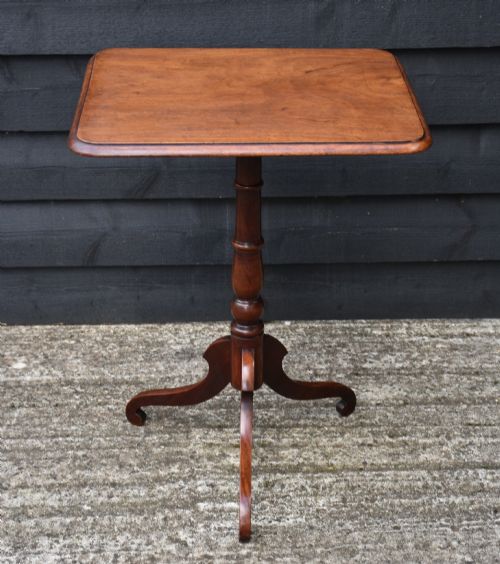
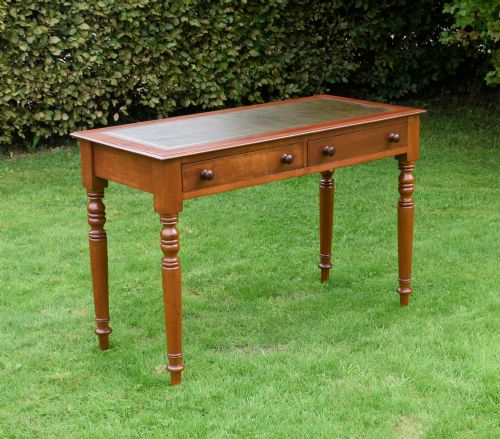
Side tables and writing desks with turned supports dominate the selection, often featuring single or multiple drawers beneath a polished rectangular top. Smaller occasional tripod tables and tilt-top versions provide versatile options for corners and smaller spaces.
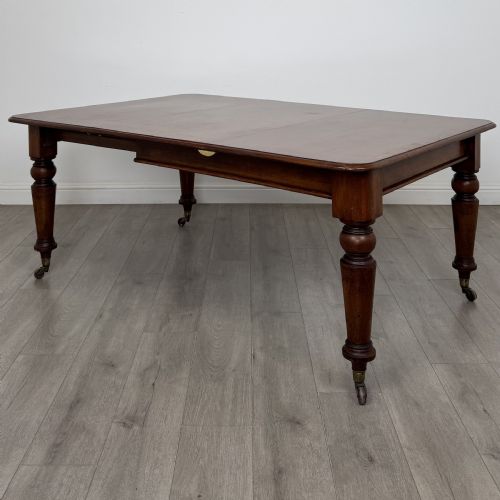
Dining variants deploy extending mechanisms or drop leaves to accommodate guests, supported by sturdy cylindrical or reeded legs. Buyers encounter both simple utilitarian pieces and refined versions bearing maker attributions from major London cabinet makers.
Materials and Construction
Cabinet makers constructed these pieces primarily from solid mahogany or flame mahogany veneers laid over secondary timbers, occasionally incorporating brass castors, leather inserts, and ceramic components. The wood was selected for its rich grain and deep natural colour, then polished to a lustrous finish.
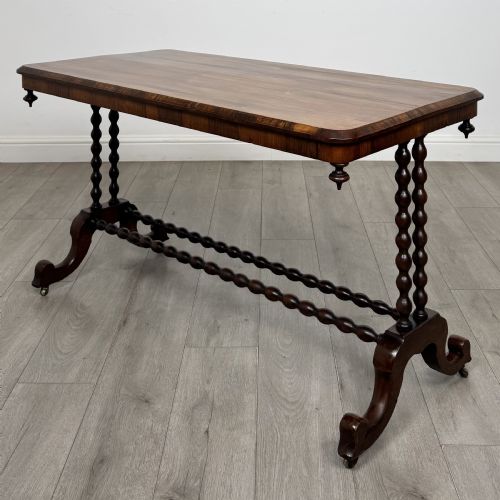
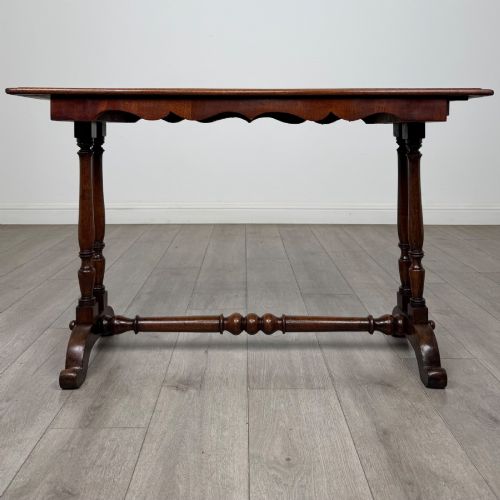
Lathe work defines the structural supports, with legs shaped into bobbin turnings, reeded columns, or tapering cylindrical forms. Joinery relied on traditional methods such as dovetailing for drawer construction and sturdy framing to ensure stability under heavy daily use.
Listings feature extensive variations in mahogany timber, including figured flame surfaces and solid structural sections paired with brass and leather.
Distinctions in Execution
The sophistication of the lathe work separates standard utility furniture from superior commissions, where crisp reeding and precise bobbin turnings demonstrate exceptional hand-carving skill. Superior examples also feature well-figured flame mahogany veneer matched symmetrically across table tops and drawer fronts.
Structural integrity and the retention of original elements, including brass hardware, leather writing surfaces, and castors, dictate the standing of a piece within its type. Refined proportions and secondary wood selection further distinguish workshop output.
Heal and Son·Johnstone and Jeanes·Gillows·Druce and Co London
The Victorian Turned Mahogany Table Glossary
- Mahogany
- A durable tropical hardwood prized for its reddish-brown colour and stability. It accepts fine carving and polished finishes exceptionally well.
- Wind-Out Table
- An extending dining table operated via a mechanical screw mechanism. A removable handle expands the framework to insert extra leaves.
- Sutherland Table
- A narrow drop-leaf table with hinged flaps supported by pivoting swing legs. It folds flat for compact storage against a wall.
- Tilt-Top Table
- A table with a hinged top that pivots vertically for storage when not in use. It typically stands on a turned tripod pedestal base.
- Partners Desk
- A large double-sided writing table designed for two people to work opposite each other. It incorporates banks of drawers on both faces.
Victorian Turned Mahogany Table: Frequently Asked Questions
How do I use a sutherland table?
A sutherland table functions as a versatile tea or side table by raising its drop leaves and swinging the supporting gates into place. When space is needed, the leaves drop down so the piece rests flat against a wall.
The narrow profile makes it practical for smaller reception rooms where surface area is required only intermittently throughout the day.
What is a wind-out dining table?
A wind-out table uses an internal metal screw mechanism operated by a crank handle to separate the frame sections. This allows additional timber leaves to be dropped into the centre for dinner parties.
Once extended, the mechanism locks tightly together to provide a stable surface for seating multiple guests.
Where were tilt-top tables placed?
Tilt-top tables served as flexible furniture for nineteenth-century parlours, often positioned beside seating or against perimeter walls. Their pivoting tops allowed servants to clear them away quickly when floor space was required.
They frequently held small lamps, books, or tea service items during social gatherings.
How do partners desks differ from standard desks?
Partners desks provide workspace on both sides simultaneously, featuring matching drawers and cupboards facing in opposite directions. They were originally built for offices, libraries, or administrative spaces where two professionals needed to sit face-to-face.
The substantial footprint and double-sided configuration distinguish them from typical single-sided writing tables.