


Victorian Tufted Spoon Back Chair
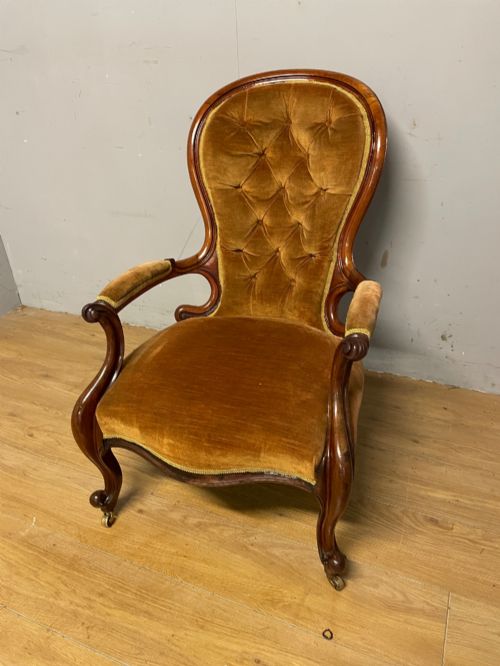
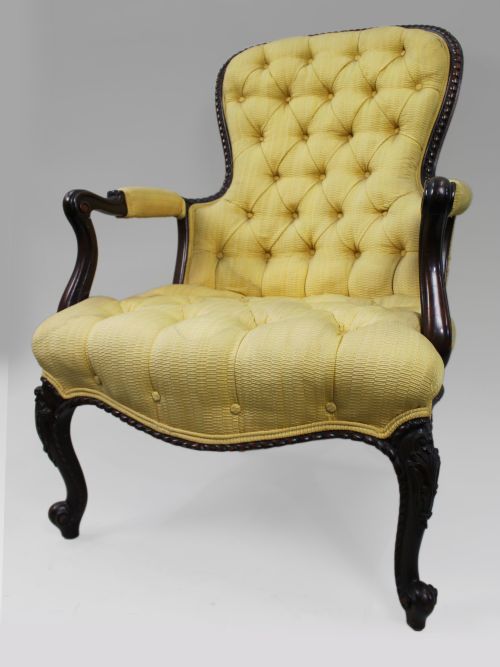
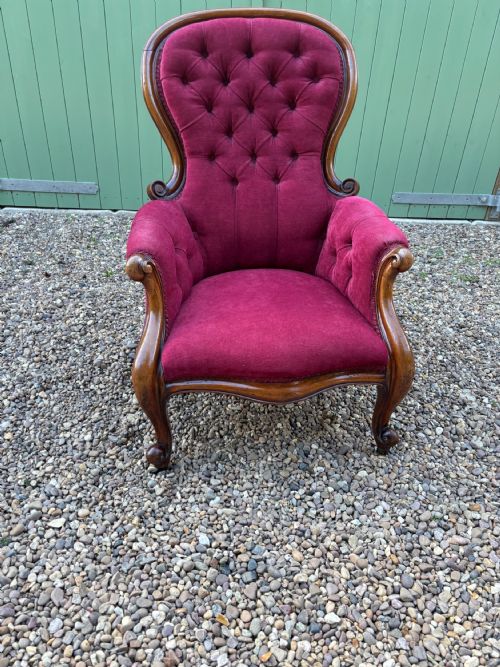
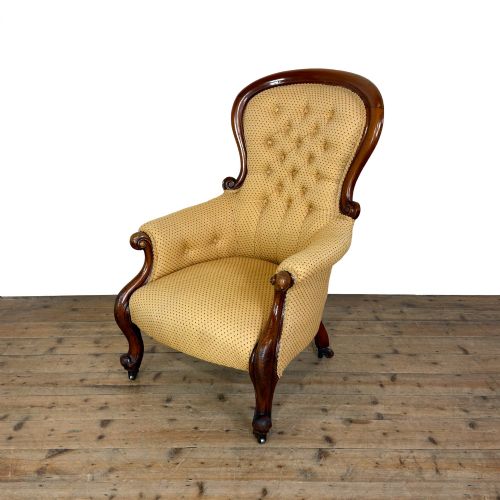
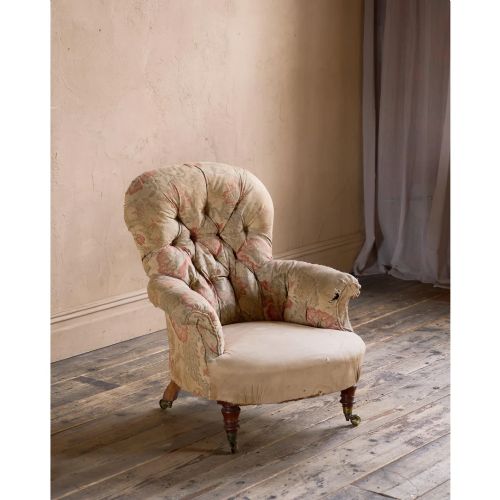
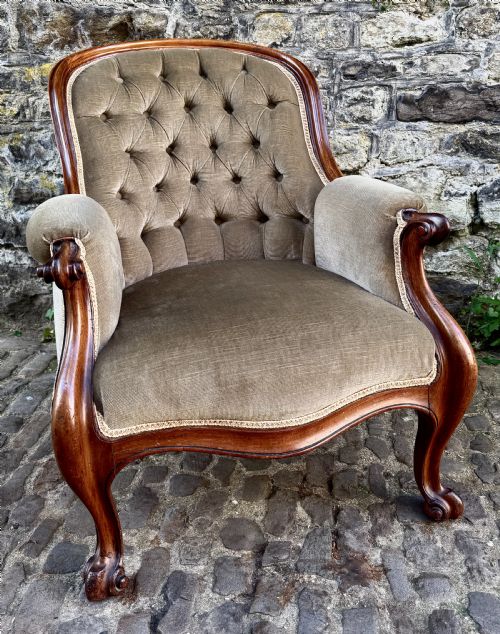
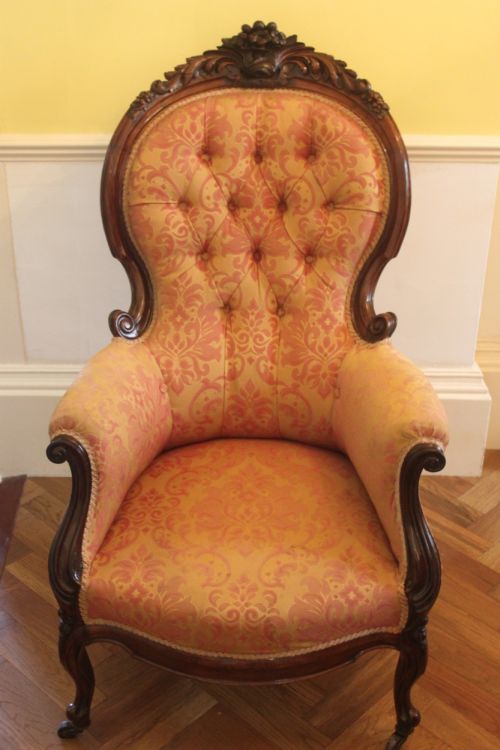
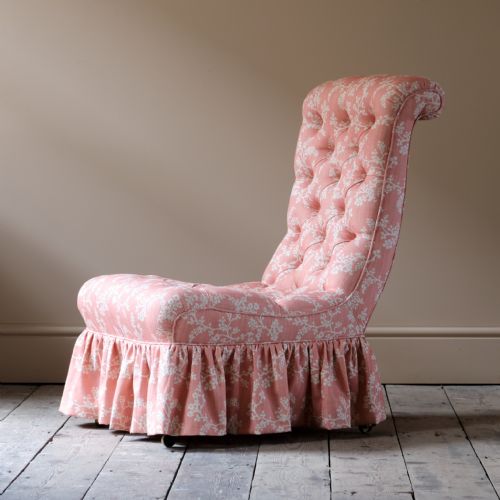
A victorian tufted spoon back chair offers deep buttoning and curvaceous timber framing designed to support the spine.
Victorian Tufted Spoon Back Chair
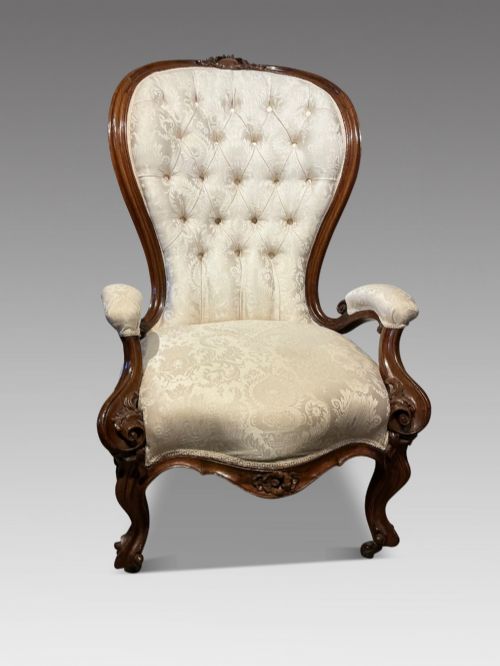
A victorian tufted spoon back chair is a heavily upholstered seating form defined by its oval or oval-reminiscent padded backrest that echoes the outline of a spoon. These pieces emerge chiefly from the nineteenth century, spanning early, mid, and late periods.
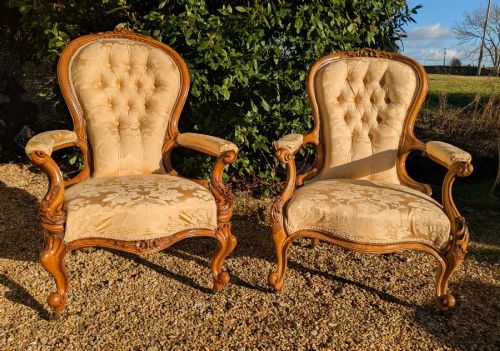
The most common examples on this page are walnut and mahogany armchairs, nursing chairs, and salon seats featuring buttoned textile covers. Maker-stamped pieces and matched pairs appear alongside single fireside chairs and open-arm library seats.
How they were made
Frames are constructed predominantly from solid walnut or mahogany, frequently shaped with carved details and supported on cabriole legs or barley twist turnings. Brass castors often finish the feet beneath the timber structure.
Upholstery involves textiles such as velvet, damask, and fabric pulled tight over deep internal padding and secured with button tufting. Iron and metal components occasionally reinforce internal support systems within the wooden framework.
Buttoned velvet upholstery offered Victorian sitters a plush landscape designed to catch the flickering glow of coal fires.
What varies in quality
The sophistication of the timber carving distinguishes standard frames from exceptional examples, with crisp floral motifs and deeply moulded contours marking the superior tier. Wood selection also plays a part, where richly figured walnut or dense mahogany elevate the visual weight of the frame.
Execution of the upholstery work separates workshop output, particularly the symmetry of the button tufting and the tautness of the textile application over the curved backrest. Maker attribution, such as stamps from established cabinet makers, provides further distinction.
Holland & Sons·C. Hindley & Sons·Gillows
The Victorian Tufted Spoon Back Chair Glossary
- Spoon back
- A padded chair back shaped in an oval contour that mimics the bowl of a spoon. This profile provides ergonomic support to the occupant.
- Button back
- Upholstery secured with deep indentations formed by sewn buttons arranged in a grid. This technique pulls the textile tight against internal stuffing.
- Nursing chair
- A low-seated upholstered chair designed for comfort during infant care. These seats often lack arms to accommodate voluminous nineteenth century skirts.
- Cabriole leg
- A furniture leg that curves outward in a convex arc and tapers inward in a concave arc to a foot. The design recalls animal limbs found in revival styles.
- Barley twist
- A cylindrical furniture component carved in a spiral helix resembling twisting rope. This decorative turning appears frequently on nineteenth century chair supports.
Victorian Tufted Spoon Back Chair: Frequently Asked Questions
Where did people use these chairs?
Victorian households placed these seats in reception rooms, intimate parlours, and private bedrooms. Lower versions suited fireside seating and dressing areas.
Larger armchairs served in libraries and drawing rooms where guests gathered for conversation.
How do I identify a nursing chair?
Nursing chairs feature low seats positioned closer to the floor than standard armchairs. They typically omit armrests to allow full freedom of movement.
Makers built these proportions specifically for nineteenth century domestic tasks.
Are pairs common for these seats?
Matched pairs appear regularly alongside individual examples. Parlours and drawing rooms of the period often demanded symmetrical seating arrangements.
Pairs usually share identical timber frames, upholstery styles, and turned leg supports.
What is the difference between walnut and mahogany frames?
Walnut frames display lighter brown tones with varied grain patterns and lend themselves well to the curved contours of revival styles. Mahogany frames offer a denser, darker reddish-brown appearance.
Both timbers provide the structural strength required for deep buttoned upholstery.