




Victorian Painted Accent Chair
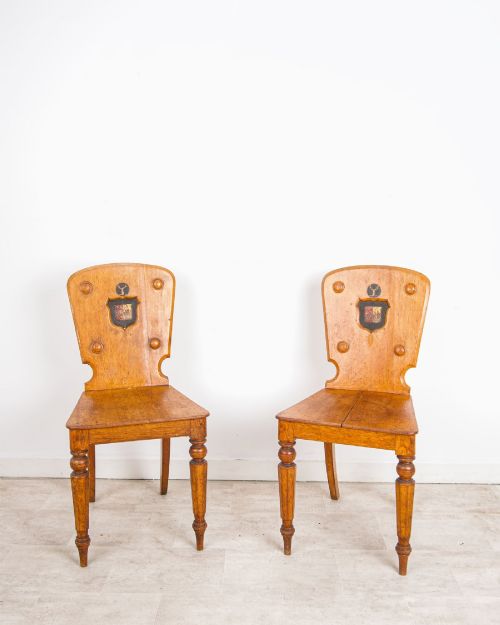
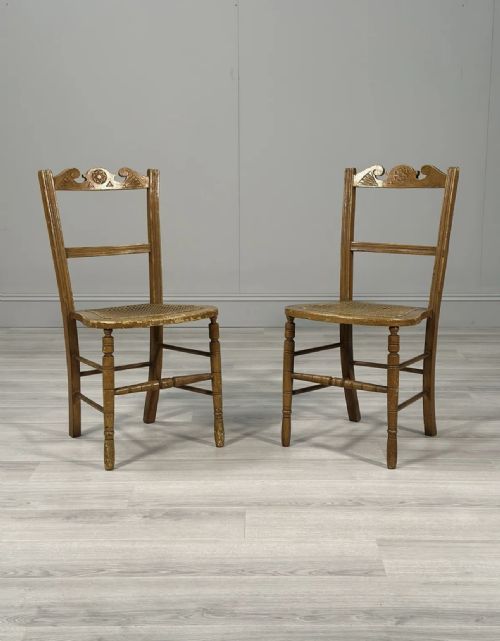
These Victorian painted accent chair pieces bring decorative nineteenth century flair to a room, offering colourful seating options for a bedroom or parlour.
Victorian Painted Accent Chair
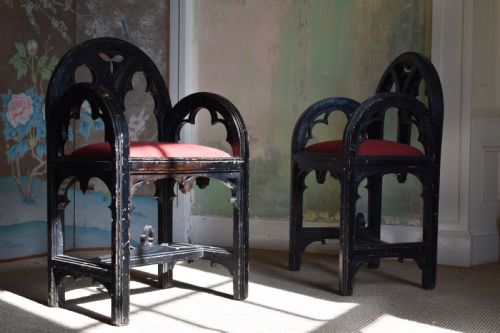
A Victorian painted accent chair brings distinct nineteenth century seating forms into domestic spaces, ranging from side chairs and hall chairs to occasional seats and bedroom chairs. These pieces appear in styles such as French Chateau, Rococo Revival, Gothic Revival, and Chinoiserie, showing the diverse decorative tastes of the era.
Buyers searching for a victorian painted accent chair will encounter various seating types constructed during the nineteenth century. The selection includes armchairs, side chairs, and salon chairs finished with painted, faux bamboo, lacquered, ebonised, or gilt surfaces.
Materials and construction
Makers utilised wood such as beech, oak, and walnut as the foundational structure for these seats. Papier-mâché also appears alongside carved wood in framing these nineteenth century items.
Surfaces received paint, scumble paint, faux bamboo effects, and silver or gold gilt ornamentation. Textile and fabric upholstery completes the seating area on many of these armchairs and side chairs.
Some nineteenth century makers cleverly turned ordinary beechwood into convincing bamboo using paint and a carving knife.
Gradations in quality
The sophistication of the painted or gilt decoration distinguishes different examples within the range. Original decorative schemes hold distinct character compared to later paint applications.
Carving detail on the wooden frames and the preservation of materials like cane or fabric upholstery define the standard of individual pieces.
The Victorian Painted Accent Chair Glossary
- Fauteuil
- An open-arm armchair with an upholstered seat, back, and arm pads, originating in French design. These often appear in revival styles.
- Scumble paint
- A decorative glazing technique creating mottled or textured surface patterns on wood. It was commonly applied to nineteenth century utilitarian and decorative seating.
- Papier-mâché
- A composite material made from paper pulp mixed with glue and resin, pressed into moulds and hardened. This substance provided a smooth base for lacquer and painted decoration on bedroom chairs.
- Faux bamboo
- Simulated bamboo carved or painted onto wood to mimic exotic imported furniture. This finish reflects nineteenth century aesthetic trends.
- Ebonised
- Wood finished to resemble ebony through staining or dark painting. This technique creates a dramatic contrast with gilt or painted highlights.
Victorian Painted Accent Chair: Frequently Asked Questions
Where should I place a painted accent chair?
These decorative seats suit bedrooms, hallways, and drawing rooms where extra occasional seating is needed. Their painted surfaces add colour and nineteenth century character to empty corners.
They function well as standalone display pieces or paired alongside other seating in a reception space.
How do I care for painted wooden furniture?
Keep these items away from direct sunlight and excessive moisture to protect the nineteenth century paintwork and gilt details. Dust gently with a dry cloth rather than using chemical polishes.
Protect upholstered sections with appropriate fabric care depending on the textile used on the seat.
What is scumble paint?
Scumble paint is a translucent decorative glaze manipulated over a base coat to create simulated wood grain or mottled patterns. It was frequently used by nineteenth century makers to elevate simpler timbers.
Pieces retaining original scumble paint display authentic period surface texture.
Are papier-mâché chairs sturdy?
Nineteenth century papier-mâché furniture was compressed and treated with durable lacquers to provide structural strength for light use in bedrooms and salons. They function well as accent seating rather than heavy daily chairs.
The lacquered finish protects the composite core from everyday wear.