



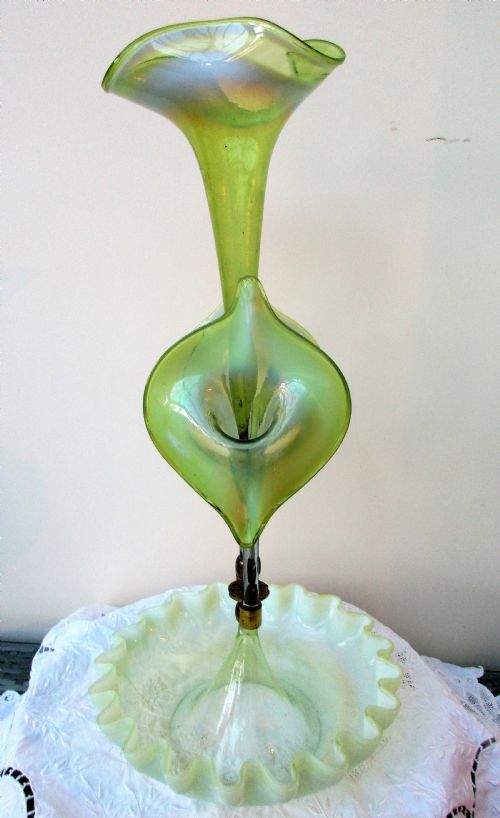

Victorian Trumpet Glasses
Victorian trumpet glasses are striking table centrepieces and epergnes that bring height and brilliant colour to a room.
Victorian Trumpet Glasses
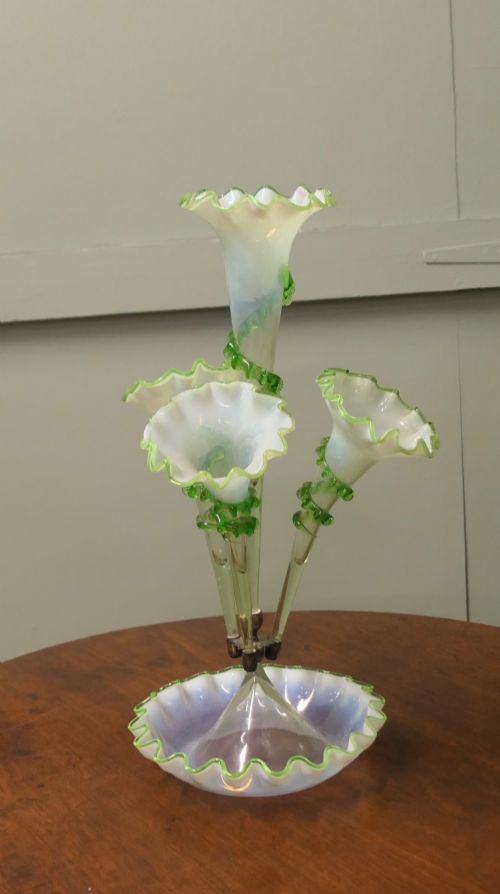
Victorian trumpet glasses include individual posy vases, floor-standing vessels, and multi-trumpet epergnes designed for nineteenth-century interiors. These pieces typically take the form of flared, lily-shaped vessels that widen dramatically toward the rim.
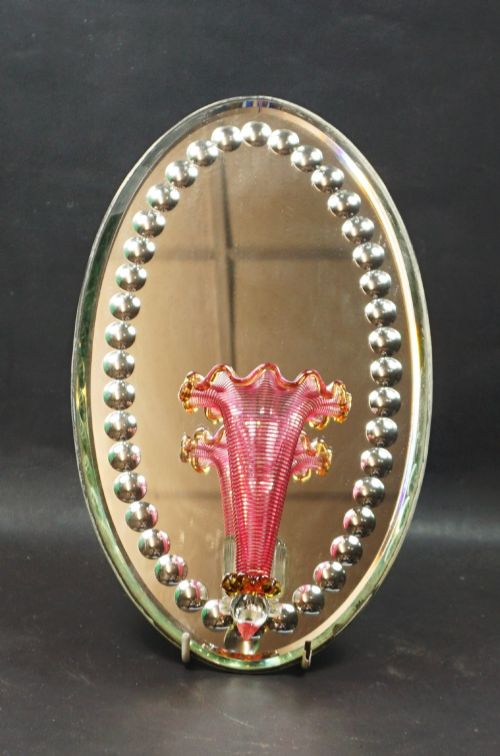
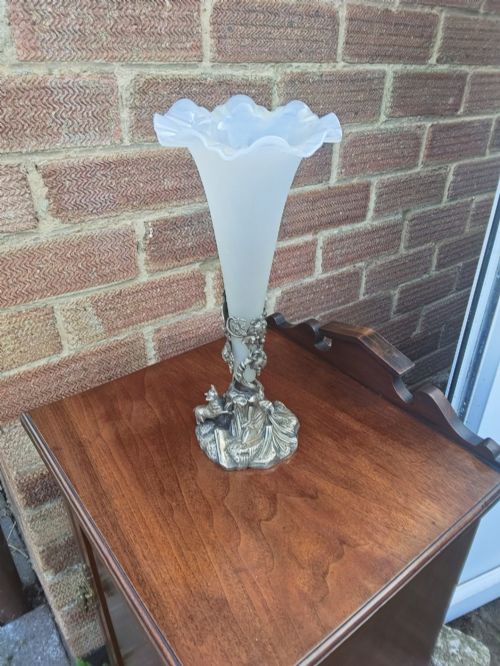
The selections available here showcase the era's taste for vibrant hues and complex table displays, ranging from single cranberry glass vessels to grand multi-trumpet centrepieces. Many incorporate stands or bases made from brass, carved wood, or white metal to support the heavy glass tubes.
How they were made
Glassmakers utilised techniques such as hand blowing, casing, and optical moulding to achieve rich colours and layered effects in cranberry, vaseline, and uranium glass. Molten metal was manipulated while hot to create the signature fluted profiles and delicate trailing.
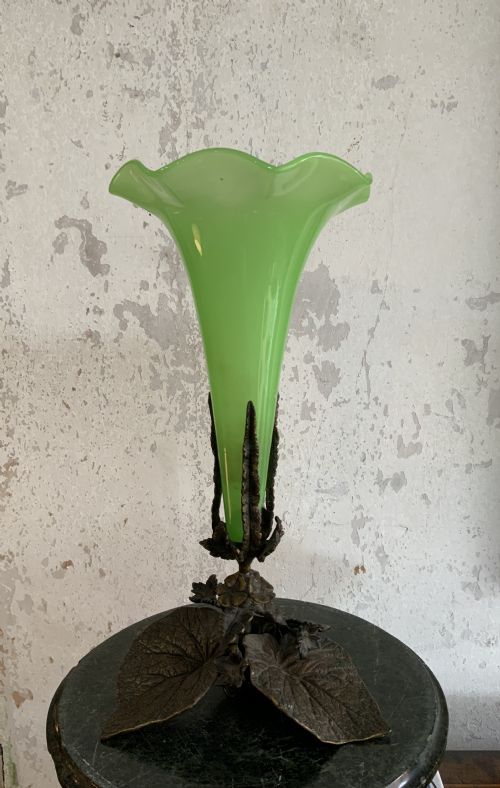
Mounts and bases combined cast bronze, gilded elements, and carved wood, frequently featuring detailed pierced work or Black Forest woodcarving. Artisans then finished the vessels with hand engraving, gilding, or applied white cane decoration.
Victorian Trumpet Glasses Retail Price Guide 2026
Typical asking prices for victorian trumpet glasses among the pieces listed under this phrase on Sellingantiques today, from the lower quarter to the upper quarter. They describe what is for sale here now, not the wider market.
Listings feature nineteenth-century items incorporating cranberry glass, uranium glass, carved wood, and gilt bronze.
What varies in quality
Quality rests in the depth and uniformity of the glass colour, alongside the crispness of any applied trails or cased layers. Superior examples display balanced proportions between the slender stem and the wide, flared trumpet opening.
The refinement of the supporting structure also dictates the tier of the piece, whether through intricate silver piercing, heavy crystal cutting, or detailed wood carving. Intact original matching components across multi-trumpet epergnes elevate the integrity of the whole.
Josiah Williams & Co·Powell·Nazeing·Baccarat
The Victorian Trumpet Glasses Glossary
- Epergne
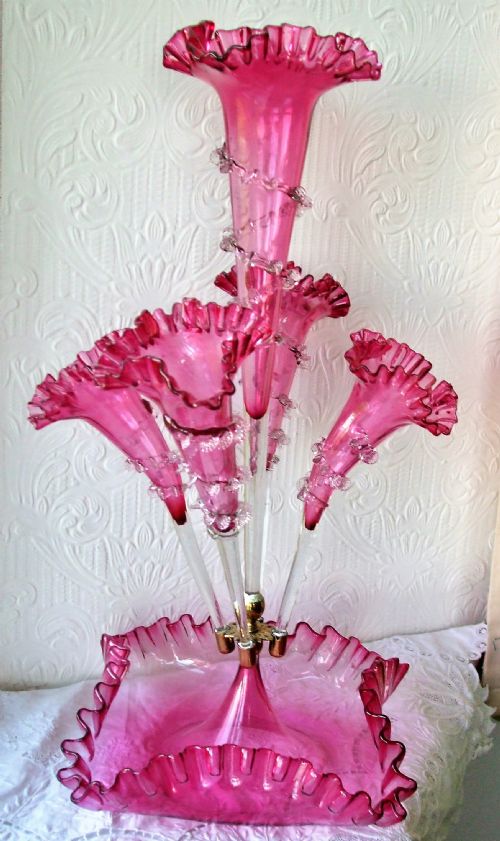
- A large table centrepiece featuring a central bowl with multiple detachable trumpet vases or arms radiating outward. They dominated formal dining tables during the nineteenth century.
- Cranberry glass
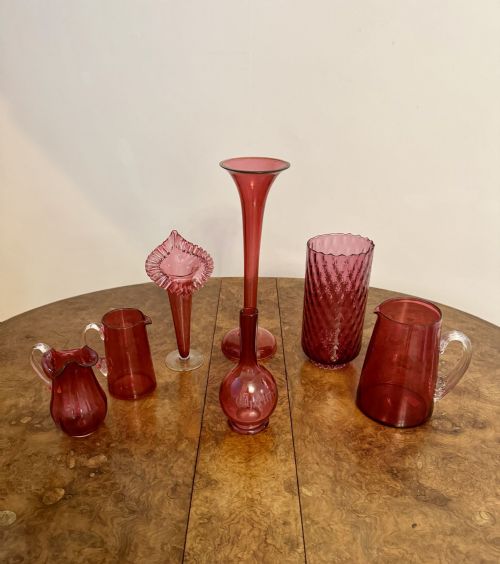
- A rich red-pink transparent glass coloured by the addition of gold chloride to the molten batch. It appears frequently in Victorian tablewares and epergnes.
- Uranium glass
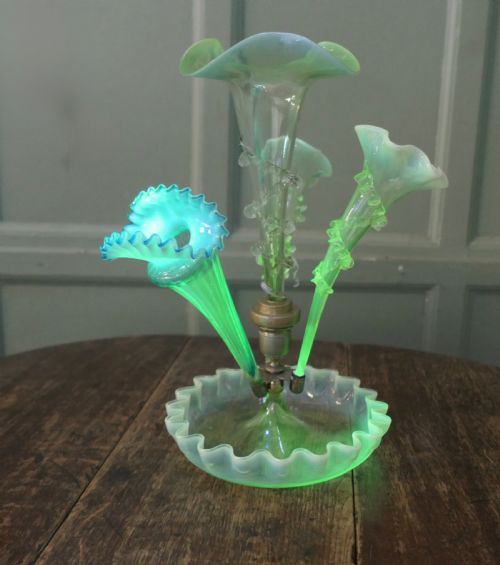
- Glass containing a small percentage of uranium dioxide, which causes the material to glow bright green under ultraviolet light. Makers often paired this with pink or clear glass.
- Cased glass
- A vessel formed from two or more distinct layers of different coloured glass fused together while hot. This technique allowed artisans to create striking contrast when cutting away the outer layer.
- Vaseline glass
- A transparent or translucent yellow-green glass that shares characteristics with uranium glass. It became popular for decorative Victorian posy vases and epergnes.
Victorian Trumpet Glasses: Frequently Asked Questions
What is a Victorian trumpet glass?
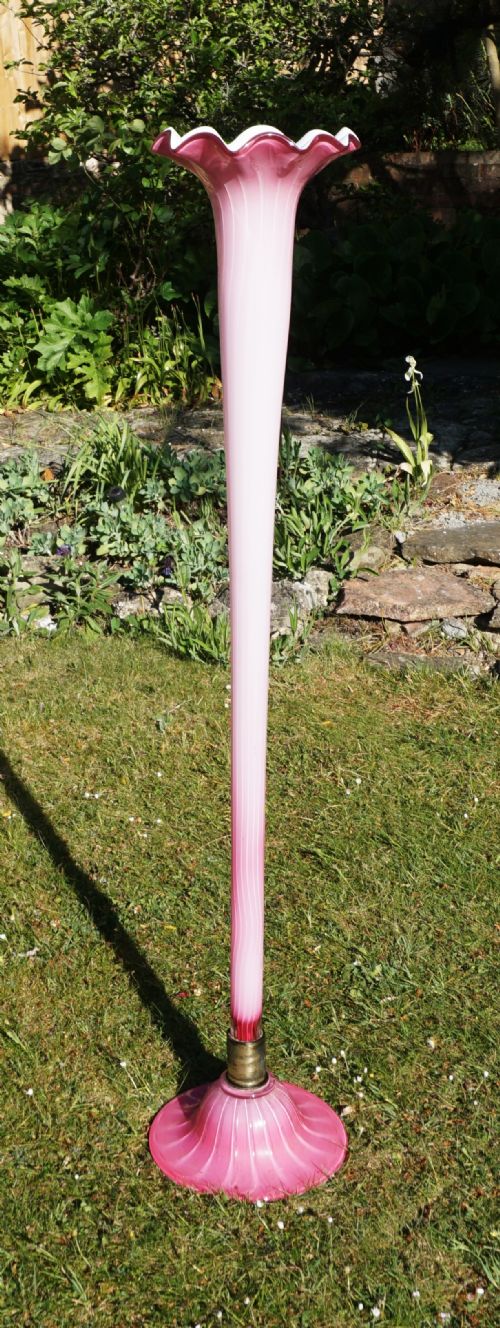
A Victorian trumpet glass is a slender, flared vessel shaped like a musical horn, produced during the nineteenth century for decorative floral displays. They appear as standalone mantel or table vases, or as the detachable components of larger epergne centrepieces.
These pieces were blown from coloured or clear glass and often embellished with trails, cased layers, or engraving. Their primary purpose was to hold cut flowers upright on dining tables and sideboards.
How do I identify uranium glass?
Uranium glass is typically transparent and ranges in hue from soft yellow-green to a brighter green. When exposed to ultraviolet light, it emits a distinct, vibrant green fluorescence.
This material was widely used in Victorian epergnes and posy vases, often combined with cranberry glass elements. You do not need specialised equipment beyond a standard UV light source to confirm the presence of uranium oxide in the glass.
How were epergnes used?
Epergnes served as the grand centrepieces of Victorian dining tables during formal meals and dessert courses. The central bowl and surrounding trumpet vases held fresh flowers, fruit, or sweetmeats.
Guests admired the brilliant colours of the glass and the intricate metal or wood stands during long gatherings. They brought height and elaborate visual interest to the centre of the room without blocking conversation across the table.
Are these trumpet vases fragile?
Like most antique glassware, Victorian trumpet glasses require careful handling due to the thinness of the blown metal at the flared rims. Multi-trumpet epergnes feature removable tubes that slot into frames, meaning each part must be lifted and cleaned separately.
When displaying them, place the pieces away from high-traffic edges where accidental knocks might occur. Support both the heavy base and the delicate stem whenever you move a piece.