

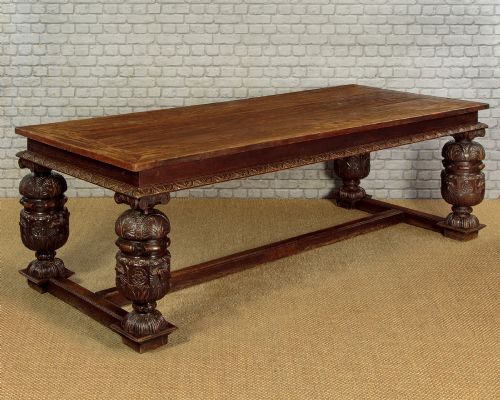


Victorian Trestle Dining Table
These pieces are a victorian trestle dining table, sturdy timber boards set on solid supports built for long family meals.

Victorian Trestle Dining Table
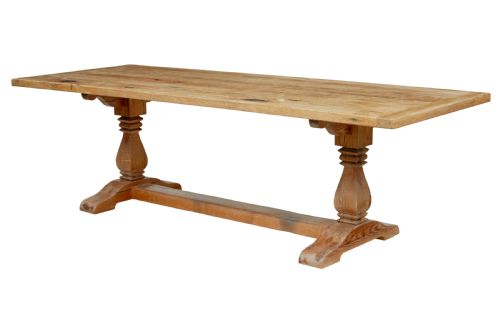
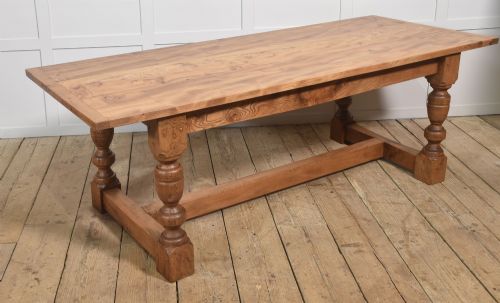
A victorian trestle dining table brings substantial utility and sturdy architecture into a room, often taking the form of a refectory or tavern board. The examples seen on this page span the nineteenth century, including pieces from eighteen eighty, eighteen ninety, and nineteen hundred.
Makers shaped these surfaces from local and imported timbers, creating formats that range from long monastic boards to smaller kitchen tables. Regional variations appear in Welsh pine tavern pieces and English oak refectory designs.
How they were made
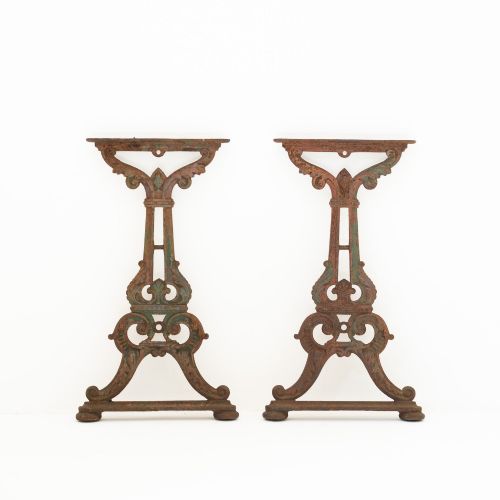
Makers relied on solid hardwoods and softwoods, frequently joining thick oak, pine, elm, and walnut planks to form robust tabletops. Structural strength came from heavy timber frames, occasionally paired with cast iron bases or brass feet.
Surfaces received various treatments, from clear wax finishes highlighting the natural grain to original red or grey paint. Carving appeared on specific styles, notably Gothic revival and Flemish carved oak examples.
Styles span rustic farmhouse, Gothic revival, Vernacular country, and Jacobean revival from the nineteenth century.
What varies in quality
The distinction between tiers rests upon the choice of timber and the integrity of the original construction. Dense, well-figured oak and aged pine planks display greater substance than utilitarian alternatives.
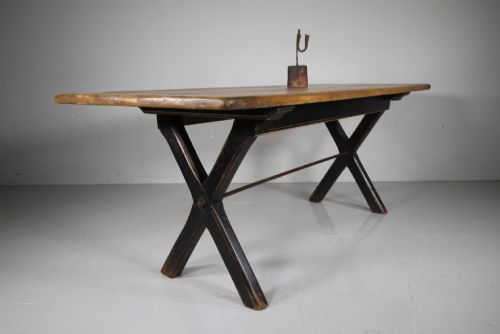
Proportion and decorative restraint set certain pieces apart, particularly where carved details or specific regional forms like X-frame bases remain intact. Original surface treatments, such as early paint layers, add considerable character.
The Victorian Trestle Dining Table Glossary
- Trestle table
- A board supported by two or more upright frames, traditionally used to allow easy dismantling and storage. This format provides maximum legroom along the length of the surface.
- Refectory table
- A long dining table originally designed for communal meals in monastery dining halls. These pieces typically feature sturdy wooden stretchers connecting the legs for stability.
- Tavern table
- A compact, sturdy table designed for commercial alehouses and domestic kitchens. They often utilise heavy timber tops on simple framed bases.
- X frame
- A structural support formed by two intersecting diagonal timbers shaped like the letter X. This design provides robust load bearing strength for heavy table tops.
- Gothic Revival
- An architectural and decorative style drawing inspiration from medieval design. Pieces often incorporate pointed arches, heavy mouldings, and carved tracery.
Victorian Trestle Dining Table: Frequently Asked Questions
How do I care for a wooden tabletop?
Clean the surface regularly with a soft, dry cloth to remove dust and grit.
Apply natural beeswax periodically to nourish the grain and protect against moisture.
Can I seat many guests at these tables?
Many examples are long refectory or tavern boards built to accommodate large numbers of diners.
Check the length and the clearance beneath the stretchers to ensure comfortable seating.
How do I identify the period of a table?
Examine the timber species, tool marks, and construction methods used beneath the top.
Compare the style, such as Gothic revival or plain vernacular country, with documented nineteenth century designs.
Where were these tables originally used?
Large refectory and tavern pieces served in communal dining spaces, halls, and public houses.
Pine kitchen variants provided sturdy workspace for domestic food preparation and family meals.