
Victorian Travelling Clock
A victorian travelling clock is a portable timepiece designed for movement, housed in brass and glass to withstand the rigours of transit.
Victorian Travelling Clock
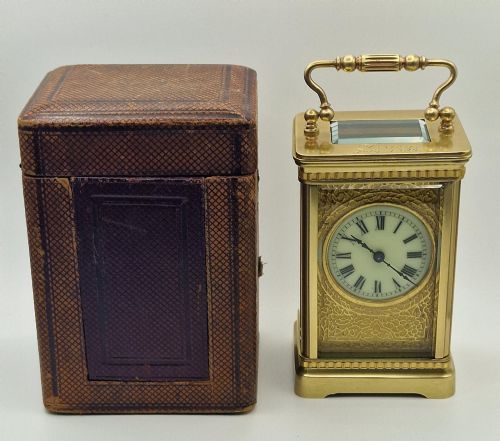
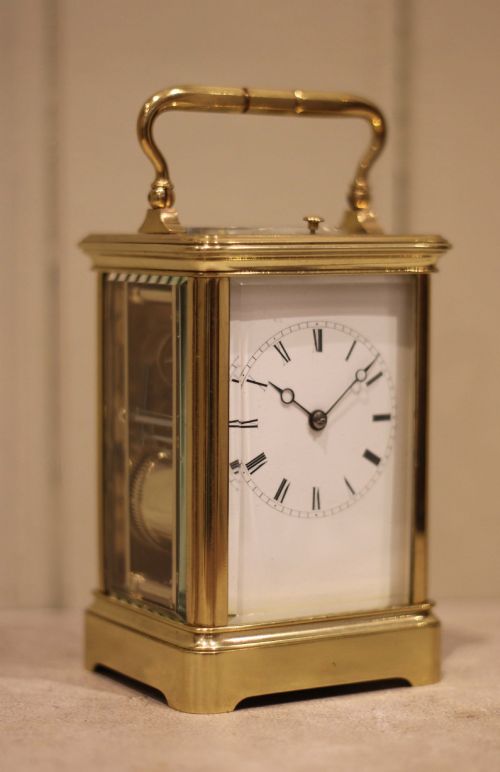
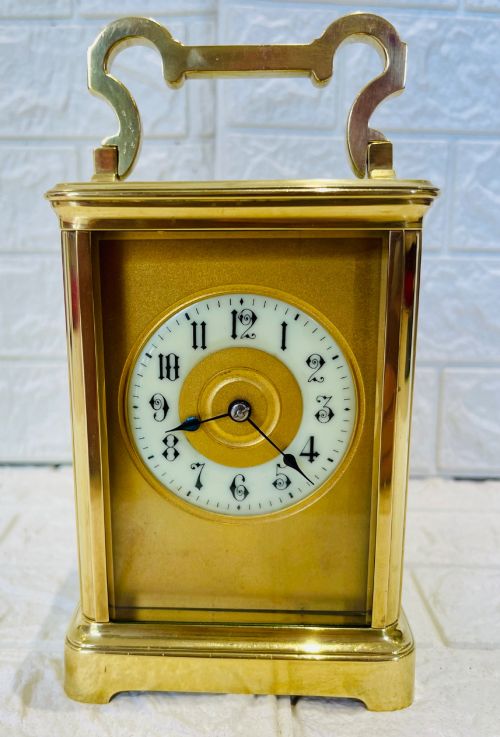
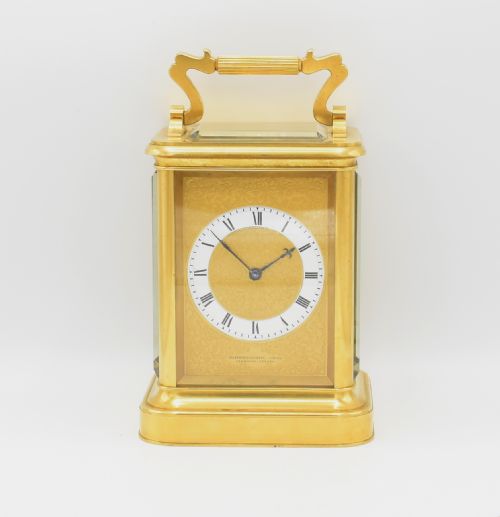
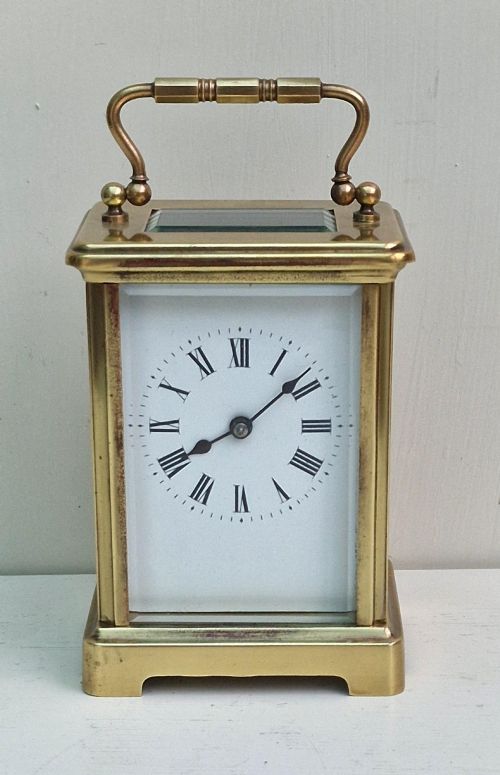
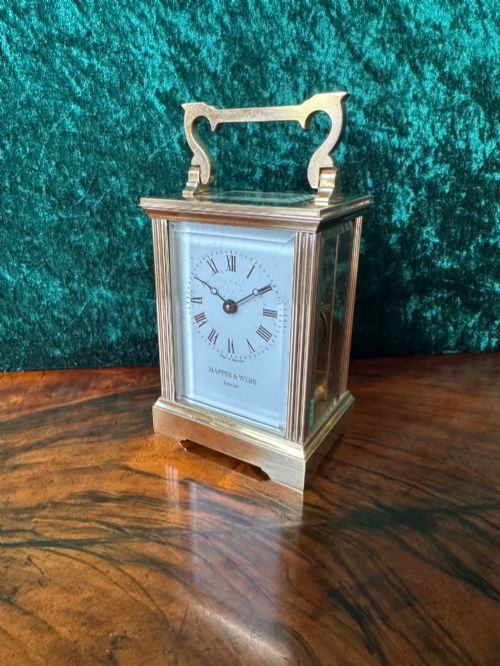
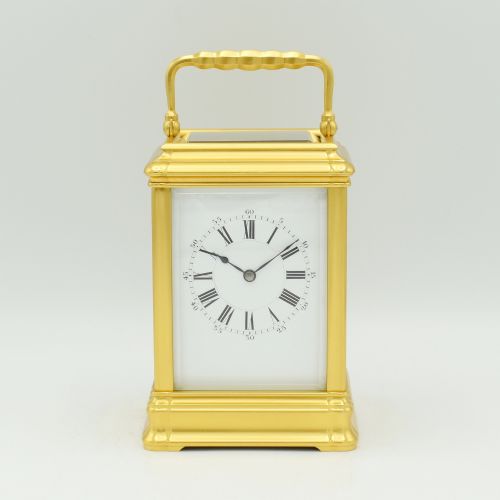
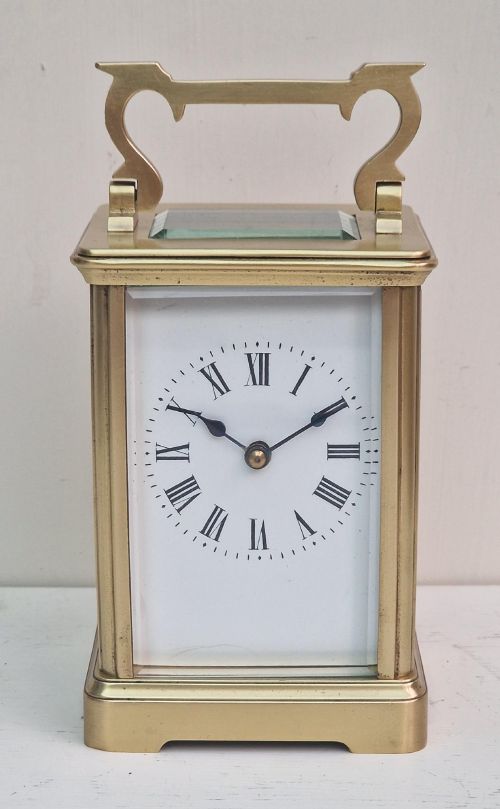
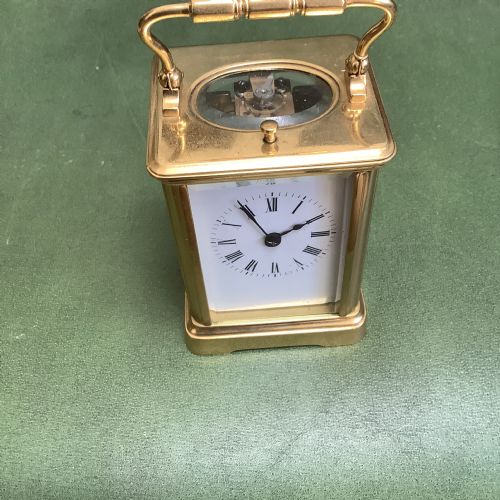
When you examine a victorian travelling clock, you are looking at sturdy, spring-driven timepieces made to be packed securely in luggage or carried on journeys. The versions most commonly encountered on this page are French and English carriage clocks, taking forms from simple timepieces to striking and repeating models.
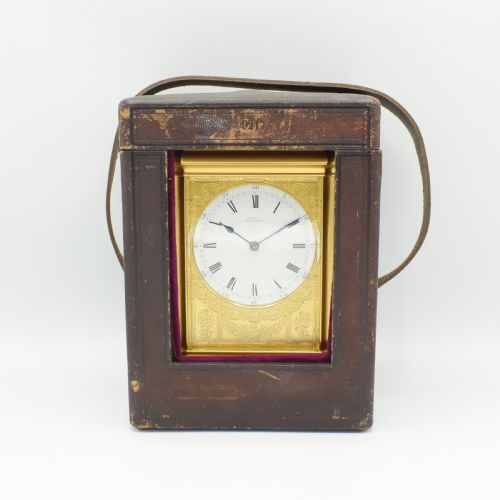
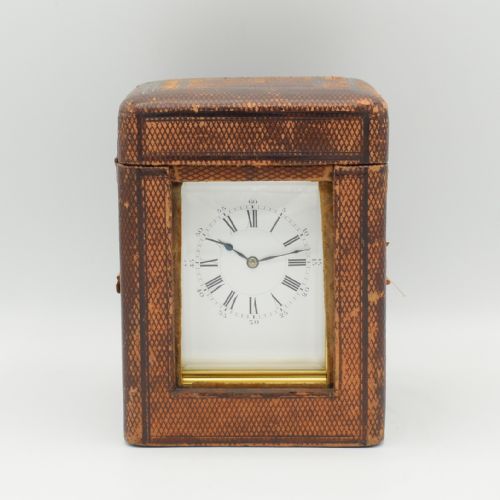
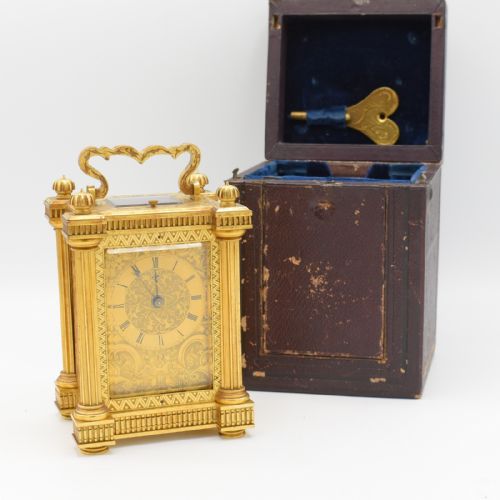
These objects span the nineteenth century, with Victorian examples frequently housed in heavy brass frames with bevelled glass panels. Many retain their original leather outer travel cases, protecting the gilt brass or engraved metal within from the bumps of nineteenth-century roads.
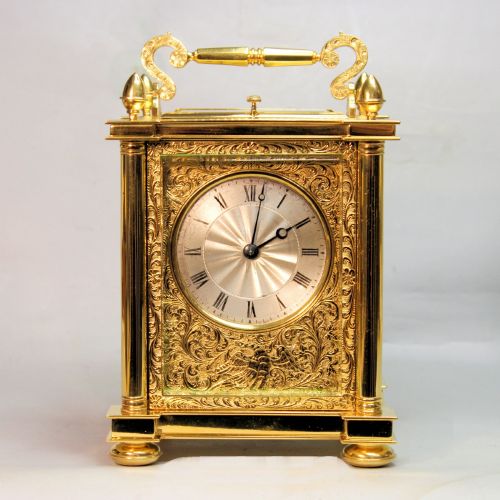
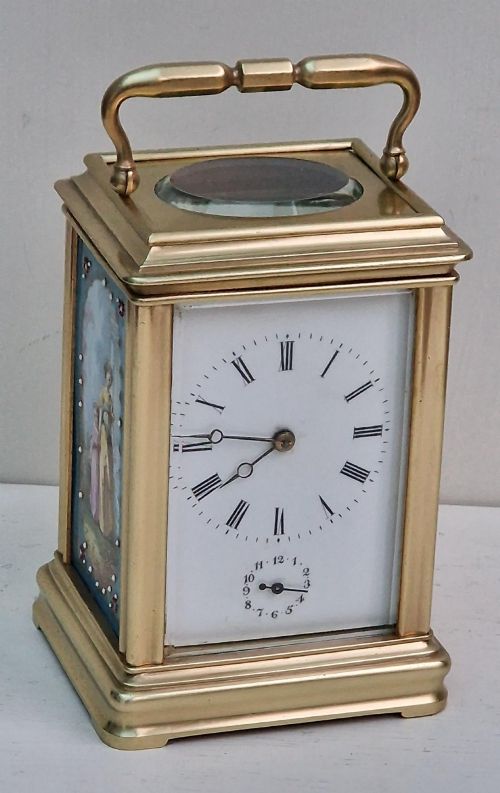
Makers ranged from notable Parisian workshops to London retailers, producing both miniature desk versions and large, substantial clock bodies. The dial layouts vary from plain white enamel to ornate porcelain panels decorated with painted figures.
How they were made
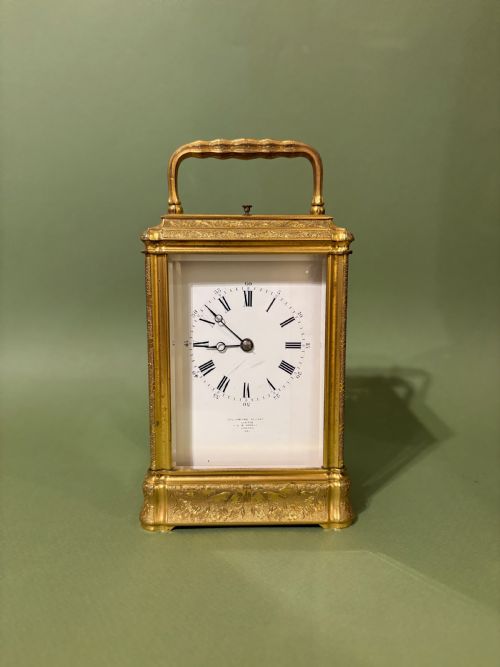
The construction relies heavily on cast and polished brass, often fire-gilt or lacquered, forming robust gorge or corniche cases that enclose complex eight-day movements. Bevelled glass windows allow the escapement and gear train to remain visible from multiple angles.
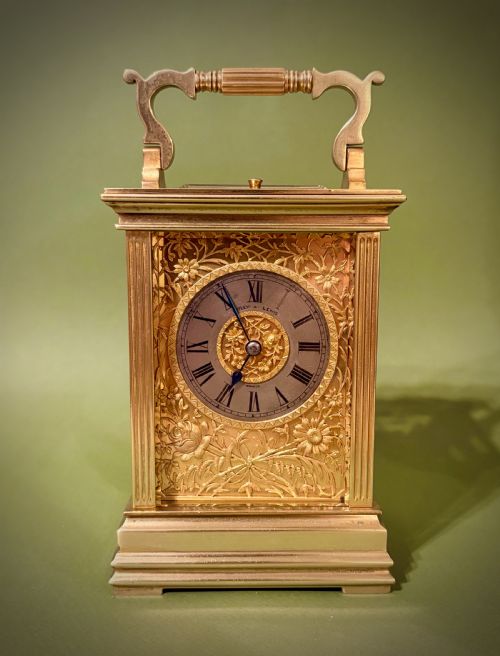
Dials are typically white enamel with delicate black numerals, sometimes complemented by subsidiary alarm dials or painted porcelain centre panels. Fine steel screws, blued hands, and intricately engraved gilt masks complete the interior mechanics.
The listings here include brass, gilt brass, leather, porcelain, and glass, spanning the nineteenth century up to Edwardian times.
What varies in quality
The distinction between ordinary and exceptional examples rests on the crispness of the brass casting and the depth of the hand-engraving on the case. Plain, utilitarian brass frames sit at one end, while fully engraved gilt cases with corniche or gorge profiles represent higher production standards.
Movement complexity alters the standing of a piece, moving from basic time-only gear trains to striking, quarter-repeating, and alarm mechanisms. Signed backplates from recognised makers add substance to the engineering.
The inclusion of undamaged enamel dials, intact mercury or platform escapements, and the survival of the original leather travel case elevate the overall integrity of the object.
HENRI JACOT·COUSENS & WHITESIDE·Howell & James London·Mappin and Web·Drocourt Paris·T. Martin & Co·C. Detouche Paris·Antoine Redier of Paris·Margaine Of France·Brunelot
The Victorian Travelling Clock Glossary
- Carriage clock
- A portable spring-driven timepiece designed for travel, featuring a handle on top and glass panels on all sides. They originated in France during the nineteenth century.
- Repeating movement
- A mechanism that chimes the hours and quarters on demand when a push-button or cord is activated. This complication allowed travellers to check the time in the dark.
- Escapement
- The internal mechanism that controls the release of power from the mainspring to the gear train. Platform escapements became standard in portable clocks of this era.
- Gorge case
- A distinct rectangular brass case style with stepped mouldings at the top and base. It is a common housing for late nineteenth-century carriage clocks.
- Fusee
- A conical pulley used in English clocks to maintain equal force on the gear train as the mainspring unwinds. This mechanical device improves timekeeping accuracy.
Victorian Travelling Clock: Frequently Asked Questions
What is a victorian travelling clock?
A victorian travelling clock is a portable mechanical timepiece built with a robust brass frame and glass panels, designed to keep accurate time while moving.
Most examples operate on a spring-driven movement with a balance wheel rather than a pendulum, allowing them to function reliably outside the home.
How do you wind them?
These clocks are wound using a dedicated square-ended key inserted into arbours located on the backplate of the movement. Winding tensions the internal mainspring that stores power for the gear train.
Care must be taken not to overwind the springs, stopping when resistance is firmly felt.
What does a repeating mechanism do?
A repeating mechanism strikes the last hour and quarters audibly when a lever or button on the case is pressed. Travellers used this feature at night to hear the time without striking a match.
These added complications require intricate gear trains behind the dial.
Why do some have leather cases?
Leather outer cases were manufactured to protect the delicate gilt brass and glass body of the clock during transit in carriages or trains. The interior of these cases is usually lined with velvet or silk to cushion the piece.
Finding a clock with its original fitted leather case is uncommon.
How do French and English clocks differ?
French carriage clocks typically utilise platform cylinder or lever escapements within standard cast brass cases. English travelling clocks often incorporate fusee movements driven by chains or cords within heavier frames.
Both styles prioritize portability but reflect different domestic horological traditions.