





Victorian Timber Credenza
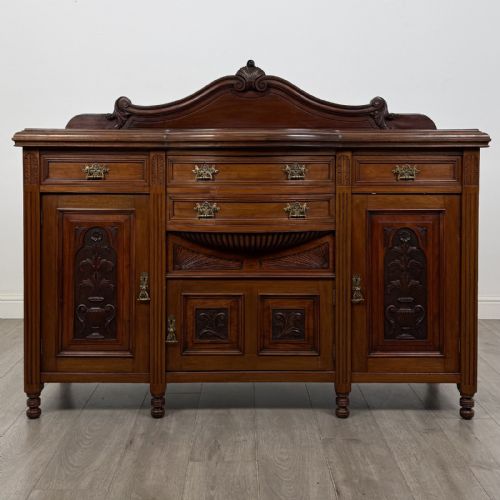
A victorian timber credenza brings grand scale and rich grain to a dining room or hall, offering deep storage beneath a polished display surface.
Victorian Timber Credenza
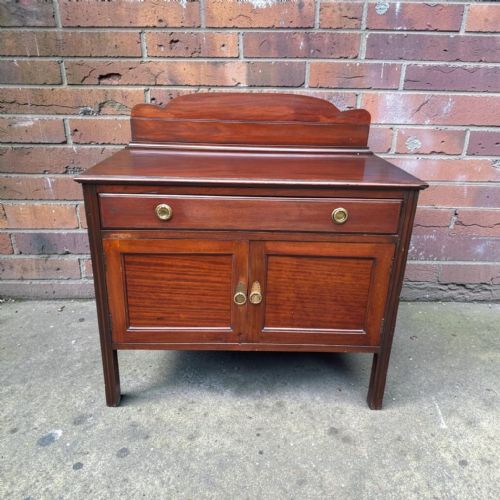
A victorian timber credenza or sideboard forms the anchor of a formal room, combining enclosed cupboards with broad surfaces for display. The listings here span sturdy kitchen dressers, side cabinets, and architectural buffets from the nineteenth century.
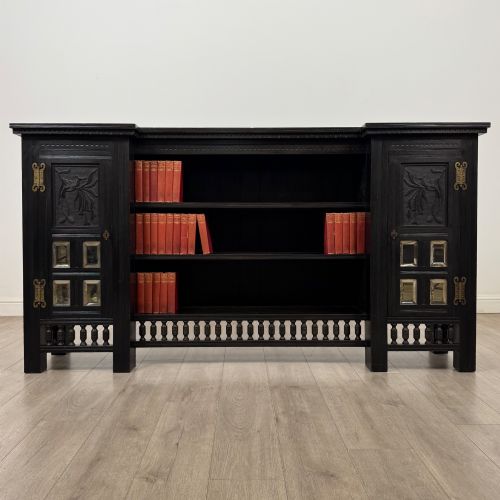
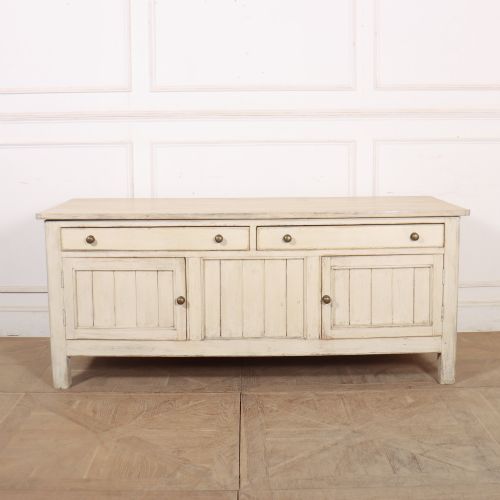
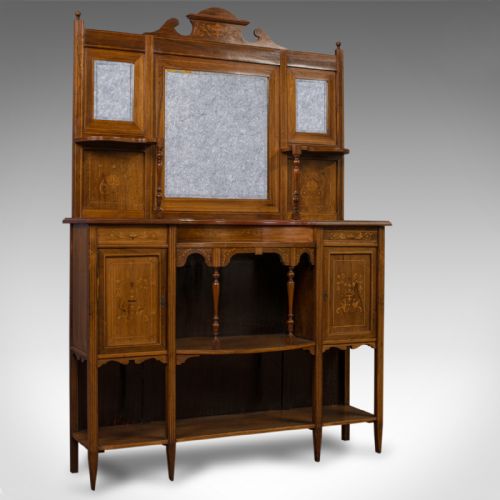
Most examples you will encounter skew towards rich hardwoods like mahogany and rosewood, alongside decorative pieces finished in satinwood, ebonised wood, or original paint. Forms range from simple country cupboards to elaborate mirror-backed sideboards carved in walnut and pollard oak.
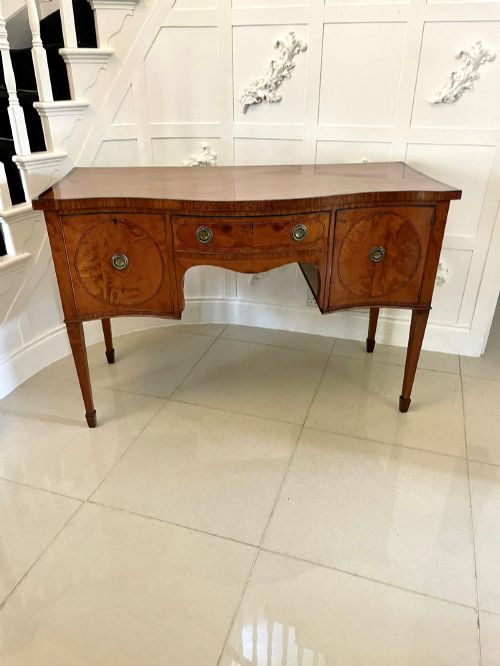
Makers and regional styles introduce significant variety, from Anglo-Indian padauk constructions to Sheraton Revival satinwood and Gillows washstands. Buyers look to these items for both functional storage and the heavy presence characteristic of Victorian case furniture.
How they were made
Cabinet makers relied on dense primary timbers such as mahogany, rosewood, and walnut for the structural carcase, often applying finer veneers like satinwood or boxwood inlay to the primary faces. Brass hardware and glazed doors completed the construction.
Surfaces were frequently polished to a high gloss or left in original painted finishes depending on whether the piece was destined for a formal morning room or an English country house kitchen.
Victorian Timber Credenza Retail Price Guide 2026
Typical asking prices for victorian timber credenza among the pieces listed under this phrase on Sellingantiques today, from the lower quarter to the upper quarter. They describe what is for sale here now, not the wider market.
Some Victorian dining sideboards hide dedicated cellarette drawers lined in lead to keep wine bottles cool.
What varies in quality
The distinction between ordinary and exceptional pieces lies in the choice of timber and the ambition of the joinery, such as serpentine shaping or complex wood inlay. Finer examples display carefully matched grain patterns across the doors and drawers.
Carved details and integrated mirrors separate standard utility sideboards from grander reception room cabinets, while original paint or untouched regional surfaces command distinct appreciation for their survival.
Gillows
The Victorian Timber Credenza Glossary
- Chiffonier
- A low sideboard or cabinet featuring enclosed cupboards beneath a shelf, popular throughout the Victorian period for holding silver and linens.
- Padauk
- A heavy, durable tropical timber with a reddish hue utilised in Anglo-Indian furniture imported during the nineteenth century.
- Pollard Oak
- Timber taken from pollarded trees, exhibiting dense, highly figured knots and swirls prized by Victorian cabinet makers.
- Serpentine
- A gently undulating curved front line found on finer Victorian sideboards and cabinets.
- Ebonised Wood
- Timber treated with a dark stain or finish to imitate expensive ebony, frequently seen on Arts and Crafts sideboards.
Victorian Timber Credenza: Frequently Asked Questions
Where should I place a timber sideboard?
These large cabinets suit dining rooms, wide hallways, or spacious living areas where their long tops and deep cupboards provide both surface display and practical storage.
Ensure you measure the wall space and clearance for doors or drawers before placement, as Victorian proportions are substantial.
How do I care for nineteenth-century polished wood?
Maintain the finish by dusting with a soft cloth and applying traditional beeswax sparingly to nourish the timber without building up heavy residue.
Keep these cabinets away from direct sunlight and strong heat sources to prevent the wood or veneer from drying and splitting.
What is the difference between a sideboard and a chiffonier?
Sideboards are generally larger dining room pieces designed for serving food and storing heavy tableware, often featuring multiple drawers and cupboards.
Chiffoniers are typically smaller, lower cabinets developed earlier in the nineteenth century, sometimes featuring a raised shelf backed by a mirror.
How can I tell the period of a Victorian cabinet?
Examine the secondary timbers inside the drawers, the style of the brass hardware, and the complexity of the carvings or veneers.
Mid-century pieces often display simpler mahogany or rosewood surfaces, whereas later Victorian examples lean towards ebonised finishes, arts and crafts influences, or elaborate satinwood inlay.