


Victorian Tiered Dumb Waiter
A victorian tiered dumb waiter brings practical multi-level serving and display to a dining room, combining clever engineering with rich period timbers.
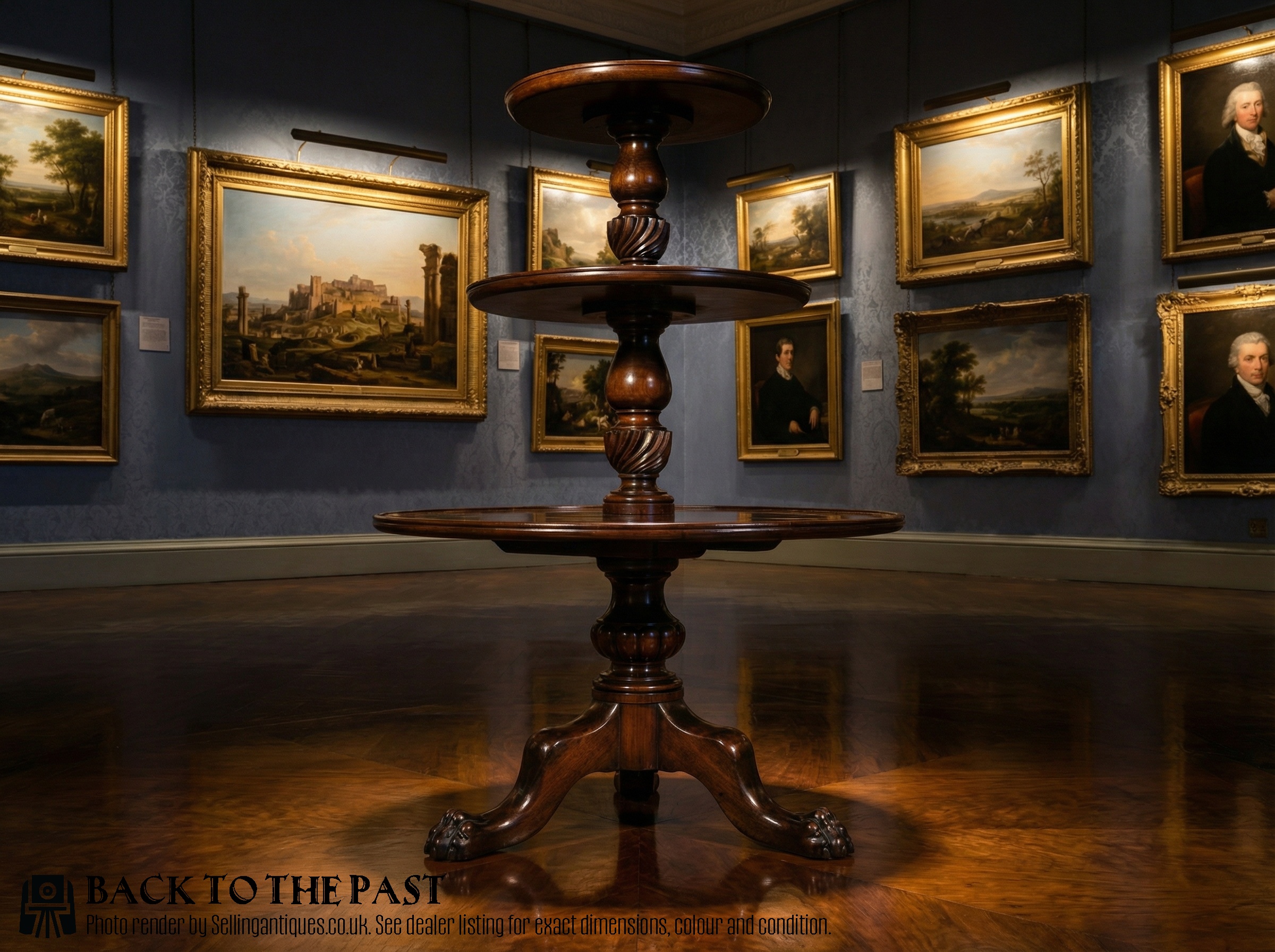
Victorian Tiered Dumb Waiter
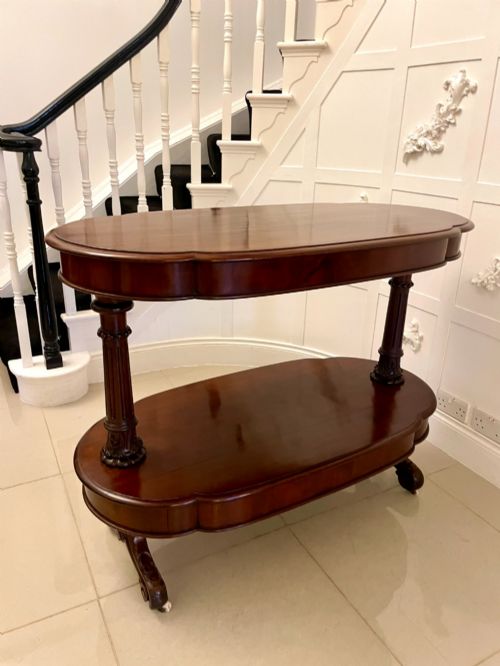
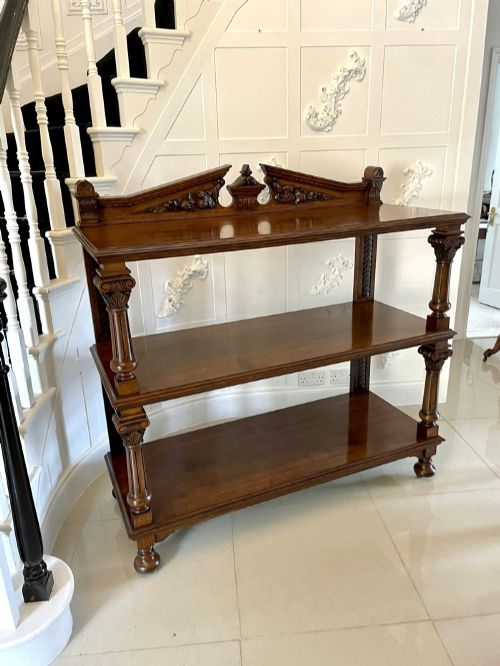
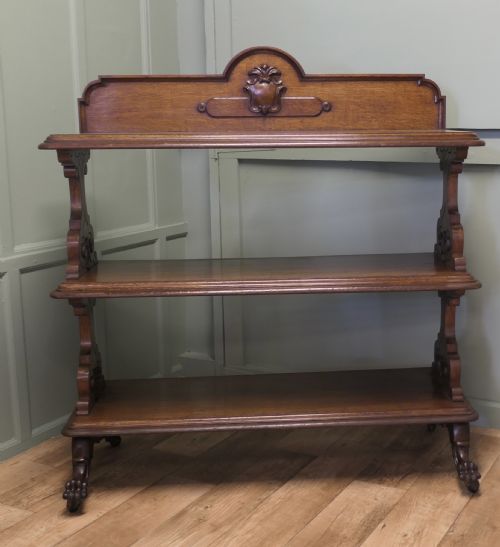
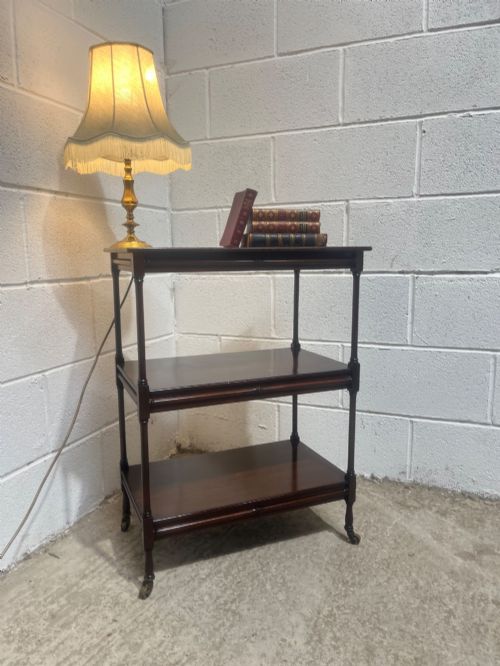
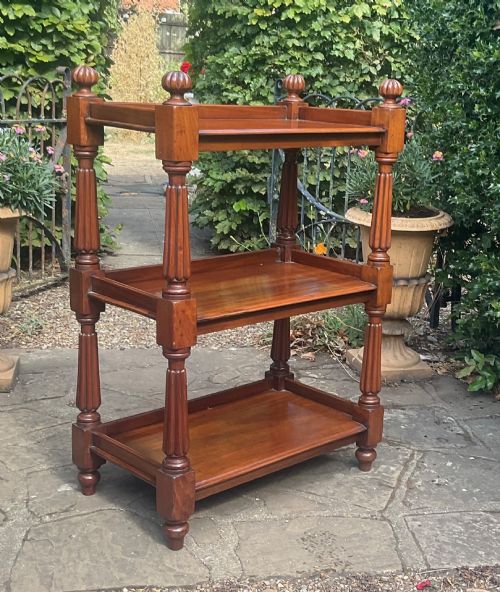
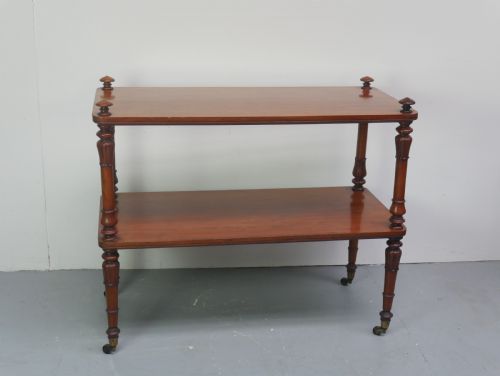
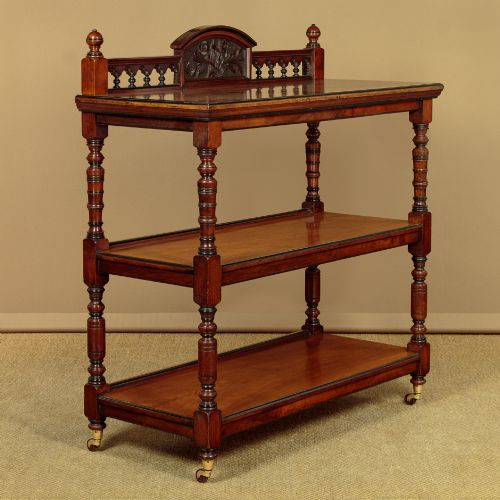
A victorian tiered dumb waiter acts as a multi-level serving table or buffet, designed to hold dishes and decanters near the dining table. The listings here span various formats, with mahogany three-tier buffets and revolving etageres appearing most frequently alongside oak and walnut iterations.
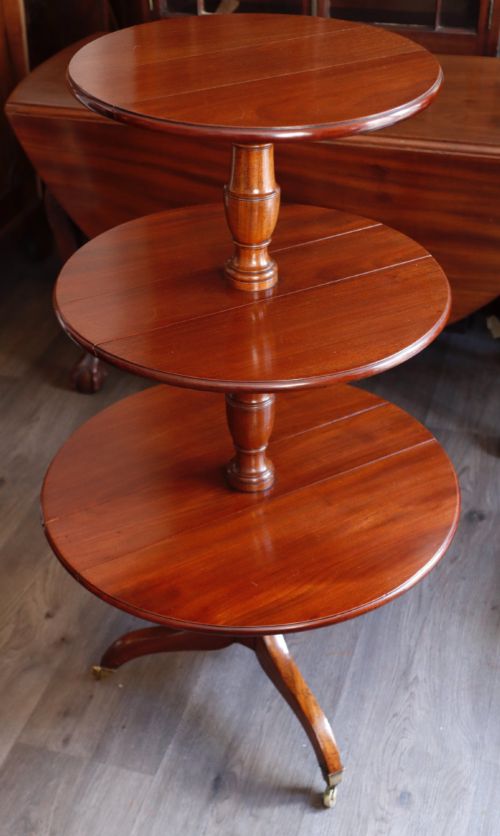
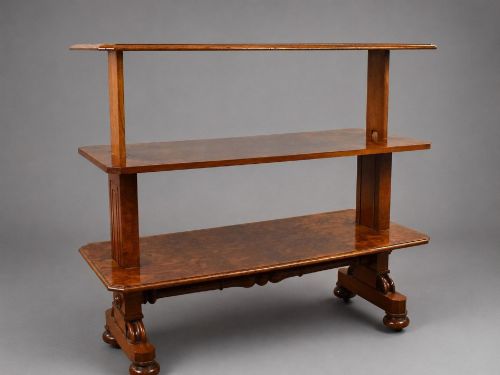
Makers produced these pieces across the nineteenth century, encompassing Georgian influences, William IV proportions, and later Aesthetic Movement designs. Forms range from simple static shelves to complex rising mechanisms and revolving tiers supported on tripod bases or castors.
Timbers and construction
Cabinetmakers relied heavily on dense hardwoods, constructing frames primarily in mahogany, walnut, oak, and rosewood. Sections often utilised brass for castors, hinges, and rising mechanisms, while secondary elements occasionally incorporated ceramic and felt.
Joinery techniques combined stable tiered platforms with robust central pedestals or corner supports. Many examples featured turned columns, carved detailing, and folding or telescopic mechanisms designed for adjustable height and compact storage.
Early dining etiquette demanded dumb waiters so guests could gossip freely without servants overhearing table conversations.
Distinctions in craftsmanship
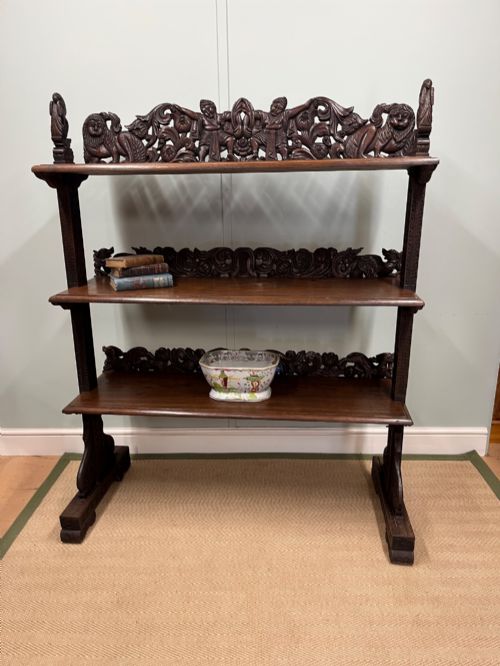
Superior examples separate themselves through the selection of figured timber veneers, refined hand-carved decoration, and the smooth operation of mechanical elements such as rising columns or revolving tiers. Lesser pieces rely on simpler turned supports and plain, unfigured boards.
The integrity of original brass castors, operational mechanisms, and structural joints defines the grade of a piece. Hand-finished details and balanced proportions distinguish bespoke workshop productions from standard utilitarian furniture.
The Victorian Tiered Dumb Waiter Glossary
- Dumb waiter
- A multi-tiered piece of dining room furniture used for holding food, glassware, and bottles without servant intervention. They typically feature two or three graduating shelves on a central column or legs.
- Etagere
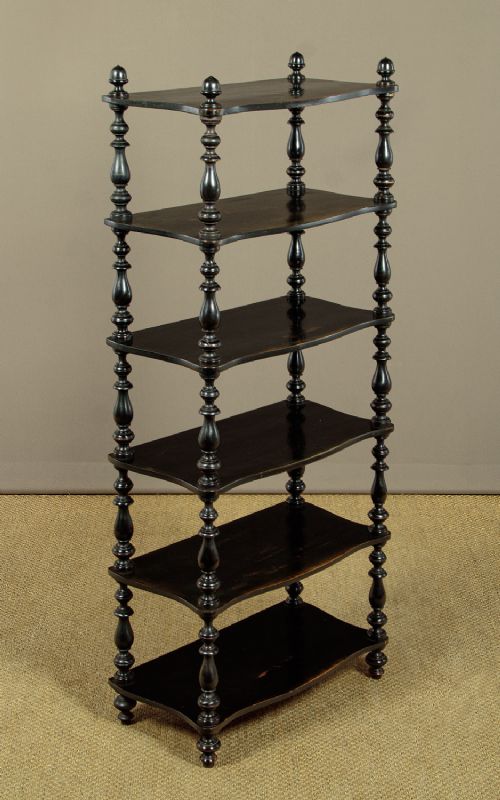
- A piece of furniture consisting of a set of open shelves for displaying small objects or serving items. These often share similar tiered proportions with dumb waiters.
- Buffet
- A sideboard or serving table utilised for food and drink service during meals. In nineteenth-century contexts, these frequently overlap with tiered dumb waiter forms.
- Telescopic
- A descriptor for furniture incorporating an adjustable rising mechanism. This allowed the tiers to alter in height via a central screw or ratchet system.
- Tripod base
- A three-legged support structure commonly found beneath the central pedestal of revolving dumb waiters. This configuration ensured stability on uneven dining room floors.
Victorian Tiered Dumb Waiter: Frequently Asked Questions
What is a victorian tiered dumb waiter?
A victorian tiered dumb waiter is a movable piece of dining furniture designed with multiple shelves to hold food, wine, and tableware. It allowed diners to help themselves during meals without domestic staff present in the room.
These pieces usually feature two or three tiers supported by a central column or corner uprights. Many sit on castors for easy movement across the floor.
How were dumb waiters used?
These pieces served as auxiliary storage stations during large meals, holding spare plates, dishes, and decanters. They kept items within arm's reach of the dining table while freeing up space on the main dining surface.
Some variants included revolving shelves or rising mechanisms to adjust tier heights. Others functioned as general display surfaces for china and books outside of dining hours.
How do I identify a period piece?
Period pieces display traditional construction methods such as hand-cut dovetails, timber shrinkage, and genuine period hardwoods like mahogany, walnut, and rosewood. Examining the secondary woods and fixing methods reveals nineteenth-century manufacturing traits.
Hardware such as brass castors and turning styles on the central columns also point toward specific decades like the 1850s or 1880s. Maker's marks or registration stamps occasionally appear on the underside of shelves.
How do I care for antique timber?
Maintain antique timber by keeping it away from direct heat sources and strong sunlight, which can dry out and fade the wood. Regular dusting with a soft, dry cloth prevents surface buildup.
Apply a traditional beeswax polish sparingly to nourish the grain and protect the finish. Avoid silicone-based sprays, as they can penetrate the pores and damage the historic polish.