



Victorian Three Tier Whatnot
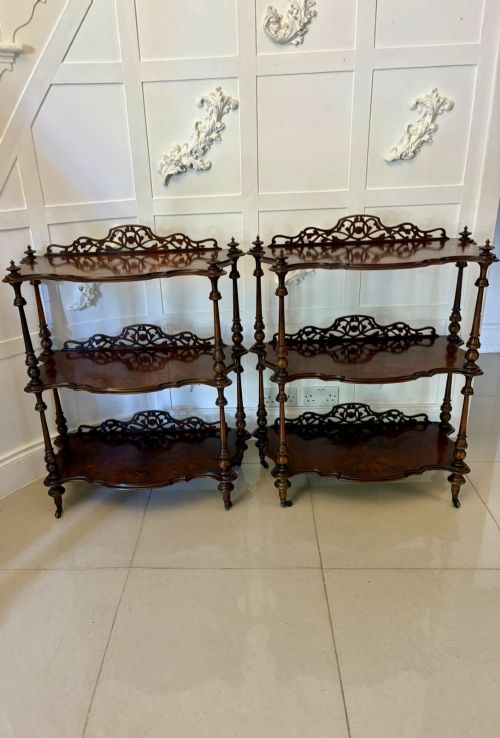
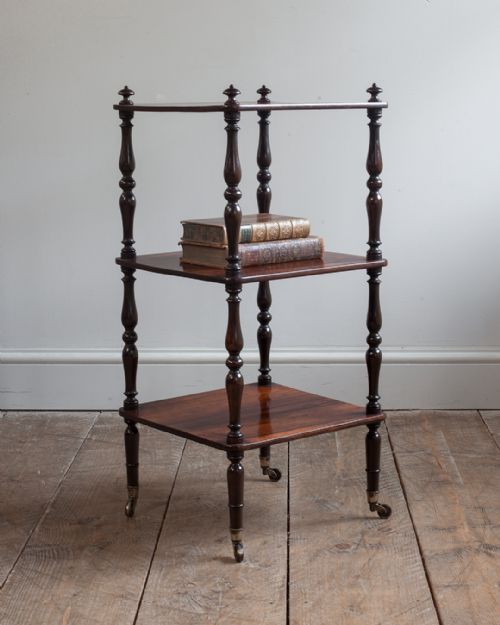
A victorian three tier whatnot brings tiered display space to a room, offering multiple open shelves held by slender uprights.
Victorian Three Tier Whatnot
A victorian three tier whatnot is a multi-level display stand designed to hold books, ceramics, or small ornaments across open platforms. The form appears predominantly in nineteenth-century contexts, spanning periods from the Regency era through to the late Victorian decades.
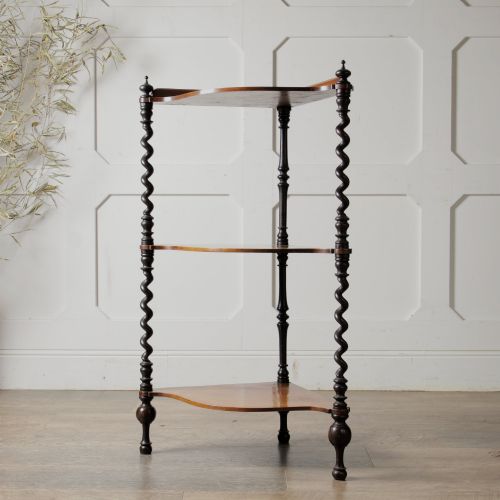
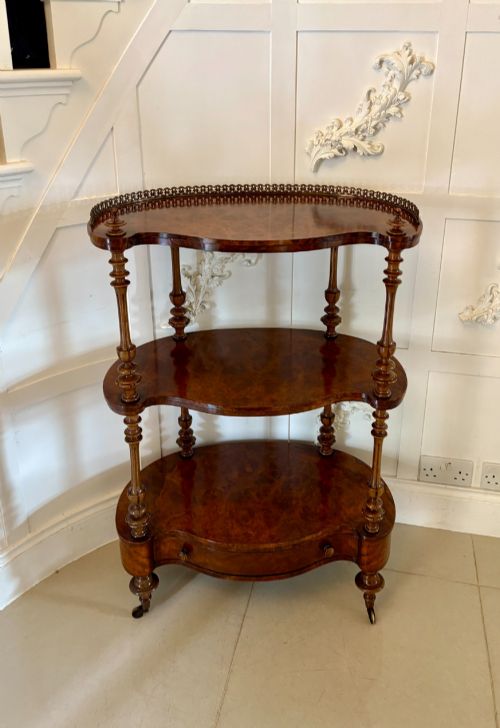
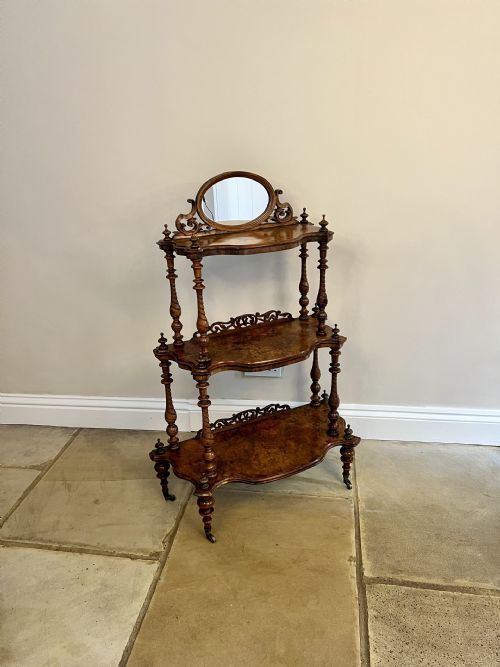
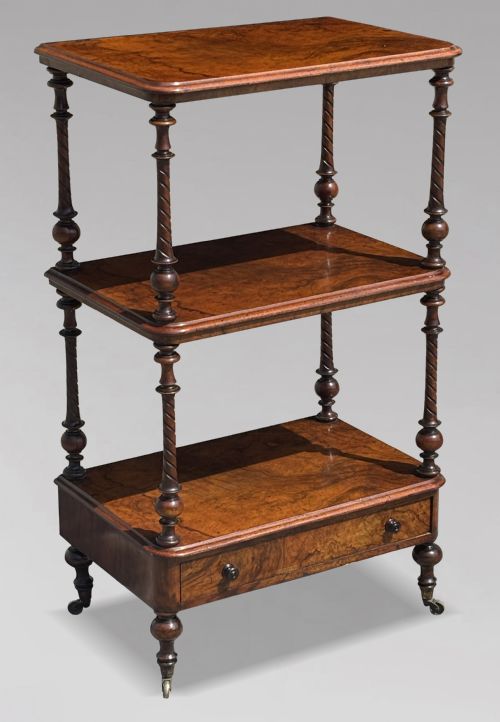
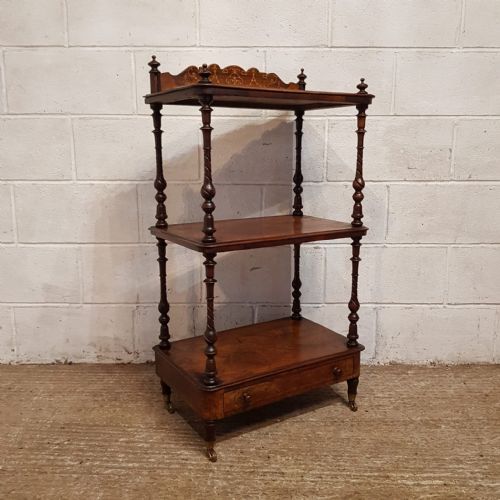
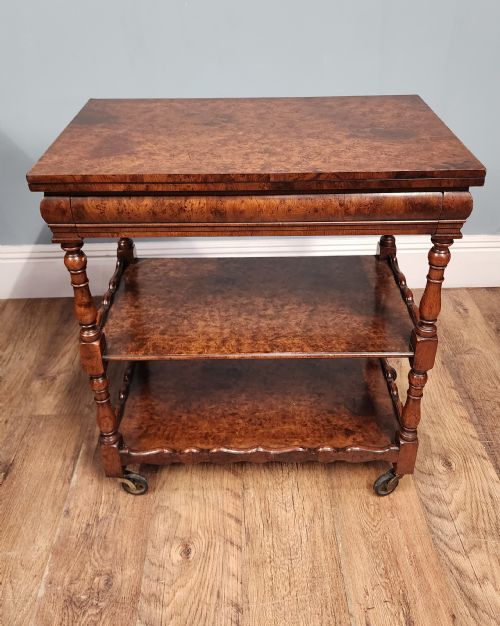
Most examples found in current records feature three graduated or uniform shelves supported by turned columns, corner posts, or barley twist supports. Variations include freestanding rectangular models, serpentine fronts, demi-lune consoles, corner units, and occasional pieces fitted with a single lower drawer or a butler trolley format.
Materials and Construction
Cabinetmakers constructed these stands using dense hardwoods such as mahogany, rosewood, walnut, and burr walnut veneer over secondary timbers. Ebonised wood, bamboo, and padouk also appear among the recorded pieces, alongside decorative turnings and brass castors.
Joinery methods relied on sturdy vertical supports framing horizontal shelves, frequently reinforced by slender spindle galleries or shaped fretwork upstands. Surface finishes depended on the timber employed, utilising polished French polish to highlight the grain patterns of figured walnut or rosewood.
One remarkably versatile survivor doubles as a butler trolley complete with shelves for afternoon tea.
Assessing Quality and Craftsmanship
The distinction between standard utility items and exhibition pieces rests upon the selection of timber veneers and the crispness of carved details. Burr walnut and figured rosewood with rich natural grain command attention, while plainer mahogany versions serve simpler functional roles.
Samson and Son London·Gillows
The Victorian Three Tier Whatnot Glossary
- Whatnot
- A piece of furniture consisting of a set of open shelves for displaying small objects. They became popular in the nineteenth century for parlours and drawing rooms.
- Etagere
- A French term for a piece of furniture with a tier of open shelves for displaying ornaments. It is often used interchangeably with a whatnot.
- Burr Walnut
- Timber taken from a walnut tree growth featuring intricate, swirling grain patterns. Cabinetmakers sliced this wood into veneers for high-end Victorian furniture.
- Barley Twist
- A type of column or support carved in a helical, spiral shape. This decorative turning technique appears frequently on nineteenth-century stands.
- Serpentine
- A curved line of furniture shaping that bends outward in the centre and inward at the sides. It adds fluid movement to the front profile of a tier.
Victorian Three Tier Whatnot: Frequently Asked Questions
What was a whatnot used for?
A whatnot served as an open display stand in Victorian homes for ornaments, books, and decorative ceramics. They kept small treasured items visible and accessible in drawing rooms and parlours.
Lower shelves often accommodated heavier volumes, while upper tiers held delicate porcelain or glassware. Their tiered open design prioritised display over enclosed storage.
How do I date a three tier whatnot?
Dating relies on identifying timber choices, turning styles, and construction traits linked to periods between the Regency era and the late nineteenth century. Rosewood and mahogany dominate earlier pieces, while burr walnut gains prominence from the mid-nineteenth century onward.
Subtle shifts in proportions and edge moulding help separate Georgian and Regency survivals from later Victorian mass production. Secondary woods and fastener types further clarify the decade of manufacture.
Where should I place a whatnot at home?
These stands suit corners, alcoves, or flat wall spaces where vertical display height is needed without heavy floor footprints. Corner units fit snugly into unused room angles, while serpentine or rectangular models anchor nicely against living room walls.
Keep them away from direct heat sources and strong sunlight to protect delicate wood veneers and French polished surfaces from fading or drying out.
What is the difference between an etagere and a whatnot?
While both terms describe multi-tiered open shelving units, etagere originates from French terminology often applied to lighter, highly decorative display furniture. Whatnot is the traditional English name used broadly for tiered stands from the same era.
In practice, antique dealers and makers used both words interchangeably for the same form of multi-level shelving.