




Victorian Three Tier Sideboard
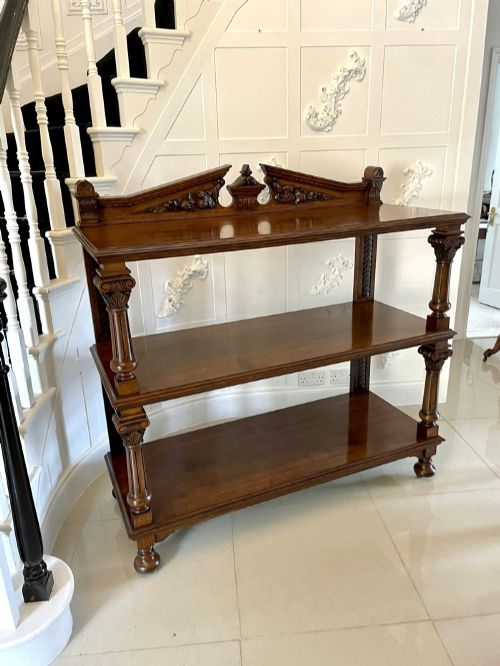
A victorian three tier sideboard is a tiered serving piece designed for dining rooms, offering tiered surfaces in rich woods like mahogany and walnut.
Victorian Three Tier Sideboard
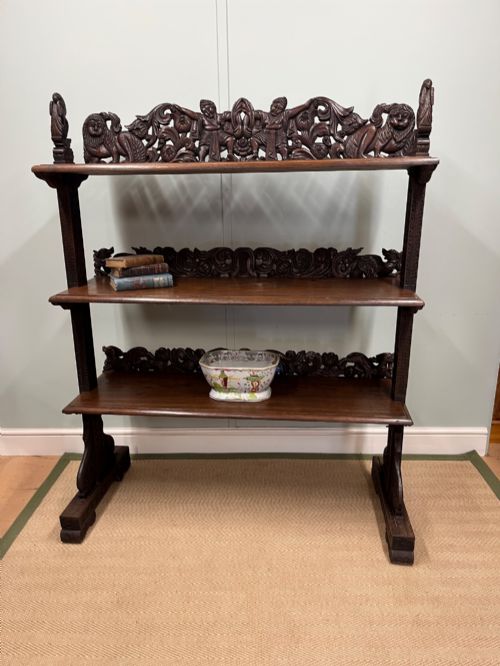
A victorian three tier sideboard, often catalogued as a buffet, dumbwaiter, or serving table, provides three stacked tiers for dining room service. These pieces emerge primarily in 19th-century styles, including Aesthetic Movement and Anglo-Indian designs.
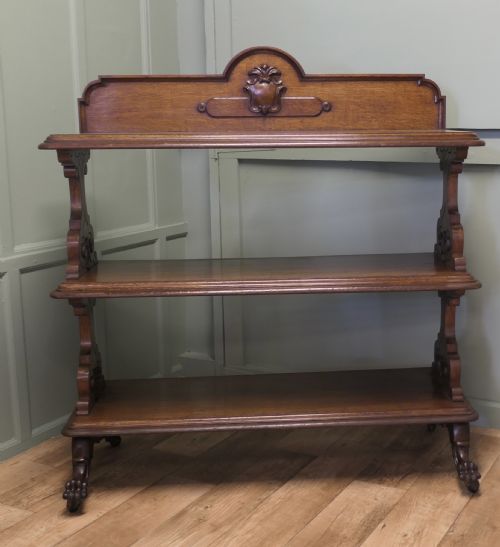
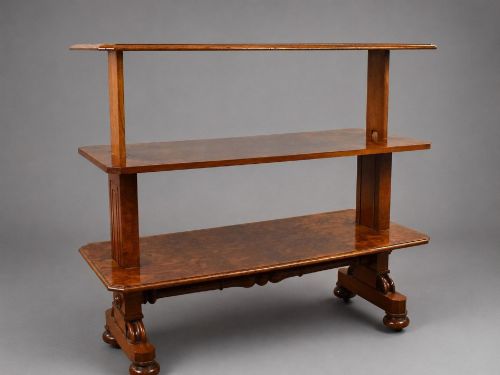
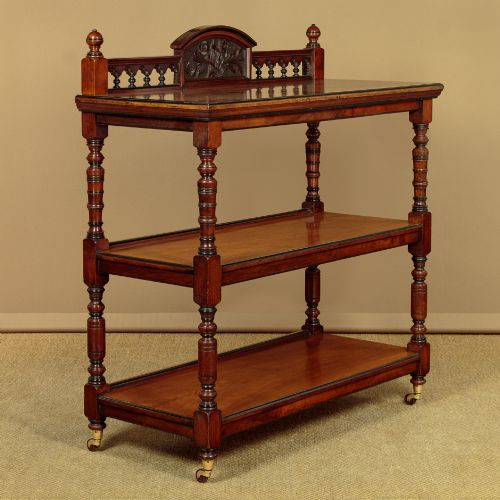
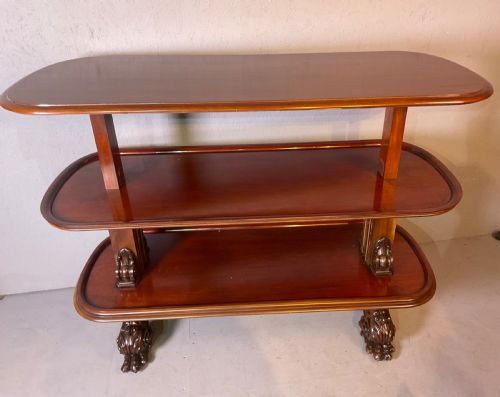
The most common formats on this page are mahogany and oak three-tier dumbwaiters and buffets, frequently fitted with castors for movement. Some examples feature telescopic or adjustable mechanisms, while others incorporate top shelves or cabinet doors.
Origins stretch across the Victorian period, with specific dates pointing to the mid 19th century and around 1880. Makers such as Maple & Co and James Shoolbred & Co contributed large-scale and finely carved variations.
Materials and Construction
Cabinet makers utilised dense hardwoods including mahogany, oak, walnut, burr walnut, teak, and pollard oak to construct the frame and tiers. These timbers were selected for their strength and figured grain.
Carved ornamentation, panelled doors, and raised shelves define the decorative construction. Brass fittings and original castors appear frequently as functional hardware supporting the tiered structure.
Some Victorian diners relied on a revolving tier to pass the port without awkwardly reaching across the mahogany.
Distinctions in Quality
Quality depends upon the selection of timber, such as highly figured burr walnut or pollard oak, paired with crisp, deep carving on the uprights and tiers. Maker attribution, particularly to established firms, elevates a piece.
Mechanical complexity also separates examples, distinguishing standard fixed shelving from adjustable, telescopic, or metamorphic dumbwaiter designs that require precise engineering.
Maple & Co·James Shoolbred & Co
The Victorian Three Tier Sideboard Glossary
- Dumbwaiter
- A multi-tiered piece of dining furniture designed to hold dishes and silverware without the aid of servants. These movable stands feature two or three graduated shelves.
- Buffet
- A side table or sideboard used for serving food and displaying silver or ceramics. Victorian iterations often incorporate three tiers and carved wooden supports.
- Pollard Oak
- Oak timber taken from trees that have been pollarded, producing a gnarled grain pattern with dense clusters of knots. Cabinet makers prized this wood for decorative veneering.
- Burr Walnut
- Timber taken from the wart or growth on a walnut tree, yielding an intricate, swirling grain. It was utilised extensively for high-status Victorian veneer work.
- Metamorphic
- Furniture designed to transform or adjust its form through mechanical hinges or ratchets. In these pieces, tiers or sections alter position for different uses.
Victorian Three Tier Sideboard: Frequently Asked Questions
What is a three tier sideboard used for?
These pieces served as auxiliary serving tables in Victorian dining rooms, holding extra dishes, silver, and glassware during large meals.
Today, they function as display furniture in hallways and living rooms, offering distinct surface tiers for books and decorative objects.
What woods were used for these sideboards?
Primary timbers include mahogany and oak, which provided sturdy structural frames for heavy daily use.
More decorative examples utilised walnut, burr walnut, teak, and pollard oak to showcase rich grain patterns and polished surfaces.
Are these pieces adjustable?
Certain examples feature telescopic columns or mechanical ratchets that allow the tiers to be raised or lowered.
Standard sideboards and buffets maintain fixed shelf heights secured by turned uprights and structural brackets.