





Victorian Tea Set China
Victorian tea set china brings nineteenth century drawing rooms to life with porcelain cups, saucers and services made for entertaining.
Victorian Tea Set China
Victorian tea set china comprises matching sets of porcelain and bone china vessels produced during the nineteenth century for the formal serving of tea. The pieces met on this page range from modest bachelor sets and single trios to extensive afternoon tea services and children's miniature services.
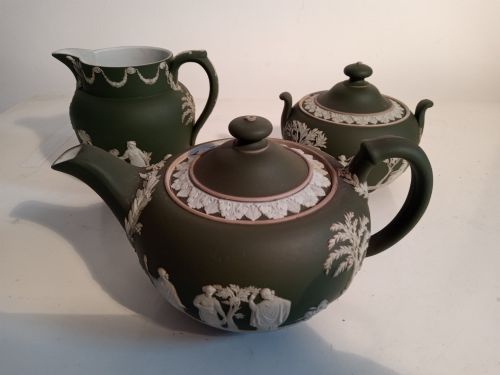
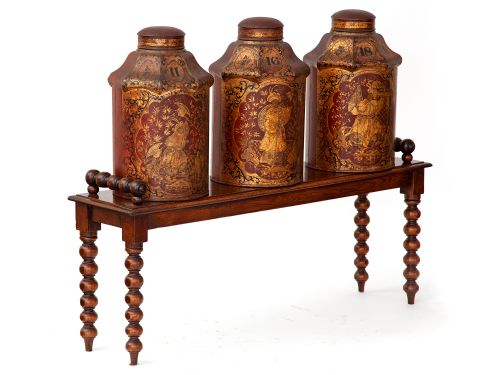
Forms include teacups, saucers, sugar bowls, tea canisters and complete tea services spanning the Victorian era, late eighteen hundreds and Georgian periods. Makers such as Wedgwood, Coalport, Royal Davenport, Minton, Wileman Foley Shelley and Royal Crown Derby appear across the selection.
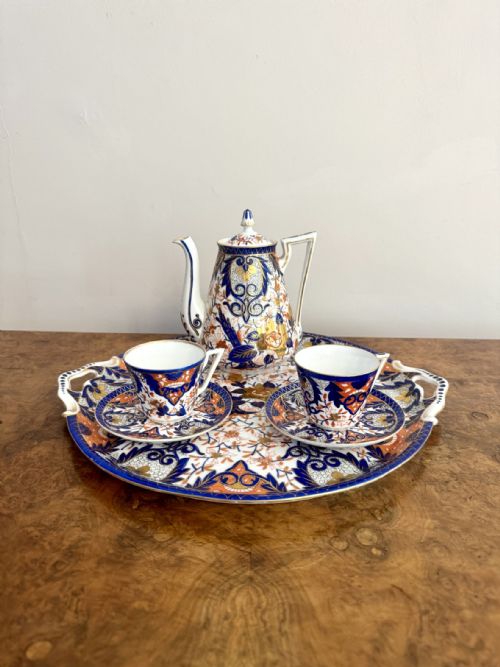
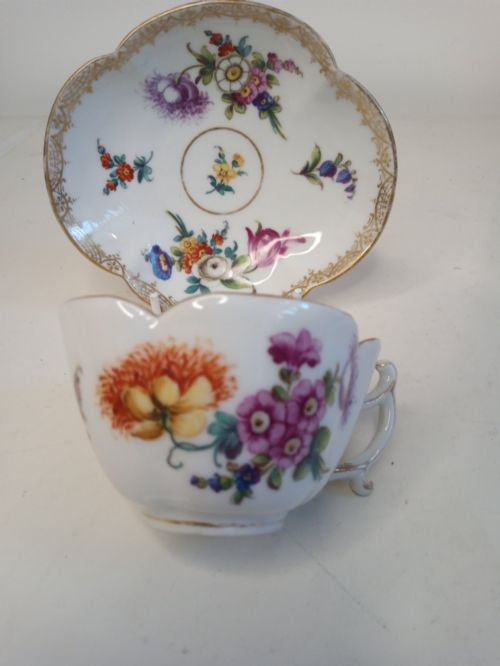
Decoration draws on traditional idioms including Imari, Kakiemon revival, Chinoiserie and hand painted floral patterns executed in enamel and gold leaf. Buyers also encounter flow blue prattware and pagoda style maroon china alongside standard porcelain compositions.
Assessing quality and execution
The distinction between ordinary ware and superior pieces lies in the precision of the hand painting and the fineness of the porcelain body. Superior sets display crisp brushwork, balanced enamel application and clean gilding without smudging.
Completeness and consistency across larger services elevate a set, particularly when matching cups, saucers, bowls and plates survive together. Maker attribution, such as signed works from established potteries, also distinguishes finer examples.
Victorian Tea Set China Retail Price Guide 2026
Typical asking prices for victorian tea set china among the pieces listed under this phrase on Sellingantiques today, from the lower quarter to the upper quarter. They describe what is for sale here now, not the wider market.
The selection includes regional British wares ranging from Georgian foundations through late Victorian production.
Wedgwood·Coalport·Royal Davenport·Minton·Wileman Foley Shelley·Royal Crown Derby
The Victorian Tea Set China Glossary
- Bone china
- A type of soft porcelain containing bone ash that produces a strong, translucent body. It became standard for British tea wares during the nineteenth century.
- Flow blue
- A cobalt blue transfer printing technique where the colour deliberately blurred into the surrounding white glaze during firing. This effect created a soft, hazy appearance popular on mid-century wares.
- Imari
- A decorative style inspired by Japanese export porcelain, featuring a palette of cobalt blue, iron red and gold leaf. Victorian makers reinterpreted these patterns on tea sets.
- Sucrier
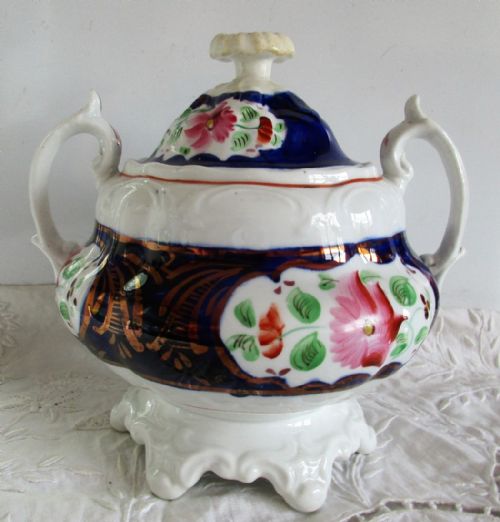
- A covered sugar bowl designed to hold lump or granulated sugar as part of a matching tea service. These vessels often feature twin handles and a domed lid.
- Trio
- A matched set consisting of a teacup, a saucer and a matching side or tea plate. Trios formed the standard individual place setting for formal afternoon tea.
Victorian Tea Set China: Frequently Asked Questions
How do I date a Victorian tea set?
Dating relies on maker marks stamped or painted on the underside of the porcelain, alongside stylistic clues like shape and palette. Reference books match these backstamps to specific production years and registry dates.
Changes in body composition from heavy earthenware to translucent bone china also help narrow the decade of manufacture within the nineteenth century.
Were children's tea sets actually used?
Miniature tea sets and child's toy services were produced as playthings for children to practice etiquette and domestic entertaining. Despite their diminutive size, they were made from genuine porcelain and earthenware.
Many surviving sets show signs of gentle use in nursery settings, while others remained as display pieces.
What is a bachelor tea set?
A bachelor tea set is a compact, single person service designed for solitary use rather than large gatherings. These sets typically combine the teapot, cup and sugar container into a single stackable unit.
They offer a practical way to experience nineteenth century porcelain without requiring space for a full twelve person service.
Can I use antique china for daily tea?
Antique porcelain handles hot liquids safely, but hand painted enamels and gold leaf gilding require gentle care. Hand washing in warm water preserves the historic surface decorations from fading.
Harsh detergents and modern dishwashers should be avoided to protect the glaze and metallic highlights.