




Victorian Tea Accessories
These Victorian tea accessories bring silver sugar tongs, caddy spoons and biscuit barrels to the table for daily service.
Victorian Tea Accessories
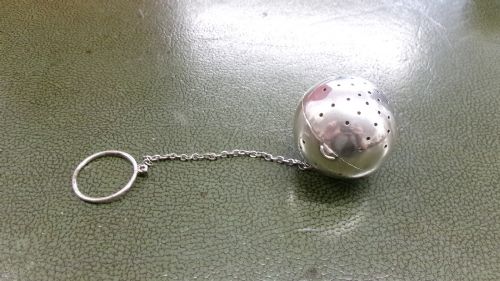
When searching for victorian tea accessories, buyers encounter a range of functional table service items spanning sugar tongs, caddy spoons, cream jugs, biscuit barrels and tea infusers. These pieces encompass specific serving tools designed to portion sugar, strain leaves and store biscuits during tea service.
The most frequent examples on this page are sterling silver sugar tongs, caddy spoons and silver plated biscuit barrels originating from the nineteenth century. Makers produced these utensils in various regional assay offices including Dublin, Exeter, Chester and Newcastle, alongside continental workshops.
Items range from early pieces featuring foliate engraving to late period naturalist designs shaped like foliage or animal forms. Tableware sets often combine sugar bowls, sifter spoons and cream jugs within fitted cases.
Materials and construction
Silversmiths utilised sterling silver and silver plate over nickel silver as the primary metals for forming bowls, tongs, spoons and biscuit box mounts. Artisans shaped these metals through hand hammering, piercing and casting, often applying foliate engraving or naturalistic motifs directly to the surface.
Victorian Tea Accessories Retail Price Guide 2026
Typical asking prices for victorian tea accessories among the pieces listed under this phrase on Sellingantiques today, from the lower quarter to the upper quarter. They describe what is for sale here now, not the wider market.
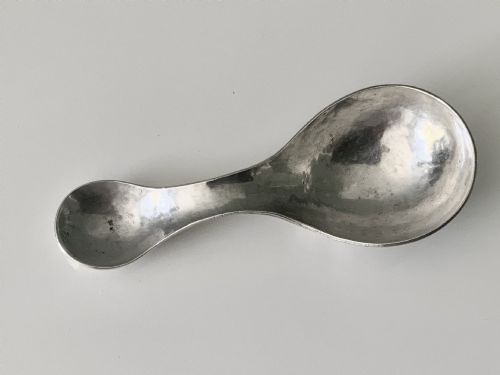
Tea was so precious in earlier times that caddy spoons were fashioned into the shape of a jockey's cap to amuse guests.
Distinctions in quality
Quality rests upon the crispness of hand engraving, the weight of the silver and the precision of mechanical actions such as locking biscuit box lids and spring sugar tongs. Heavier gauge sterling silver provides greater structural rigidity than thin electroplate.
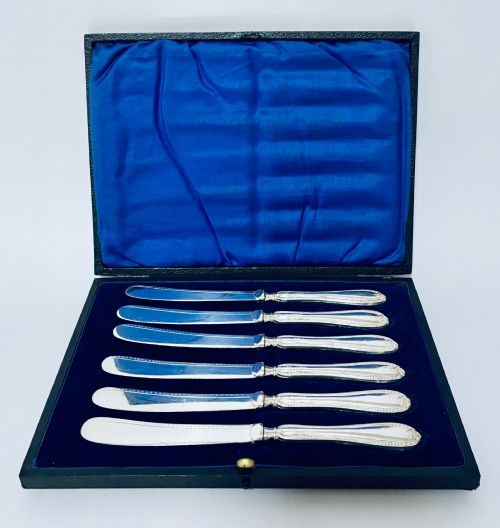
Maker marks and regional hallmarks stamped clearly into the metal indicate standard and origin, while intact original velvet and silk lined presentation cases elevate the standing of matched sets.
Mappin and Webb·Walker and Hall·George Unite·Josiah Williams and Co·John Walton·Francis Higgins
The Victorian Tea Accessories Glossary
- Caddy spoon
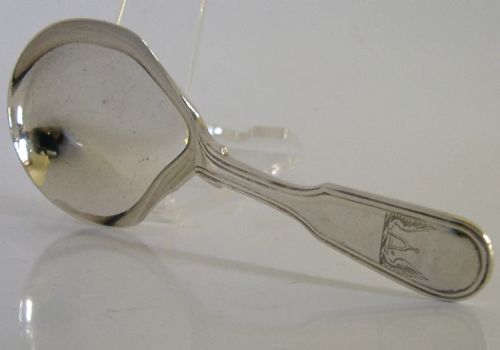
- A short handled spoon utilised for measuring loose tea leaves from a caddy into a pot. These spoons often feature flat rectangular or shell shaped bowls with engraved decoration.
- Sugar tongs
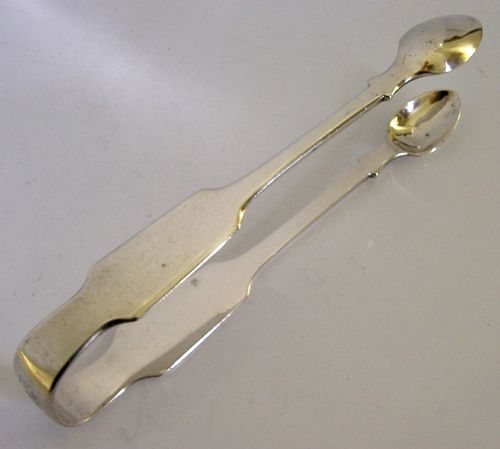
- Spring action or scissor type implements designed for lifting sugar lumps or granules. Examples include naturalistic foliate designs and plain Georgian or Victorian forms.
- Biscuit barrel
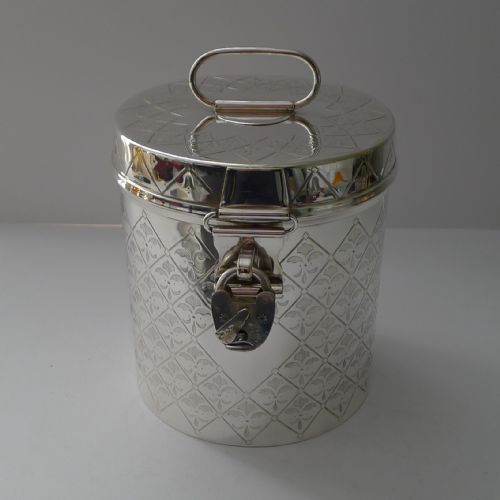
- A lidded container utilised for holding biscuits on the tea table. Victorian versions frequently combine cut glass bodies with silver plated swing handles and locking frames.
- Mote spoon
- A narrow nineteenth century spoon featuring a pierced bowl for skimming stray tea leaves and a pointed terminal for clearing the teapot spout. These appear in silver.
- Electroplated nickel silver
- A base metal alloy of copper, nickel and zinc coated with a layer of pure silver via electrolysis. This material served as a durable alternative to solid sterling silver.
Victorian Tea Accessories: Frequently Asked Questions
What are victorian tea accessories?
These items comprise specialised silver and glass implements created for nineteenth century tea service. They include sugar tongs, caddy spoons, infusers, strainers and biscuit barrels.
Collectors gather these objects for display and continued use on the modern tea table. Each piece reflects the refined social rituals of the Victorian era.
How do I date a silver tea spoon?
Dating relies upon the stamped hallmarks found on the metal, which indicate the assay office, standard and year of production. Monarch duty marks also help establish the active period.
Additional clues include the manufacturing style, handle shape and any accompanying fitted presentation case. Comparing these details against known silversmith records confirms the exact decade.
How were silver biscuit barrels used?
Biscuit barrels held dry sweet biscuits during formal afternoon tea and evening gatherings. Hosts placed them centrally on the table alongside tea urns and cream jugs.
Many barrels featured locking mechanisms to secure provisions in busy Victorian households. Cut glass bodies allowed guests to view the contents while silver plated lids kept biscuits fresh.
How do I clean antique silver tableware?
Cleaning requires a soft microfiber cloth and mild soapy water to remove everyday dust and oils without damaging the metal surface. Avoid harsh abrasive dips that strip away desirable patination.
Store pieces in dry environments away from direct sunlight and humidity. Cased sets benefit from occasional airing to protect internal velvet and silk linings.