

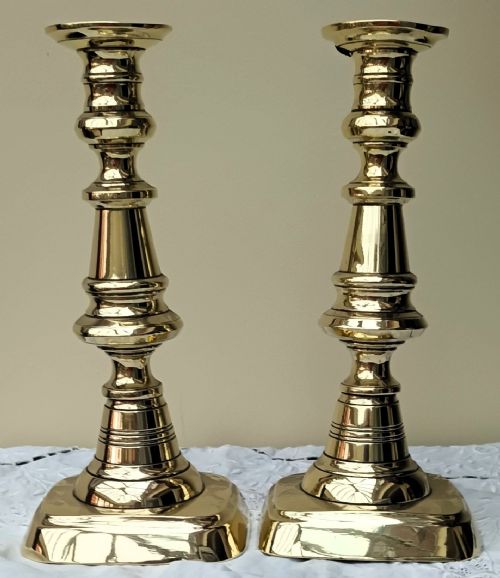
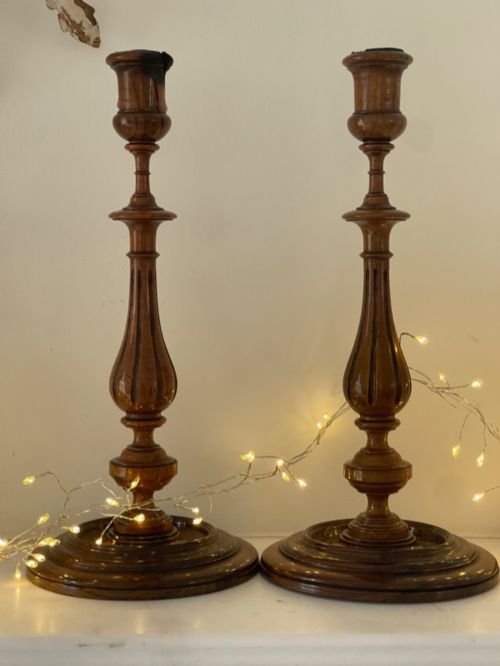
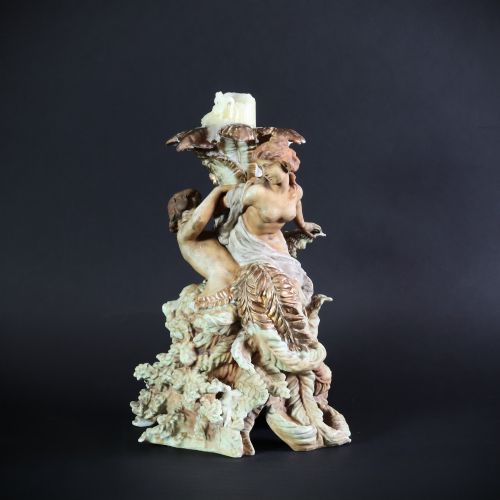
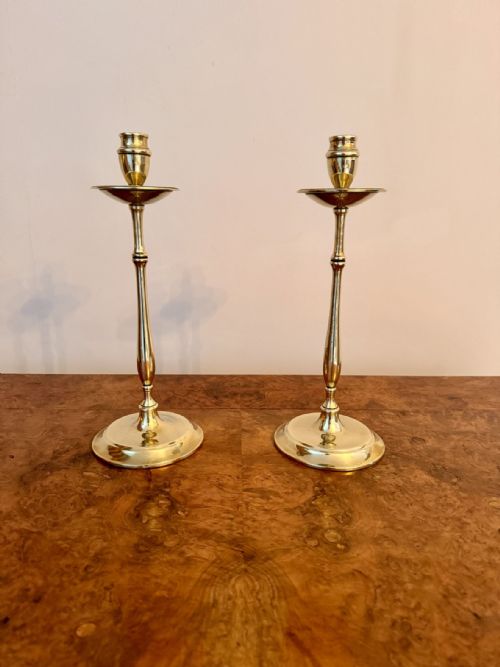


Victorian Taper Stick Holders
Victorian taper stick holders are small, elegant domestic lights designed to melt sealing wax or kindle candles, appearing mostly in brass and silver plate.
Victorian Taper Stick Holders
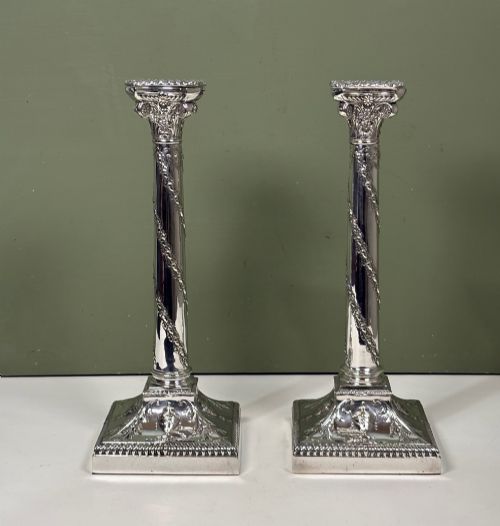
Victorian taper stick holders are compact lighting pieces created to hold slender candles for desk use or carrying around a room. The selection here leans heavily towards brass and silver-plated pairs, alongside items featuring pewter, tortoiseshell, enamel, and ironstone.
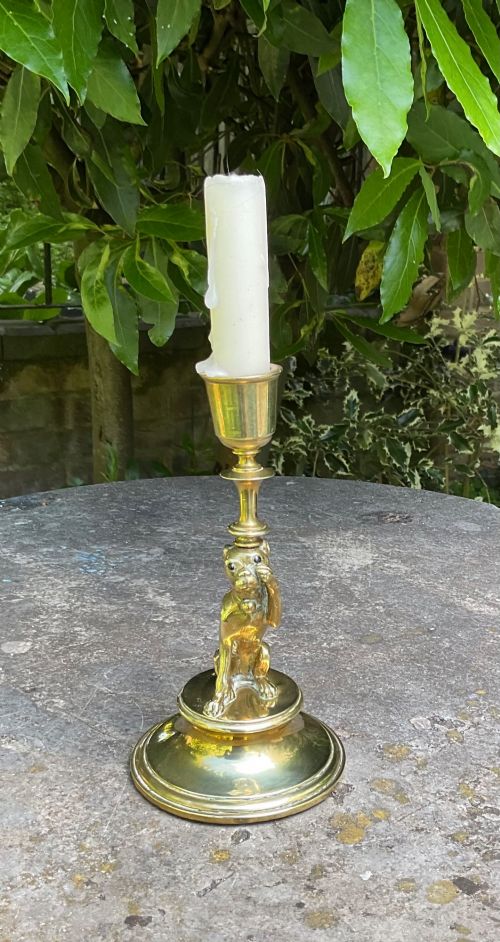
Forms range from simple domestic chamber sticks and miniature table sticks to decorative novelty designs such as pug dogs and heraldic motifs. Pieces stretch across the nineteenth century into the Edwardian era, showing both simple utilitarian shapes and ornate revival styles.
Buyers will encounter pairs of tall brass pillars, heavy silver-gilt examples, and unusual desk accessories like micro mosaic pieces. The common thread is domestic scale and utility, intended for intimate spaces rather than grand halls.
Materials and construction
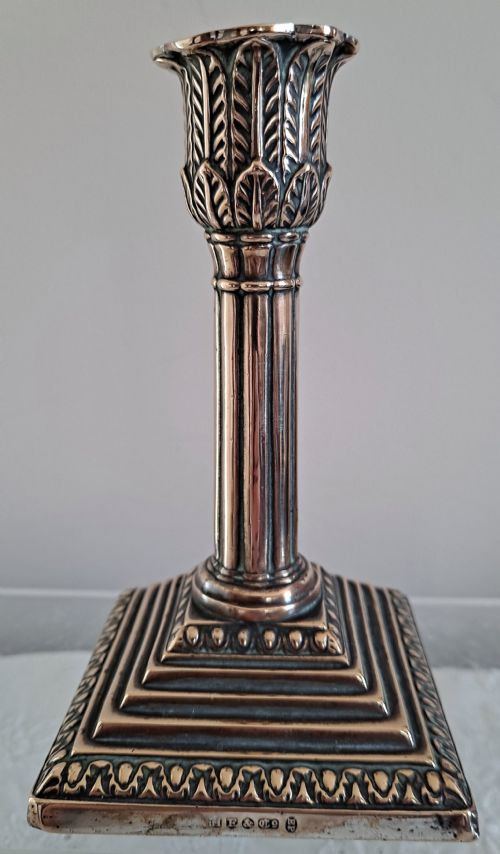
Brass dominates the construction, shaped through casting, turning, and assembly to form sturdy columns and beehive profiles. Silver-plated and silver-gilt versions apply precious metal layers over base metal cores, combining durability with a bright decorative finish.
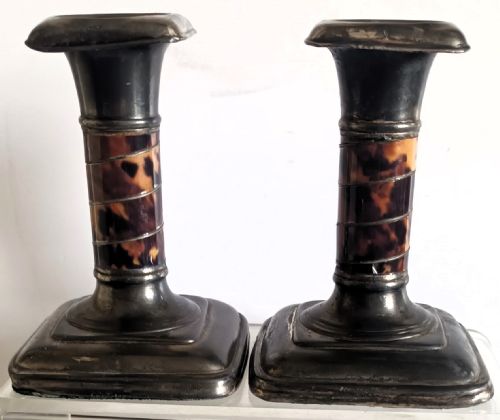
More diverse pieces incorporate pewter frames inset with tortoiseshell panels, or intricate cloisonné and micro mosaic work. Ironstone china provides a ceramic alternative, decorated with traditional painted patterns.
Makers utilised joining techniques suited to each medium, securing sockets to drip pans and weighted bases with pins, threads, or solder. The resulting objects balance practical weight distribution with decorative surface detail.
Victorian Taper Stick Holders Retail Price Guide 2026
Typical asking prices for victorian taper stick holders among the pieces listed under this phrase on Sellingantiques today, from the lower quarter to the upper quarter. They describe what is for sale here now, not the wider market.
Listings span the nineteenth century and early twentieth century, utilising brass, silver plate, pewter, tortoiseshell, and ironstone china.
Quality variations
Quality rests in the crispness of casting and the weight of the metal used in the stem and base. Heavier brass and thick silver plating endure decades of polishing without wearing through the underlying layers.
Detailing sets finer examples apart, particularly in hand-chased ornamentation, precise turned rings, and the careful fitting of mixed materials like tortoiseshell or enamel. Novelty forms depend on sculptural proportion and realistic detail rather than standard geometric turning.
The Victorian Taper Stick Holders Glossary
- Taper stick
- A miniature candlestick designed specifically for burning thin wax tapers rather than heavy household candles. They typically sat on writing desks for melting sealing wax.
- Chamber stick
- A low-profile candle holder featuring a flat saucer base and a loop handle for carrying room to room. Many include a small metal cone snuffer resting in the tray.
- Silver plate
- A thin layer of silver fused or electroplated onto a base metal such as copper, brass, or nickel silver. It offered the appearance of solid silver at a lower cost.
- Cloisonné
- An enamel technique where metal wires are soldered to a base to form compartments filled with coloured paste and fired. It creates vibrant, patterned surfaces on decorative pieces.
- Beehive
- A decorative turning style featuring concentric rounded rings resembling traditional skep beehives. This pattern appears frequently on nineteenth-century brass stems.
Victorian Taper Stick Holders: Frequently Asked Questions
What is a taper stick used for?
These small holders were kept on desks or in hallways to burn thin wax tapers. People used the flame to melt sealing wax on letters or to light lamps before electricity.
Their compact size made them easy to move around a home for daily tasks.
How do I clean brass taper sticks?
Regular dusting with a soft cloth keeps brass surfaces bright without removing the historic patina. Avoid harsh chemical dips that strip away the aged character accumulated over decades.
Gentle cleaning maintains the warm tone prized by collectors of nineteenth-century metalwork.
Are these candle holders sold in pairs?
Many listings feature matching pairs intended for mantelpieces or side tables, though single chamber sticks also appear. Pairs were traditionally produced for symmetrical placement on furniture.
Checking the description confirms whether you are viewing a matched set or an individual piece.
How do I date a Victorian candle holder?
Dating relies on stylistic clues, manufacturing marks, and material combinations typical of the nineteenth century. Makers often incorporated revival styles like Rococo or Neoclassical elements into their designs.
Makers' stamps or registration numbers on the base can occasionally narrow down the year of production.