



Victorian Tantalus Decanter
A victorian tantalus decanter secures precious spirits behind a clever locking metal bar while displaying cut crystal for after-dinner hospitality.
Victorian Tantalus Decanter
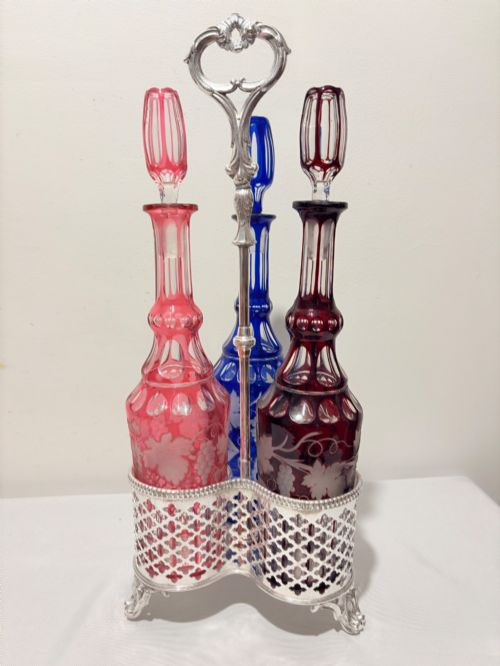
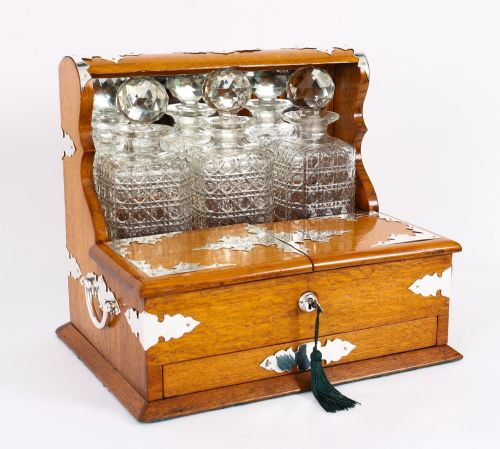
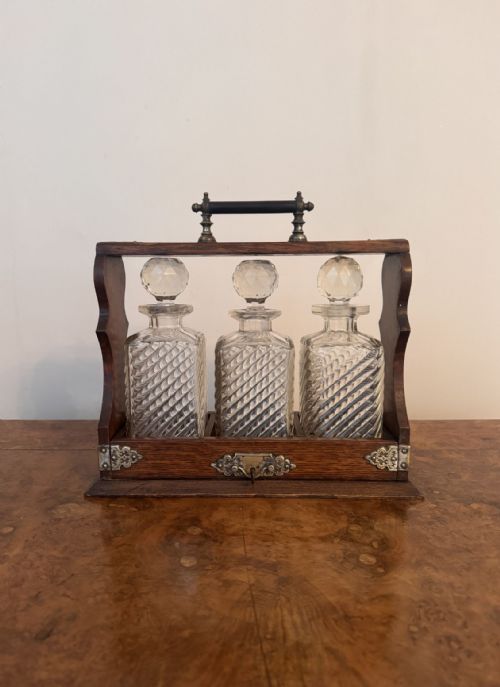
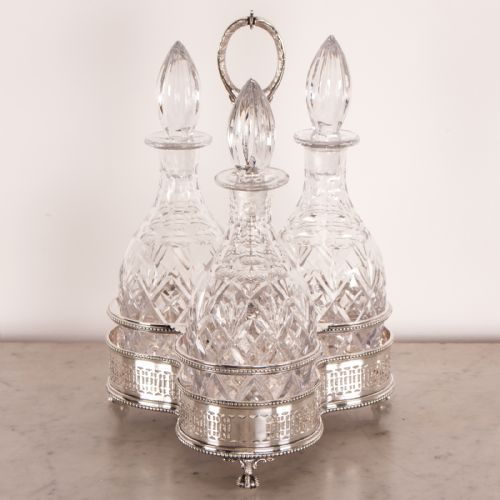
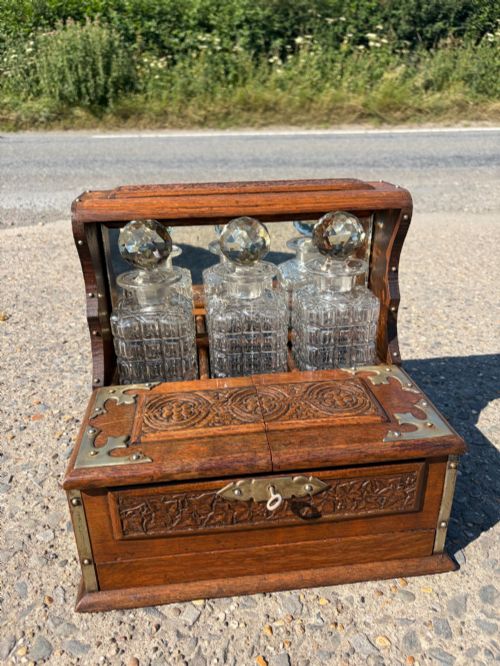
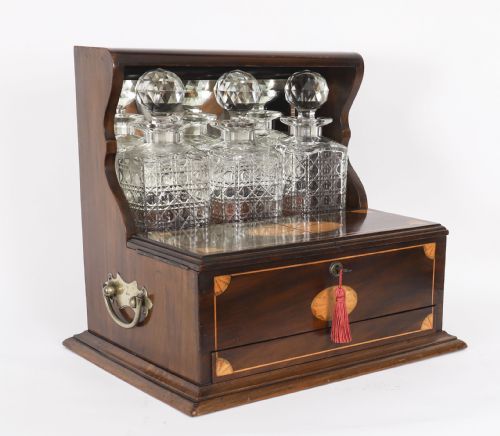
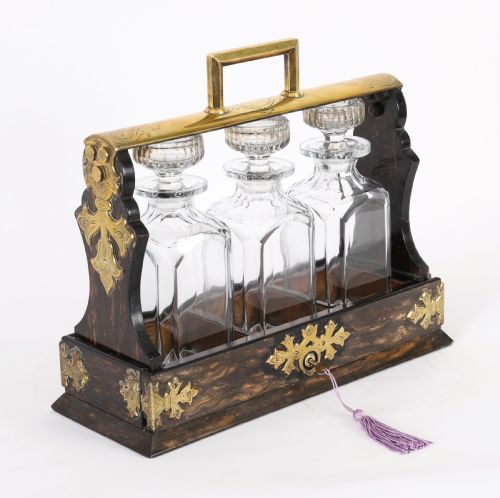
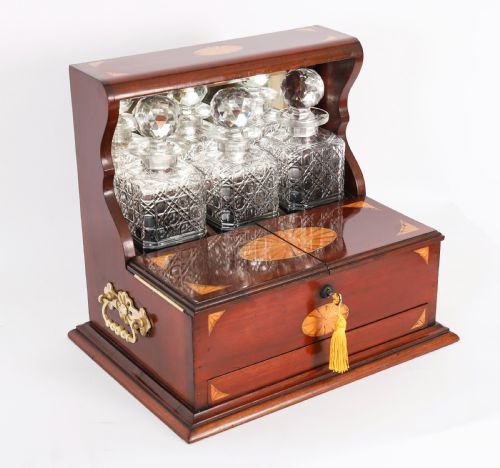
A victorian tantalus decanter arrangement comprises a secure locking frame holding two, three, or four glass vessels designed to prevent unauthorized access to spirits while keeping them on display in the dining room or drawing room. Most pieces found here belong to the later nineteenth century, spanning oak, walnut, and coromandel cases often combined with games compendiums or dry bar fittings.
The dominant forms are table stands and compartmented boxes where a silver-plated or brass mechanism engages the stoppers to lock the bottles in place. Oak and walnut examples frequently incorporate folding panels for cards or gaming pieces alongside the decanters.
Originating during the mid to late nineteenth century, these drinking cabinets reflect the Victorian appetite for hospitable display paired with domestic security. Collectors encounter single-bottle variants alongside elaborate triple-decanter dry bars housed in figured woods.
How They Were Made
Cabinetmakers constructed the frames using solid or veneered timbers such as oak, burr walnut, mahogany, satinwood, and coromandel, frequently enhancing the surfaces with marquetry stringing, brass mounts, or carved details in the Black Forest style. The interior compartments required precise joinery to house matching glass vessels snugly alongside gaming equipment or cigar storage.
Metalworkers cast and plated the securing bars, handles, and lock mechanisms in silver plate or brass, often stamping them with the marks of notable makers. The bottles themselves utilise heavy-cut crystal or glass, occasionally featuring frosted finishes, barrel dispensers, or silver necks.
Many pieces combine spirit storage with folding game boards and dry bar compartments under Victorian and Edwardian manufacturing styles.
What Varies In Quality
The distinction between ordinary and superior pieces rests on the complexity of the housing and the integrity of the locking mechanism. Elaborate combination boxes featuring integrated games compendiums, humidor storage, and substantial silver-plated frameworks command greater attention than simple open stands.
Walker & Hall·Elkington·Betjemann Brothers·Fenton Bros·The Goldsmith Co
The Victorian Tantalus Decanter Glossary
- Tantalus
- A locking device and frame that holds decanters by their stoppers, preventing access to the contents while keeping them visible. Named after the mythological king who was tormented by food and water just out of reach.
- Games Compendium
- A fitted box containing equipment for multiple parlour games such as cards, chess, or backgammon, frequently built into the base of nineteenth-century drinking cabinets.
- Coromandel
- A dense, heavily figured timber imported from Asia, valued for its rich brown colour and dark streaks in luxury Victorian cabinet making.
- Silver Plate
- A base metal, often copper or brass, coated with a thin layer of silver using electroplating techniques common in nineteenth-century manufacturing.
- Marquetry
- The art of applying decorative veneer pieces to a structure to form intricate geometric or pictorial patterns.
Victorian Tantalus Decanter: Frequently Asked Questions
What is a tantalus?
A tantalus is a locking spirit stand designed during the nineteenth century to keep servants or guests from helping themselves to the host's liquor.
A metal bar locks over the glass stoppers, allowing the decanters to be seen clearly while remaining firmly secured inside the wooden frame.
How do you open a tantalus?
Opening the mechanism requires a working key to unlock the end bracket, which then allows the metal retaining bar to slide or hinge upward.
Once the bar moves clear of the stoppers, the heavy cut-crystal decanters can be lifted vertically out of their fitted wooden base.
Why are games included?
Victorian hosts often combined after-dinner drinking cabinets with entertainment accessories to save space and keep drawing-room pastimes close at hand.
Drawer compartments beneath the decanters housed playing cards, gaming boards, and counters for evening gatherings.
How do you date a tantalus?
Dating relies on timber choices, such as coromandel and burr walnut favouring the mid-nineteenth century while golden oak points toward later decades.
Maker stamps on the silver-plated hardware and the style of the cut crystal provide further chronological clues.