




Victorian Tabletop Furniture
Victorian tabletop furniture comprises compact chests, miniature cabinets, and small mirrors scaled down for utility, display, or training.
Victorian Tabletop Furniture
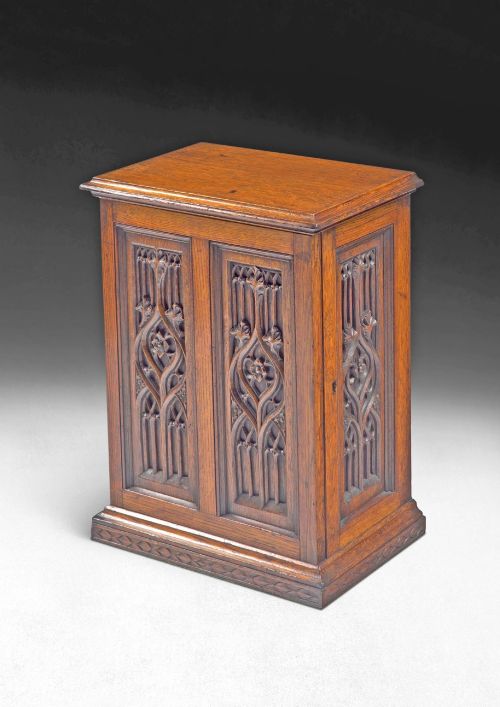
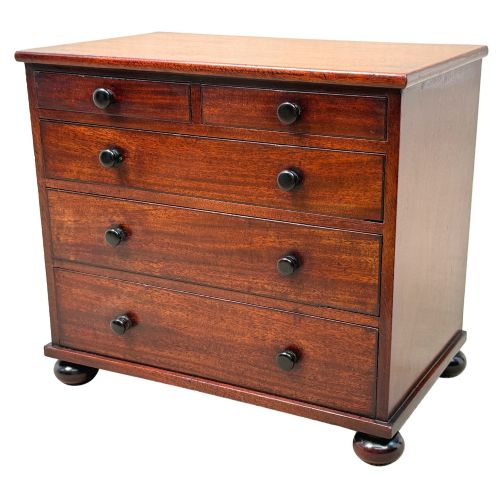
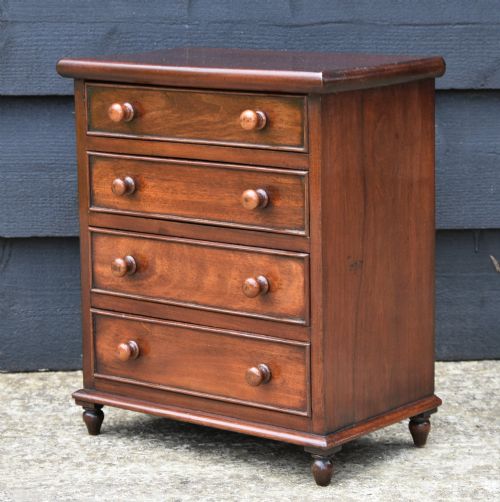
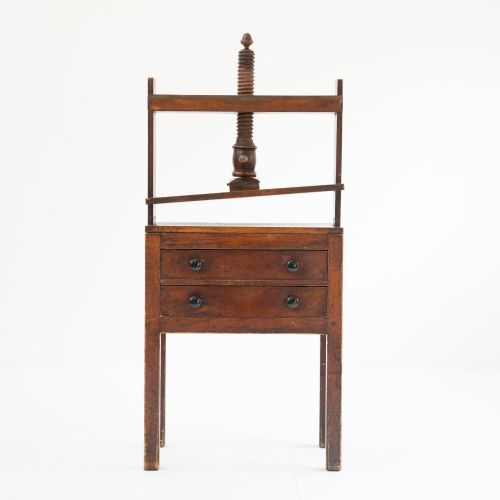
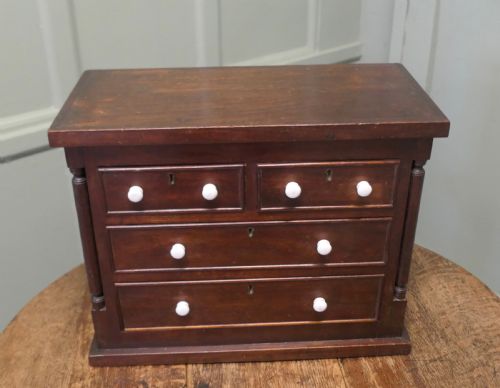
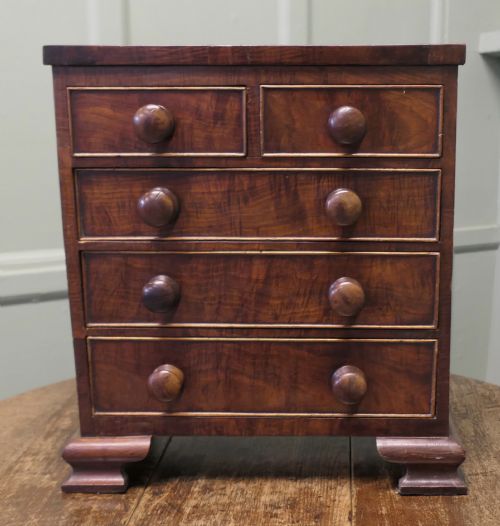
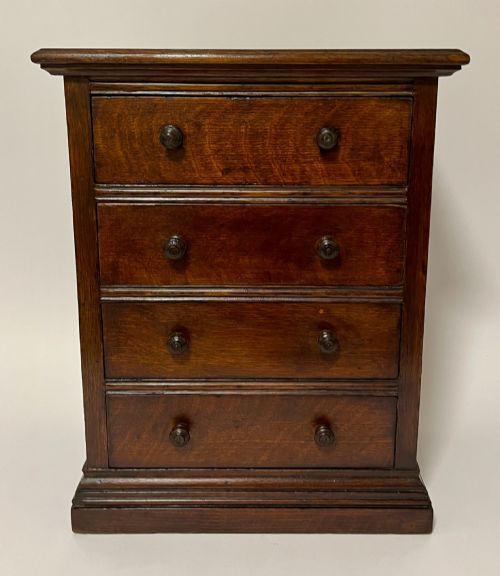
Victorian tabletop furniture consists primarily of miniature chests of drawers, apprentice pieces, small cabinets, and portable reading stands designed for domestic use. The pieces mirror full-scale furniture types, including chiffoniers, linen presses, and Scotch chests, but on a reduced scale suitable for tabletops and dressing surfaces.
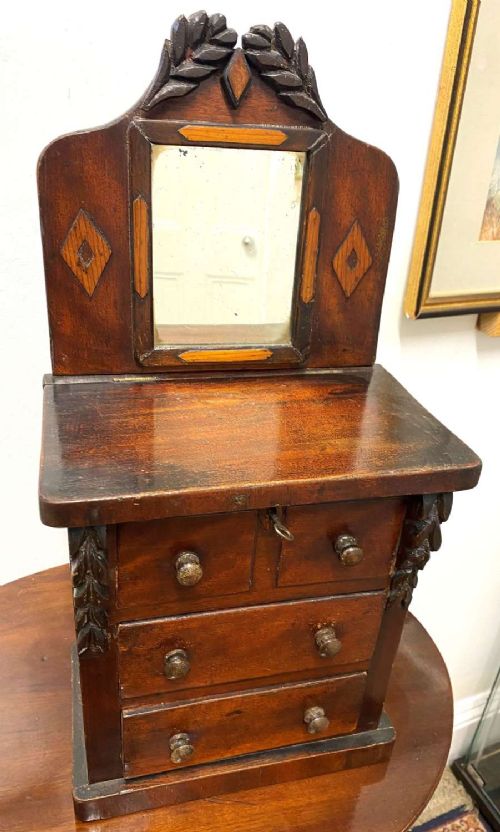
Miniature chests of drawers dominate the selection, frequently constructed in mahogany with multiple graduating drawers, secret compartments, or bow fronts. Alongside these traditional forms, buyers encounter specialised items such as campaign shaving mirrors, book racks, and display cabinets originating from the nineteenth century.
Materials and construction
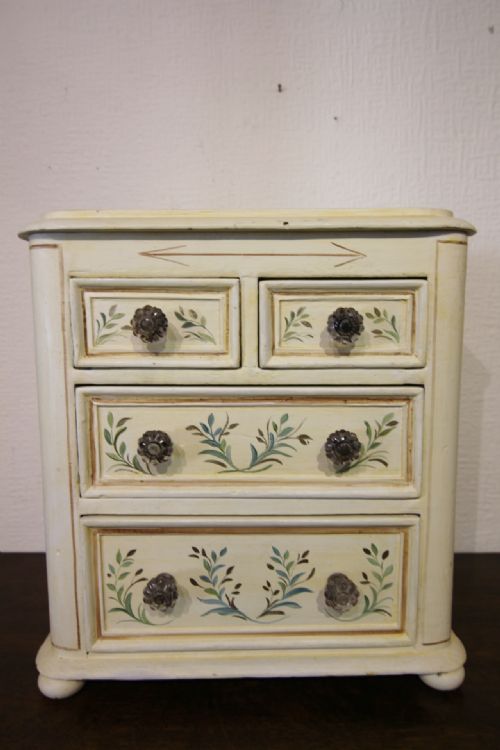
Makers relied heavily on solid mahogany, oak, and exotic hardwoods such as amboyna, burr walnut, and kingwood, often combining secondary timbers like pine within internal drawer framing. Selected examples incorporate brass campaign hardware, bone escutcheons, mother-of-pearl inlay, or simple painted finishes on country pine.
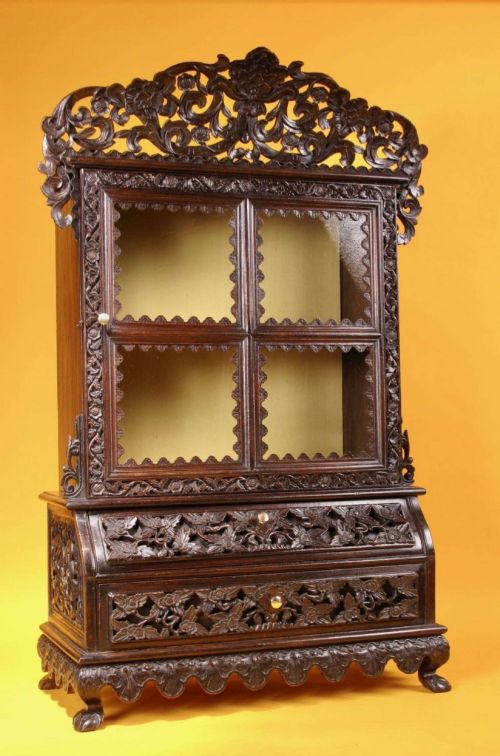
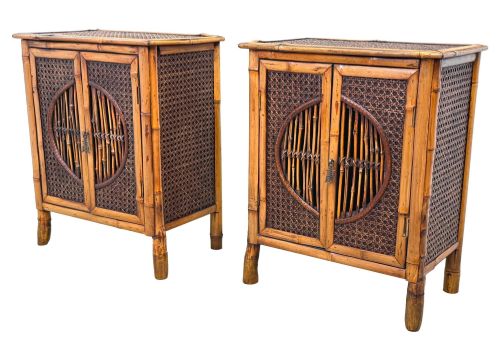
Joinery techniques mirror the standards of full-sized cabinet making, utilising dovetail joints for drawer construction and turned wooden knobs or brass pulls. Pieces from colonial workshops introduce teak and carved hardwoods, while bamboo and painted surfaces reflect later aesthetic movement preferences.
Victorian Tabletop Furniture Retail Price Guide 2026
Typical asking prices for victorian tabletop furniture among the pieces listed under this phrase on Sellingantiques today, from the lower quarter to the upper quarter. They describe what is for sale here now, not the wider market.
Listings feature nineteenth-century pieces in mahogany, oak, pine, and exotic hardwoods, alongside Anglo-Indian teak and campaign brass fittings.
Distinctions in quality
Quality rests on the precision of the miniature joinery, the selection of timber figuring, and the retention of original surfaces such as polished mahogany patinas. Pieces exhibiting finer wood choices like amboyna or kingwood, alongside functional secret drawers and fitted interiors, demonstrate superior workshop execution.
Proportion and fidelity to full-scale furniture separate standard examples from finer works, particularly in apprentice pieces where cabinet makers demonstrated technical mastery. Secondary elements like hand-cut dovetails and matched drawer veneers indicate greater care during original production.
The Victorian Tabletop Furniture Glossary
- Apprentice piece
- A small-scale item created by a trainee woodworker to demonstrate proficiency to a guild or master. These objects often display high levels of cabinet-making skill.
- Bow front
- A convex curved front on a chest of drawers or cabinet. This shape requires specialised joinery to bend or shape the timber.
- Campaign furniture
- Portable pieces designed for military officers, equipped with recessed brass handles and folding elements. These items were built to withstand travel.
- Escutcheon
- A protective plate surrounding a keyhole, frequently fashioned from brass, bone, or mother-of-pearl. It prevents the surrounding wood from wearing down through repeated use.
- Patina
- The surface sheen and coloration developed by wood over decades of handling and polishing. Good patination indicates age and consistent maintenance.
Victorian Tabletop Furniture: Frequently Asked Questions
How were apprentice pieces used?
Apprentice pieces served as test projects where young woodworkers proved their mastery of dovetailing, veneering, and shaping.
Once completed, these miniature chests and cabinets functioned as desktop storage for small valuables or jewellery.
What woods appear in these pieces?
Mahogany forms the primary material for the majority of nineteenth-century pieces, supplemented by oak, pine, and rosewood.
Exotic veneers such as amboyna, burr walnut, and kingwood appear on select decorative examples alongside teak in colonial items.
How do campaign items differ?
Campaign items feature portable designs equipped with brass hardware intended for easy dismantling or transport during travel.
These pieces include folding reading stands, shaving mirrors, and compact chests adapted for military officers on the move.