


Victorian Style Animal Artwork
Victorian style animal artwork brings domestic pets and farm livestock onto canvas through detailed nineteenth century oil paintings and watercolours.
Victorian Style Animal Artwork
Victorian style animal artwork captures horses, cattle, sheep, dogs, and cats in pastoral settings and detailed realism. These pieces reflect a nineteenth century fascination with domestic and farm animals rendered with careful observation.
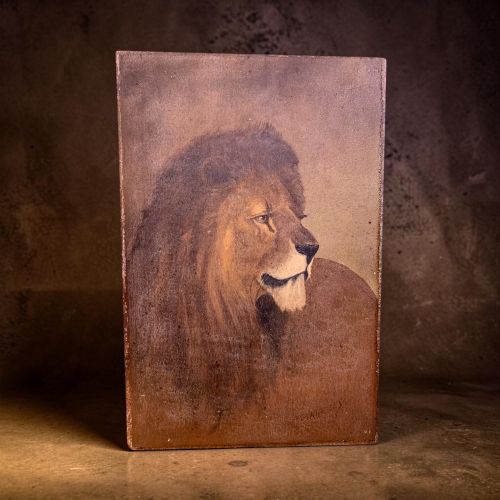
The works appearing here span oil on canvas, watercolours, charcoal, and framed drawings from the nineteenth century alongside later twentieth century iterations. Subjects range from naive folk art depictions of lions to polished oil paintings after prominent animaliers.
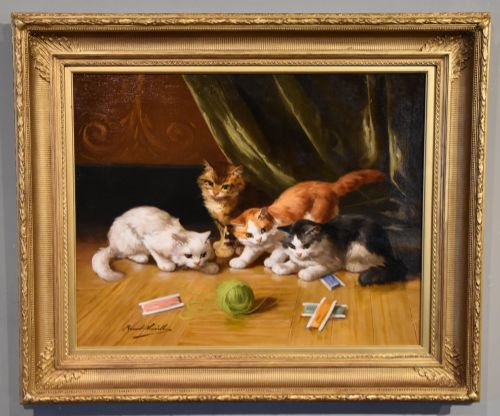
Buyers encounter oil paintings depicting kittens at play, sheep sheltering in barns, and terriers alongside works following established nineteenth century animal painters. These pieces bring historical animal subjects directly into domestic interiors.
How victorian style animal artwork was made
Artists applied oil paint and watercolours onto canvas and paper, mounted within wood and gilt wood frames often featuring decorative plaster mouldings. Canvas supports provided a durable ground for building up layers of animal fur, feathers, and landscape backgrounds.
Many works utilise charcoal or oil paint to achieve texture in animal coats, distinguishing between the wool of sheep and the sleek fur of dogs. Gilt wood frames complete the presentation of these nineteenth century paintings.
Listings feature oil on canvas, wood, gilt wood, plaster, and paper across periods spanning the nineteenth and early twentieth centuries.
What varies in quality
Quality rests upon the anatomical precision of the animal subjects and the depth of the surrounding landscape or interior background. Works by direct followers or circle members of established painters display superior handling of light and texture compared to simpler naive interpretations.
The execution of fine details such as animal expressions, feather patterns, and coat textures distinguishes standard decorative pieces from accomplished fine art paintings. Original framing in gilt wood with plaster enrichment also elevates the standing of a piece.
Alfred Arthur Brunel de Neuville·Thomas Sidney Cooper·Sir Edwin Landseer·Eugene Verboeckhoven·Claude Cardon·John Emms·Edgar Hunt·Geza Vastagh
The Victorian Style Animal Artwork Glossary
- Oil on Canvas
- A traditional painting medium where oil paints are applied to a stretched canvas support. This combination allows for rich colour blending and textured brushwork.
- Gilt Wood
- Wood that has been covered with a thin layer of gold leaf or gold paint. This finish frequently appears on nineteenth century picture frames.
- Naive Art
- Artwork created by an artist without formal training, often characterised by a direct perspective and simplified forms. These pieces possess a distinct folk art charm.
- Watercolour
- A painting method where pigment is suspended in a water-based solution and applied to paper. This medium creates translucent washes and delicate tones.
Victorian Style Animal Artwork: Frequently Asked Questions
What subjects appear in victorian style animal artwork?
These works feature domestic and farm animals including cattle, sheep, dogs, cats, chickens, and lions. Artists placed these creatures in pastoral landscapes, barns, or domestic interiors.
Paintings focus heavily on livestock and household pets, reflecting nineteenth century agricultural life and domestic companionship.
How do I care for an oil painting on canvas?
Keep oil paintings away from direct sunlight and fluctuating humidity levels to protect the canvas and paint layers. Dust the surface gently with a soft, dry brush.
Avoid using water or chemical cleaners on the paint or the gilt wood frame to preserve the original materials.
Are these pieces from the nineteenth century?
The selection includes genuine nineteenth century works alongside pieces created in the early twentieth century by followers of earlier masters. Dates span from the mid-nineteenth century through to the nineteen-thirties.
Examination of the canvas, materials, and framing helps determine the period of creation for each individual artwork.
What is the difference between an original and a follower piece?
Follower pieces are created by artists working in the manner or circle of a well-known master, often emulating their specific style and subject matter. These works date from the same era or slightly later.
They offer an accessible way to collect the aesthetic of prominent animal painters without acquiring a primary signed canvas.