





Victorian Study Cabinet
These robust victorian study cabinet pieces span desks, bookcases and writing tables built to bring order to private rooms.
Victorian Study Cabinet
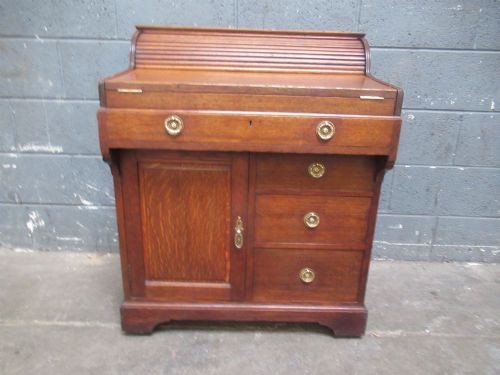
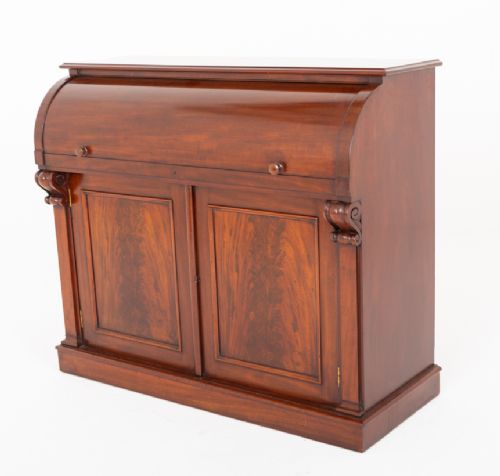
A victorian study cabinet encompasses the desks, bookcases and writing tables that populated nineteenth-century libraries and private offices. Buyers seeking this type of furniture will find numerous Davenport desks, pedestal desks and bookcases spanning the Victorian era.
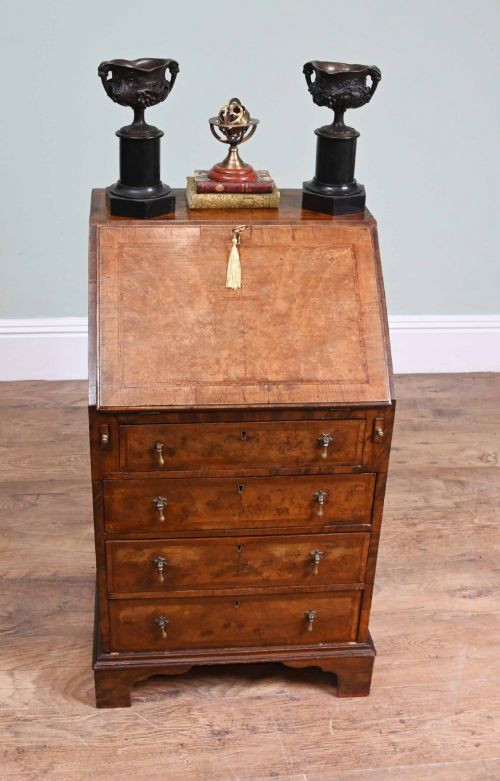
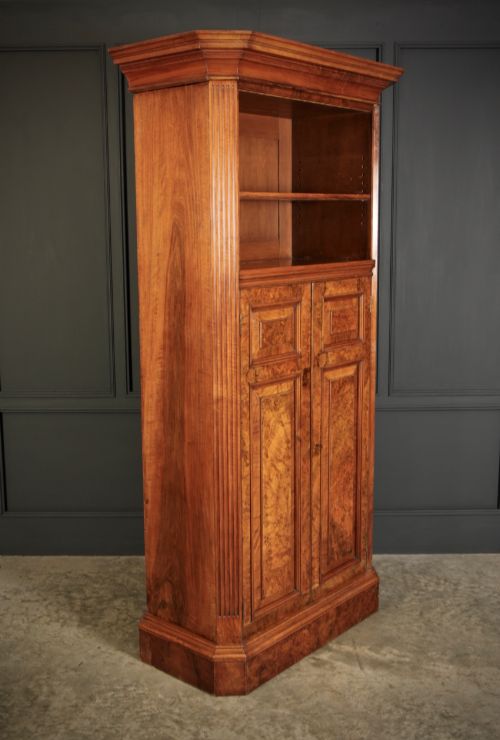
The material record on this page shows a strong presence of walnut, burr walnut, mahogany and rosewood across these study pieces. Forms range from compact slope-front writing desks to larger pedestal desks and fitted bookcases.
Materials and construction
Cabinet makers utilised dense hardwoods such as mahogany, walnut and rosewood, often selecting figured veneers like burr walnut to create patterned surfaces on writing slopes and drawer fronts. Brass handles, leather writing inserts and occasional ormolu mounts complete the structural execution.
Joinery techniques relied on solid timber carcases housing dovetailed drawers, while specialised forms incorporated mechanical pop-up compartments and sliding writing surfaces operated by concealed levers.
Victorian Study Cabinet Retail Price Guide 2026
Typical asking prices for victorian study cabinet among the pieces listed under this phrase on Sellingantiques today, from the lower quarter to the upper quarter. They describe what is for sale here now, not the wider market.
Listings span the Victorian era, incorporating earlier nineteenth-century examples and transition pieces up to nineteen-twenty in mahogany, walnut and oak.
Distinctions in quality
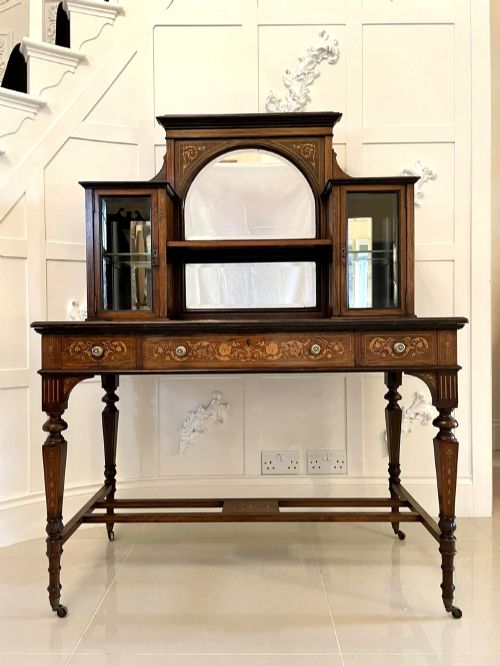
Quality rests upon the selection of timber veneers and the precision of marquetry inlay work, where finer pieces display intricate floral or geometric patterns set directly into the wood. The presence of secondary timbers and the crispness of turned or carved details separate standard production from superior workshops.
Internal engineering also divides the range, distinguishing simple stationery drawers from complex writing boxes with secret compartments, stationary galleries and rising desk mechanisms.
Edwards & Roberts·William Bird MD FLS
The Victorian Study Cabinet Glossary
- Davenport
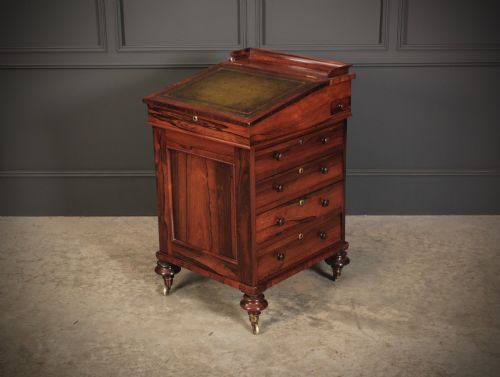
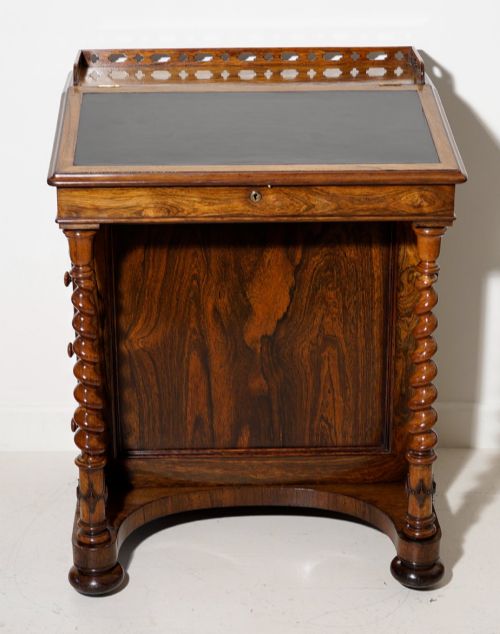
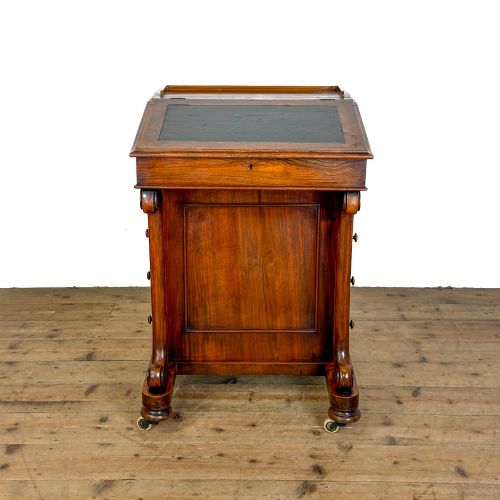
- A small compact writing desk featuring a sloping top hinged over a pedestal of drawers. This form became particularly popular during the Victorian period for domestic studies.
- Secretaire
- A piece of furniture containing a pull-down writing drawer or flap that conceals small pigeonholes and letter compartments. It combines the utility of a chest or cabinet with a writing surface.
- Marquetry
- The art of applying decorative veneer pieces of different woods to a structural panel to form elaborate patterns or pictures. Master craftsmen used contrasting grains to create pictorial depth.
- Pedestal desk
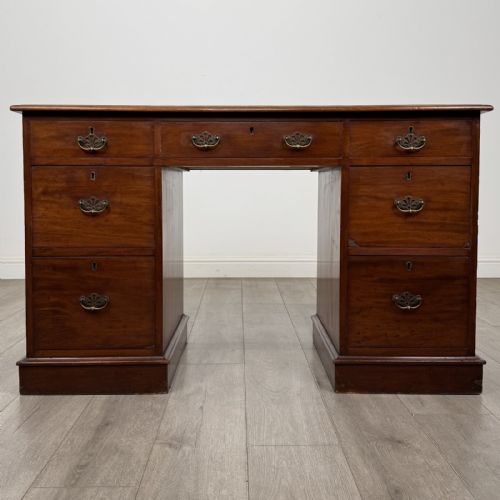
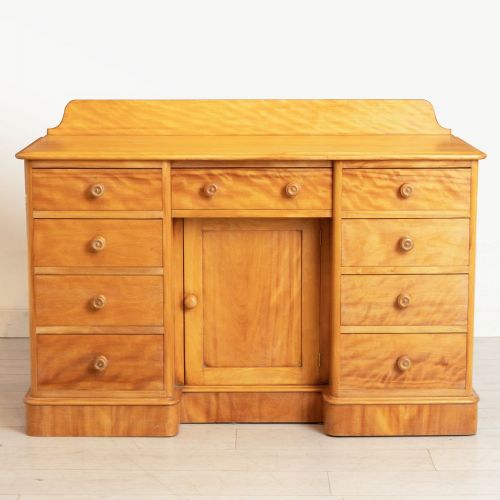
- A large freestanding desk comprising two supporting pedestals of drawers beneath a wide top. They frequently feature inset leather writing surfaces.
- Burr walnut
- Wood taken from the gnarled outgrowth of a walnut tree, yielding highly twisted and decorative grain patterns. Cabinet makers prized this timber for high-status drawer fronts and desk lids.
Victorian Study Cabinet: Frequently Asked Questions
What is a Davenport desk?
A Davenport is a compact writing desk with a sloping, hinged writing surface mounted above a set of drawers. It was designed for domestic study spaces where floor space was limited.
Inside, these desks often house small compartments for stationery, while the side drawers typically pull out for storage.
How do I identify a Victorian study piece?
Victorian study furniture is identified through period timber choices like mahogany, walnut and rosewood, combined with nineteenth-century construction methods such as hand-cut dovetails. Stylistic details often include brass hardware and leather writing inserts.
Cabinet forms from this era prioritised functional organisation, reflecting the rise of private home offices and scholarly pursuits.
Where were these pieces used?
These desks and bookcases were placed in private studies, libraries, parlours and offices within Victorian homes. They provided dedicated spaces for correspondence, bookkeeping and reading.
Larger pedestal desks stood centrally in rooms, while Davenport desks and slope-front bureaus fit neatly against walls or near windows.
How do I care for wood surfaces?
Maintain nineteenth-century wood surfaces by keeping them away from direct sunlight and abrupt changes in temperature. Regular dusting with a soft, dry cloth preserves the polished finish.
Apply occasional appropriate wax feeds to nourish older timbers like mahogany and walnut without building up heavy residues.