


Victorian Street Scene Painting
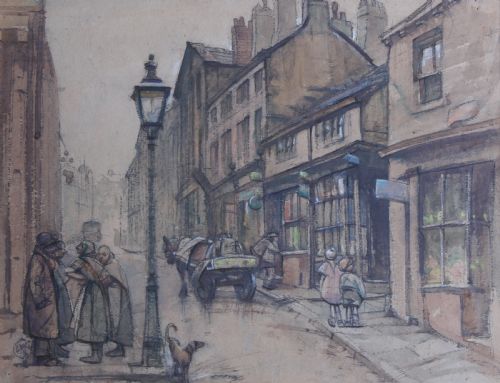
These pieces capture a victorian street scene painting, depicting urban life and townscapes in oil and watercolour.
Victorian Street Scene Painting
A victorian street scene painting depicts townscapes, architectural views, and daily urban life from the nineteenth century and the Edwardian era. These works frequently record figures with horses and carts, market days, and moonlit thoroughfares across British and continental locations.
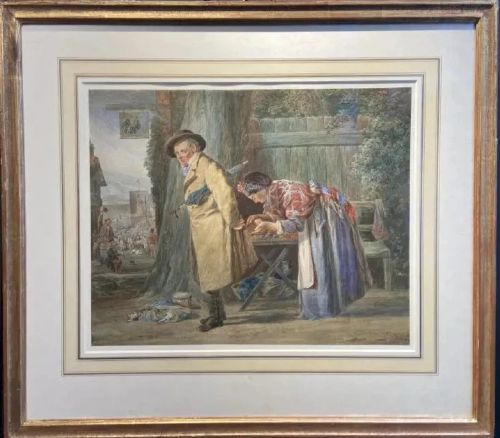
The version most commonly met on this page is a watercolour on paper or an oil on canvas, housed in a framed presentation. Such works range from local English streetscapes in Yorkshire and Warwickshire to French and Dutch town views.
Materials and methods
Artists painted these urban views using oil or watercolour applied to canvas, paper, wood, or board. Works on canvas or board provide heavier texture and depth, while watercolours on paper offer a more fluid treatment of light and atmosphere.
Finished artworks were typically mounted beneath glass and secured within wood and giltwood frames, occasionally enhanced with gold leaf accents to complement the composition.
Artists frequently braved the damp evening air to capture moonlit street scenes and foggy winter twilights.
Distinguishing quality
The strength of the draughtsmanship and the handling of perspective define the better examples of a victorian street scene painting. Skill in rendering architecture, street sellers, and shifting daylight separates competent topographical records from accomplished artistic achievements.
The integrity of the original materials also marks the upper tier of works. Surviving oil paintings on canvas and well-preserved watercolours retaining their original giltwood frames command greater interest.
Felix Stone Moscheles·Joseph H Barnes·Albert Ludovici Jnr·Léon Joseph Voirin·Cornelis Christian Dommersen·William George Meadows·Lewis J Wood·Robert Hollands Walker·Joseph W Milliken·Walter Meegan·David Small·Charles H Poingdestre·William Manners·Walter Emsley·William Greaves·Tom Dudley·Matthew Hale·Henry Schafer
The Victorian Street Scene Painting Glossary
- Social Realism
- An artistic style focusing on the everyday lives of the working class. Works in this vein often depict street sellers, labourers, and common urban scenes without idealisation.
- Genre Realism
- A category of painting depicting scenes from everyday life. These compositions concentrate on ordinary people engaged in routine activities in towns and cities.
- Giltwood
- Wood carved and coated with gold leaf or a metallic substitute. It is commonly found on the period frames enclosing these nineteenth-century artworks.
- Oil on Board
- A painting technique where oil pigment is applied to a rigid wooden panel or stiff board rather than flexible canvas. This support was frequently utilised for smaller plein air sketches.
Victorian Street Scene Painting: Frequently Asked Questions
What subjects appear in these paintings?
These works record townscapes, cathedrals, and architectural views alongside figures engaged in daily commerce. Common motifs include horse-drawn carts, market days, and moonlit thoroughfares.
Views range from specific British locations in Yorkshire, London, and Warwickshire to continental street scenes in France, Italy, and the Netherlands.
How do oil and watercolour differ?
Oil paintings utilise pigment suspended in drying oils on canvas or wood panels, allowing for heavy brushwork and rich colour blending. Watercolours employ water-soluble pigments on paper, producing lighter, translucent effects.
Both mediums were utilised concurrently throughout the nineteenth and early twentieth centuries to capture urban atmospheres.
How should I frame these artworks?
Many examples retain their period wood or giltwood frames, which complement the aesthetic of nineteenth-century interiors. Retaining original framing preserves the historical character of the piece.
When framing works on paper, ensure conservation-grade materials and glass are utilised to protect the watercolour medium from light damage.
How do I date a street painting?
Dating relies on recorded artist active dates, stylistic indicators such as Victorian social realism or Edwardian dress, and framing materials. Architectural details and clothing fashions often provide a clear chronological window.
Inscriptions on the reverse of canvases or boards frequently record titles, dates, or specific locations.