



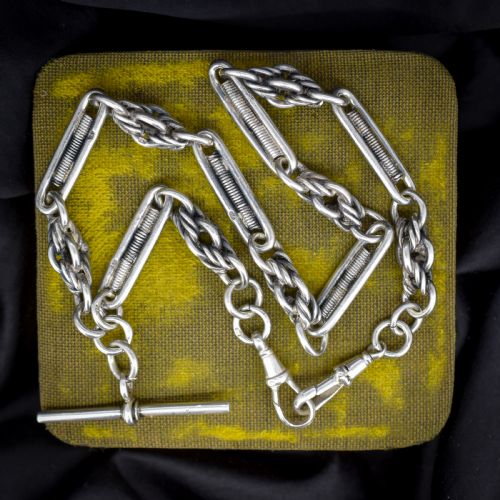
Victorian Sterling Watch Necklace
These Victorian sterling watch necklace pieces are ingenious conversions of pocket watch chains transformed into wearable neckpieces, offering authentic period character.
Victorian Sterling Watch Necklace
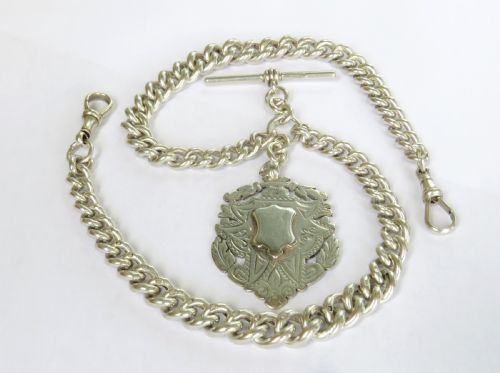
Victorian sterling watch necklace examples on this page are primarily repurposed 19th Century and early 20th Century watch chains, specifically albert chains and curb link chains designed to be worn around the neck. These pieces combine historic utility with distinctive ornamentation, drawing from Victorian and Edwardian periods.
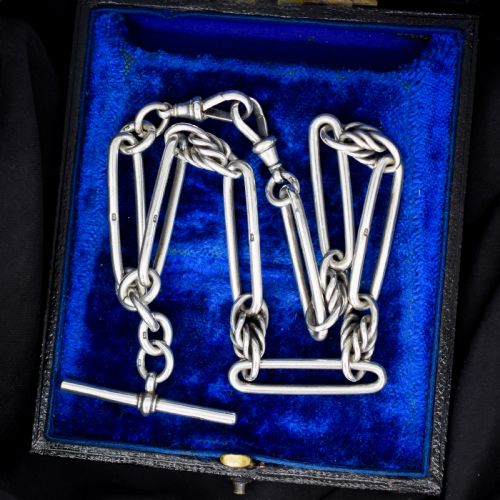
The forms typically originate from pocket watch chains, retaining functional elements such as dog clips, swivel fobs, and T-bars that now serve as decorative focal points or clasps on a necklace. Variations span from uniform curb links to intricate trombone and love knot patterns.
Originating largely from the 19th Century, these items reflect an era of solid metalwork and practical jewellery design, often dated specifically through hallmarks or engraved inscriptions like those from 1887, 1888, and 1893.
How they were made
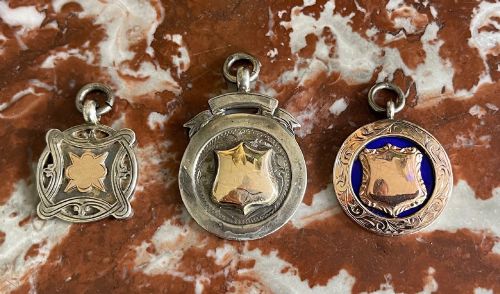
Makers utilised sterling silver and silver as the primary metals, sometimes supplemented by gold accents, enamel, and gemstones like bloodstone for fobs and pendants. Links were individually formed, soldered, and assembled into substantial chains designed to secure pocket watches.
Construction techniques involve robust link configurations such as uniform curb links and trombone links, often connected with dog clips, spring rings, and T-bars. Hallmarks stamped directly into the metal record the assay office, such as Birmingham, and the year of manufacture.
Some chains still keep their tiny silver keys attached, ready to wind a watch that vanished a century ago.
What varies in quality
Quality rests in the substantial weight of the silver, the complexity of the link pattern such as trombone links with love knots, and the completeness of original components like T-bars, keys, and swivel fobs. Substantial gram weight indicates a more robust, desirable piece.
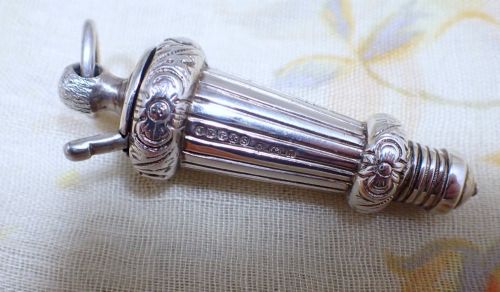
The clarity of period hallmarks and the presence of original ancillary pieces, such as a matching whistle pendant or bloodstone swivel fob, elevate the integrity and historical interest of the necklace.
The Victorian Sterling Watch Necklace Glossary
- Albert chain
- A type of watch chain designed to secure a pocket watch, named after Prince Albert and frequently adapted today as a necklace. These chains often feature central T-bars and dog clips.
- Dog clip
- A spring-loaded snap hook originally used to fasten a pocket watch to an albert chain. On converted necklaces, it serves as the primary clasp or a decorative drop.
- T-bar
- A short transverse bar attached to a watch chain, originally designed to slip through a waistcoat buttonhole. In necklace form, it hangs as a distinctive decorative feature.
- Swivel fob
- A small ornamental pendant attached to a watch chain that can turn on its axis, often set with stone like bloodstone on one side. They add movement and weight to the piece.
- Trombone link
- A distinctive watch chain link style characterised by elongated rectangular links connected by smaller circular or figure-eight links. It is typical of the late 19th Century.
Victorian Sterling Watch Necklace: Frequently Asked Questions
How do I wear a watch chain as a necklace?
You simply fasten the dog clip to a link or ring on the chain, allowing the T-bar and any attached fobs to drape at the front. The length can often be adjusted depending on where you secure the clasp.
Many pieces also accommodate pendants directly onto the dog clips, offering multiple ways to style the historic silver links.
What is an albert chain?
An albert chain is a heavy silver or gold chain traditionally used by men in the 19th Century to secure a pocket watch in a pocket. They are named in honour of Prince Albert.
Today, these sturdy chains are widely worn as necklaces because their length and substantial links lend themselves perfectly to modern neckwear.
Are these necklaces original Victorian pieces?
The chains themselves originate from the Victorian and Edwardian eras, often bearing hallmarks and dates from the 19th Century or early 1900s. Many were originally pocket watch chains that have since been adapted for the neck.
Original components like dog clips and T-bars remain intact, preserving the authentic craftsmanship of the period.
How can I date my silver chain?
You can date British silver chains by examining the stamped hallmarks, which typically include a maker's mark, a purity mark for sterling silver, an assay office symbol, and a date letter. Some pieces also feature engraved dates directly on the metal.
Consulting standard hallmark reference guides will help you match the specific stamps to their exact year of assay.