



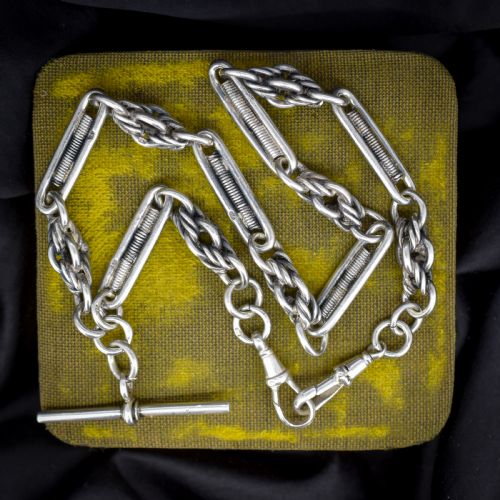
Victorian Silver Watch Necklace
These Victorian silver watch necklaces are transformed pocket watch chains and fobs, offering a clever mix of utility and historic ornamentation for modern wear.
Victorian Silver Watch Necklace
A Victorian silver watch necklace brings together nineteenth-century horological hardware and neckwear, taking pieces designed originally to secure pocket watches and adapting them for the neck. These items originate predominantly from the nineteenth century, stretching into the Edwardian era and the early twentieth century.
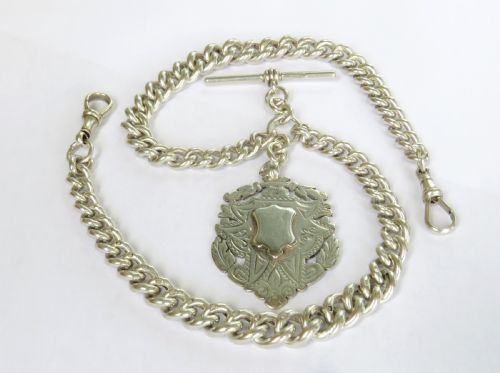
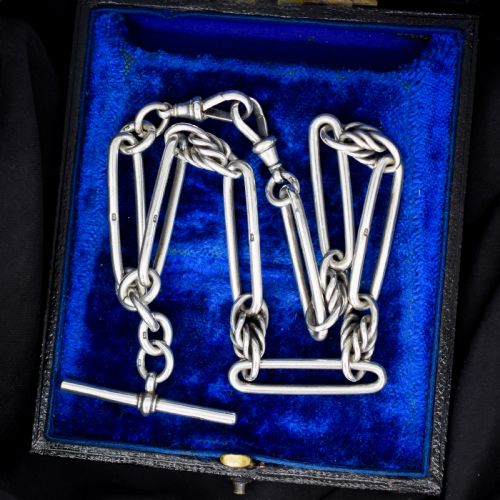
The primary forms on this page include robust albert chains, curb link necklaces, and trombone link chains, frequently retaining functional elements like swivel dog clips and t-bars. Buyers encounter lengths varying from compact chokers to substantial multi-inch drapers.
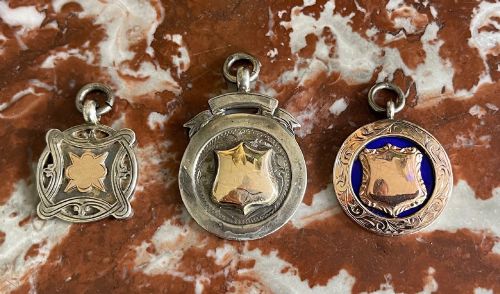
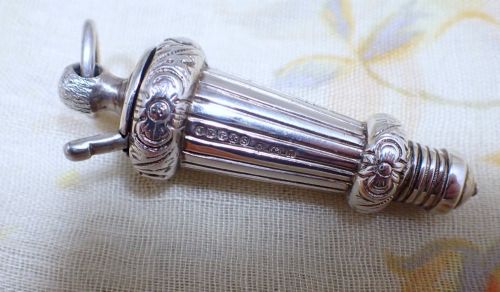
Many examples incorporate suspended additions such as watch keys, bloodstone swivel fobs, or whistle pendants in silver cases. This blending of watch chains and pendants creates distinctive necklaces rooted in period practicality.
Materials and Construction
Makers fashioned these pieces predominantly from sterling silver and solid silver, occasionally introducing gold or enamel accents for contrast. Links were individually formed, soldered, and assembled by hand to create durable curb, trombone, and uniform patterns.
Functional hardware such as dog clips, swivel connectors, and t-bars required resilient engineering to withstand daily pocket use. Component parts like bloodstone fobs and whistle pendants were meticulously bezel-set or cased in matching silver.
Judging Quality
Quality rests in the integrity of the links and the crispness of the original hallmarks stamped into the metal. Substantial weight and tight link construction separate heavy-duty daily wear pieces from lighter, more delicate variations.
The presence of original components - such as matching dog clips, t-bars, and integral fobs like bloodstone swivels or watch keys - elevates an example. Superior craftsmanship shows in smooth swivel mechanisms and secure closures that retain their original spring tension.
The Victorian Silver Watch Necklace Glossary
- Albert Chain
- A pocket watch chain named after Prince Albert, designed to secure a timepiece to a waistcoat or garment. These chains are frequently adapted to be worn as necklaces.
- Dog Clip
- A spring-loaded swivel clasp attached to the end of a watch chain. It allowed the wearer to quickly secure a pocket watch or fob.
- T-Bar
- A small horizontal metal bar attached to the centre of an albert chain. It passed through a buttonhole to anchor the chain securely.
- Trombone Link
- A specific style of watch chain link featuring alternating elongated oval bars and small circular links. It provides a distinct geometric rhythm to the piece.
- Watch Fob
- An ornamental pendant attached to a watch chain. They often featured gemstones like bloodstone or served as functional items like keys and whistles.
Victorian Silver Watch Necklace: Frequently Asked Questions
What is a Victorian silver watch necklace?
It is an antique pocket watch chain, often an albert or curb link style, repurposed to be worn around the neck.
These pieces retain their original functional elements, such as dog clips and t-bars, giving them a distinct industrial character.
How were these chains originally used?
Owners used them to secure pocket watches to waistcoats or lapels in the nineteenth and early twentieth centuries.
The t-bar anchored the chain through a buttonhole, while the watch hung safely in a pocket.
How do I wear a watch necklace?
You can wear them as standalone necklaces, often letting the t-bar or dog clip sit as a feature at the front or back.
Heavier curb link versions work well as short chokers, while longer lengths can be doubled up.
How can I tell the period of a silver chain?
Look for British hallmarks stamped onto the links, t-bars, or dog clips, which indicate the exact assay office and year of manufacture.
Stylistic markers like trombone links and specific fob attachments also point towards the Victorian and Edwardian eras.