


Victorian Silver Albert Necklace
A victorian silver albert necklace is a sturdy pocket watch chain adapted for the neck, prized for its generous curb links and swinging dog clips.
Victorian Silver Albert Necklace
When searching for a victorian silver albert necklace, a buyer is examining converted pocket watch chains originally worn across a waistcoat. The examples found here span the nineteenth century into the early twentieth century, taking the form of robust watch chains, longuards, and fitted necklaces.
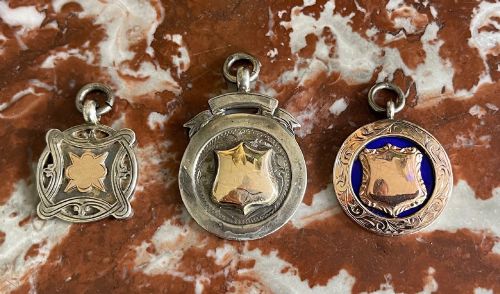
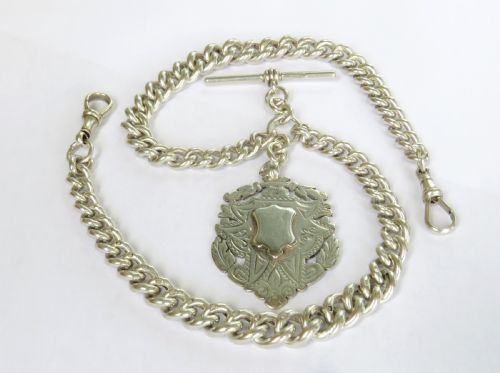
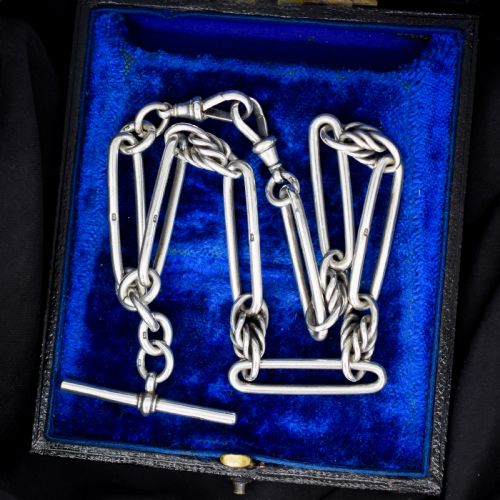
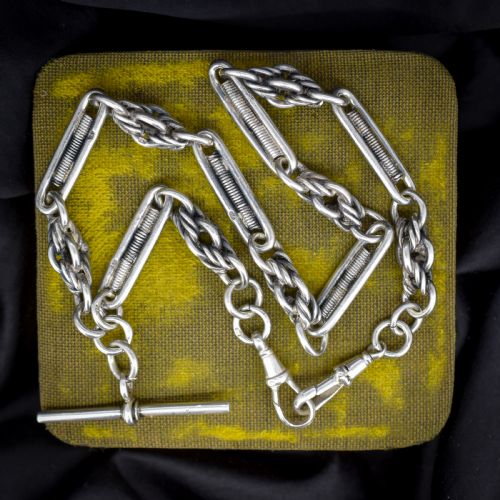
The most common versions met on this page are uniform curb link chains and trombone link variations. These pieces frequently retain their original dog clips, T-bars, and occasionally fob pendants set with bloodstone or enamel.
Origins stretch from nineteenth-century British assay offices to continental workshops, with sterling silver serving as the dominant metal. Shorter lengths function as chokers or collars, whilst longer examples double around the neck with substantial weight.
Materials and construction
The construction relies heavily on sterling silver links, fashioned manually or mechanically into uniform curb, trombone, and love knot patterns. Individual links are securely soldered and joined to swivel dog clips designed for daily pocket watch attachment.
Enamel, gemstones such as bloodstone, and occasional touches of gold enrich the silver framework, particularly upon suspended fobs and watch keys. Hallmarks stamped directly onto links or T-bars record the assay year and origin.
Listings feature sterling silver, gold, enamel, and gemstones across nineteenth-century and early twentieth-century dates.
Distinguishing quality in the metalwork
The distinction between ordinary and superior pieces rests in the integrity of the links and the crispness of the hallmarks. Heavy gauge silver with a substantial gram weight commands greater presence than lighter, thinner chains.
Completeness of original components, including matching dog clips, functional T-bars, and intact fobs, elevates the standing of a chain. Crisp chasing on love knots and well-preserved niello work indicate superior execution by the maker.
The Victorian Silver Albert Necklace Glossary
- Albert chain
- A pocket watch chain named after Prince Albert, designed to secure a timepiece in a waistcoat pocket.
- Dog clip
- A spring-loaded swivel clasp attached to the end of the chain, utilised for fastening watch fobs or securing the necklace.
- T-bar
- A short transverse bar attached to the centre of the chain, originally slotted through a buttonhole to anchor a watch.
- Trombone link
- An elongated rectangular metal link interspersed with smaller circular or oval connecting links.
- Longuard
- An extra-long watch chain designed to be worn doubled around the neck.
- Niello
- A black metallic alloy used to inlay engraved designs on silver, creating sharp contrast against the bright metal.
Victorian Silver Albert Necklace: Frequently Asked Questions
What is a victorian silver albert necklace?
A victorian silver albert necklace is an antique pocket watch chain repurposed for contemporary wear around the neck. These chains retain their original utility hardware, including dog clips and T-bars.
They represent the heavy, tactile metalwork of the nineteenth century, forged primarily in sterling silver with varied link formations.
How were these chains originally worn?
In the nineteenth century, gentlemen secured their pocket watches by threading the T-bar through a waistcoat buttonhole and attaching the watch to the dog clip. The chain draped across the front of the garment.
Today, these pieces are adapted as necklaces, often worn with the T-bar dropping centrally or tucked aside.
How do I identify a period piece?
Period pieces are identified through hallmarks stamped on individual links, dog clips, or T-bars, indicating the year of assay and the silver standard. Birmingham hallmarks and specific dates stamped into the metal help confirm nineteenth-century origins.
The weight, hand-finished links, and traditional hardware styles also distinguish genuine antique examples from modern reproductions.
Are all these chains made of sterling silver?
The listings on this page consist predominantly of sterling silver and general silver, alongside occasional continental silver pieces. Some examples incorporate contrasting metals like gold or decorative elements such as enamel and bloodstone fobs.
The metal standard is typically confirmed by British hallmarks or continental silver stamps found directly on the hardware.