



Victorian Sterling Tankard
A victorian sterling tankard is a solid silver drinking vessel made for formal use or presentation, offering tactile weight and historic craftsmanship.
Victorian Sterling Tankard
A victorian sterling tankard encompasses solid silver drinking vessels and presentation pieces originating primarily from the nineteenth century. Buyers searching this phrase encounter a heavy concentration of christening mugs, handled cups, and lidded tankards spanning multiple decades of British and colonial production.
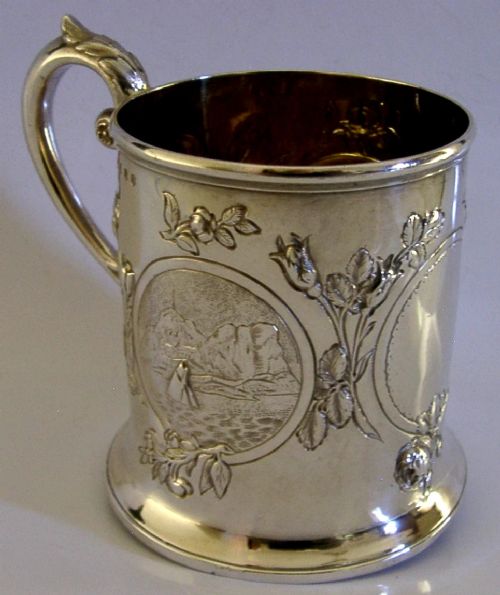
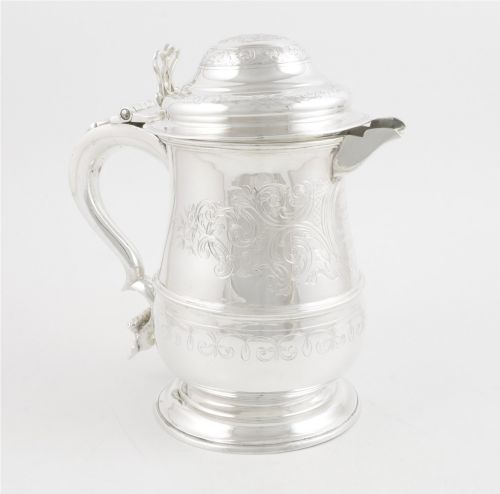
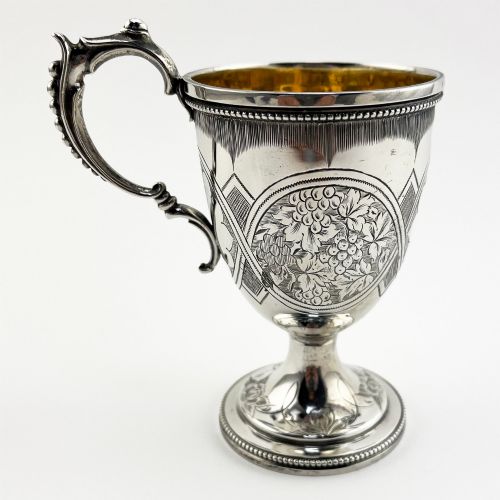
The objects appearing on this page range from early nineteenth century baluster forms to later Edwardian and Art Nouveau examples. Smaller christening mugs form a large portion of the selection, often featuring floral engraving or Rococo scroll handles alongside larger lidded variants.
Origins stretch from traditional London and Sheffield assay offices down to Australian workshops. The inventory reflects diverse stylistic shifts including Chinoiserie, Aesthetic Movement, and elaborate Rococo Revival motifs applied to solid silver bodies.
Materials and construction methods
Makers utilised sterling silver, solid silver, and silver gilt to form the primary body of each piece. Interior gilding, often termed gold gilt or gold plate, appears on specific presentation mugs to protect the metal from acidic contents.
Decoration relied on hand embossing, floral engraving, and cast applied handles such as Rococo scrolls. Hallmarks stamped directly into the silver provide official confirmation of the metal standard, assay town, and year of manufacture.
Victorian Sterling Tankard Retail Price Guide 2026
Typical asking prices for victorian sterling tankard among the pieces listed under this phrase on Sellingantiques today, from the lower quarter to the upper quarter. They describe what is for sale here now, not the wider market.
Some christening cups doubled as novelty pepper pots, proving that Victorians enjoyed blending practicality with miniature whimsy.
Distinguishing quality across pieces
Quality separates through the crispness of hand engraving and the structural integrity of applied handles. Pieces featuring deep repoussé work and sharply defined floral motifs demonstrate superior craftsmanship compared to plain or shallowly stamped alternatives.
The weight of the solid silver and the balance of the baluster form dictate the tactile appeal of the vessel. Heavier gauge silver resists denting better and maintains a more substantial feel in the hand.
The Victorian Sterling Tankard Glossary
- Sterling silver
- A silver alloy containing 92.5 percent pure silver by mass and 7.5 percent other metals, usually copper. This standard composition guarantees durability while maintaining a bright metallic lustre.
- Baluster form
- A shape featuring a rounded lower body curving inward toward a narrow neck, resembling an architectural baluster. This silhouette provides a stable base and comfortable grip.
- Silver gilt
- Silver objects that have been coated with a thin layer of gold on the interior or exterior surfaces. This technique adds a warm tone and prevents tarnishing from certain liquids.
- Repoussé
- A metalworking technique where the artisan hammers the metal from the reverse side to form a raised design in relief. It creates textured, dimensional surfaces across the body of the vessel.
- Assay office
- A statutory body responsible for testing the purity of precious metal items and stamping them with official hallmarks. London and Sheffield offices appear frequently among these pieces.
Victorian Sterling Tankard: Frequently Asked Questions
What is a victorian sterling tankard used for?
These vessels served historically for drinking ales, beers, or commemorative use during significant life events. Many smaller variants functioned as christening gifts given to newborns.
Over time, their roles shifted toward decorative display pieces or cabinet items rather than daily tableware. Their robust metal construction allows them to endure centuries of handling while retaining their original form.
How do I identify a Victorian piece?
Examination of the stamped hallmarks provides the most reliable method for dating silver items accurately. London and Sheffield date letters correspond to specific years of production.
Stylistic indicators such as Rococo scroll handles or Aesthetic Movement motifs further help place an object within the nineteenth century.
Are these tankards made of solid silver?
The listings consist of solid silver, sterling silver, and silver gilt compositions. These metals differ from plated wares by possessing a uniform metallic structure throughout.
Internal gilding found in certain examples uses a thin gold layer over the silver base to prevent beverage corrosion.
How should I display a silver tankard?
Silver vessels benefit from placement in stable environments away from direct sunlight and excessive humidity. Regular soft dusting prevents airborne particulate accumulation on intricate engravings.
Avoiding harsh chemical polishes preserves the original surface patination built up over decades of antique existence.